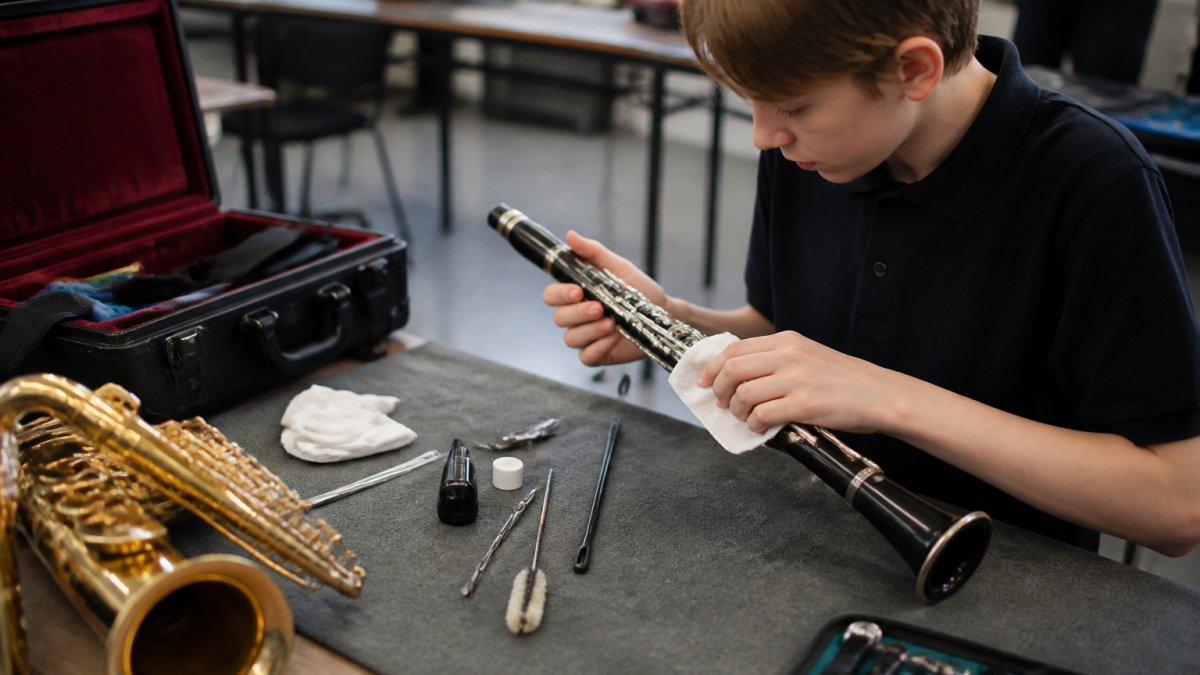
 How-to
How to Maintain School Band Instruments: A Practical Guide
Last Updated: 24 October 2026
Quick Summary
To maintain school band instruments, swab woodwind instruments and empty moisture straight after playing, then give each instrument a ten-minute deep clean once a week. Oil brass valves weekly, grease slides monthly, and book a professional service at the end of term or in the summer break.
- Swab the inside of woodwind instruments and wipe fingerprints off with a soft cloth after every session.
- Set aside ten minutes once a week to clean keywork, rinse mouthpieces and inspect pads and corks.
- Brass players should oil valves weekly and grease slides monthly to prevent seizing.
- Build your cleaning kit around soft cloths, pull-through swabs, valve oil, slide grease and cork grease.
- Book repairs in the summer holiday, as repair shops get busy before September.
Table of Contents
- Why School Band Instruments Need a Regular Maintenance Routine
- Your School Instrument Cleaning Checklist for Every Practice Session
- How to Clean a School Clarinet Without Causing Damage
- Brass, Flute and Percussion: Cleaning by Instrument Type
- Building a Band Instrument Maintenance Schedule Around the School Year
- What Belongs in a Band Instrument Cleaning Kit
- Common Mistakes That Cost You Money in Repairs
- When to Book a Professional Service or Repair
- Frequently Asked Questions
Why School Band Instruments Need a Regular Maintenance Routine
A school band instrument is a precision tool, and it fails in predictable ways when nobody looks after it. Knowing how to maintain school band instruments properly is the difference between a horn that plays sweetly for years and one that spends every half term in a repair queue. Good instruments get neglected: pads rot, valves seize, and a child loses months of progress. Consistent habits in maintaining musical instruments extend this principle of care to stringed pieces, ensuring that the delicate craftsmanship of handmade guitars remains resilient against the wear of daily practice.
The good news is that most damage is preventable. A few minutes of care each week protects your investment and keeps lessons moving.
Here's what most guides get wrong: they treat maintenance as a big annual event. In practice, small habits beat big clean-ups. A quick swab after playing does more than an hour of polishing ever will.
- Pads and corks dry out and split without regular attention
- Valves and slides seize when old grease hardens
- Woodwind bodies crack when moisture sits inside them
- Cases trap dust and grit that scratch the finish
We'll show you exactly how to build those habits, instrument by instrument.
Your School Instrument Cleaning Checklist for Every Practice Session
A school instrument cleaning checklist takes five minutes and prevents most common faults. The routine splits into two parts: what you do straight after playing, and the deeper clean once a week.
What to Do Straight After Playing
The most important habit is the one that happens in the first minute after you stop playing.
- Empty moisture from the instrument using the correct method for its type
- Swab the inside of woodwind instruments with a pull-through
- Wipe fingerprints and sweat from the outside with a soft cloth
- Loosen the reed on clarinets and saxophones before storing
- Return the instrument to its case, latches fastened
Moisture is the enemy. Left inside a clarinet or flute, it feeds mould and softens pads. A quick swab now saves a repair later.
The Weekly Deep Clean
Once a week, set aside ten minutes for a fuller clean. Wipe down keywork with a soft cloth and a brush around the rods. Check the mouthpiece for build-up and rinse it in lukewarm water where the maker allows it. Inspect pads for splits and corks for wear.
If you want to go further and confirm everything sits correctly, our guide on how to check instrument setup walks through the checks step by step. It's worth reading before a new term starts.
How to Clean a School Clarinet Without Causing Damage
Cleaning a school clarinet safely means keeping water away from the pads and never soaking the body. The clarinet is the instrument most often damaged by well-meaning cleaning, usually because someone runs it under a tap.
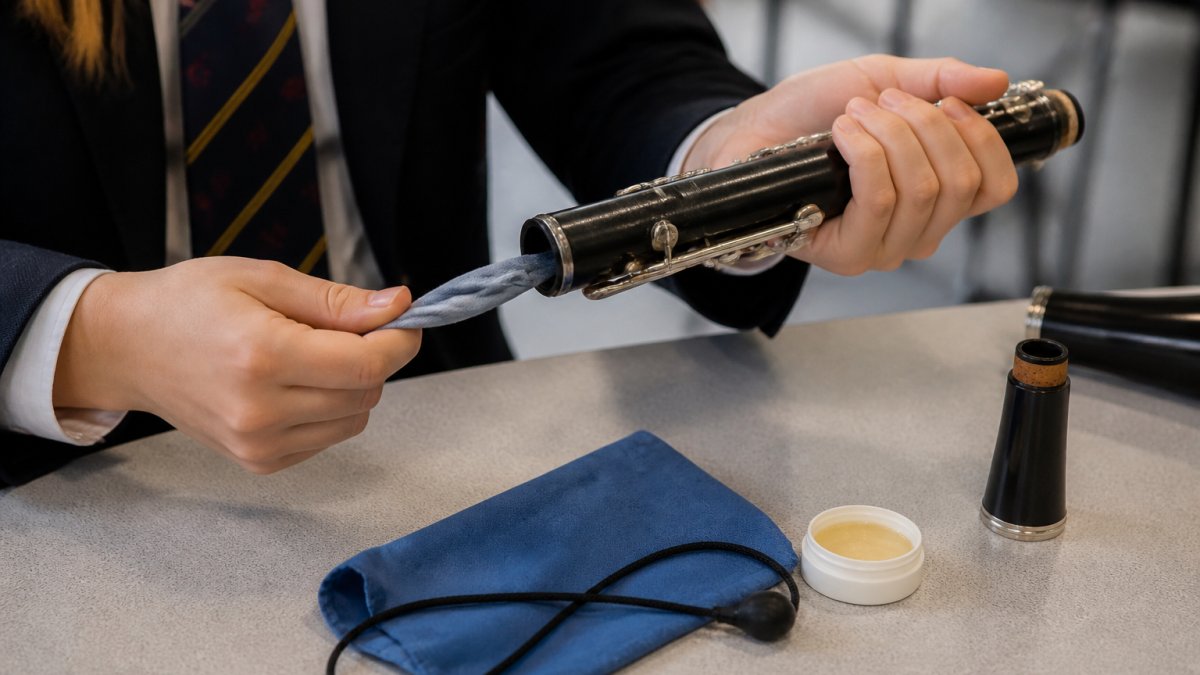
Follow this order:
- Take the clarinet apart and lay the sections on a soft cloth
- Drop the weighted end of a pull-through swab through each section
- Pull the cloth through gently, never forcing it
- Wipe the tenons and apply a thin film of cork grease
- Clean the mouthpiece separately with lukewarm water and a soft brush
- Leave all sections to air dry fully before reassembly
Watch out: never leave the reed on the mouthpiece between sessions. It warps, and a warped reed plays sharp and squeaky.
Choosing the right reed matters as much as cleaning. Our guide to the best clarinet reeds for beginners explains which strength suits a new player.
Brass, Flute and Percussion: Cleaning by Instrument Type
Different instruments need different care, and treating them all the same causes damage. Here's how the main band families compare.
| Instrument type | Daily care | Weekly care | Watch out for |
|---|---|---|---|
| Brass | Empty water keys, wipe exterior | Clean valves, oil | Seized valves from old grease |
| Flute | Swab inside, wipe keys | Clean headjoint, check pads | Tarnish from fingerprints |
| Clarinet/sax | Swab, remove reed | Clean mouthpiece, grease corks | Water on pads |
| Percussion | Wipe sticks, check heads | Tighten hardware, dust shells | Overtightening drum heads |
Brass players should oil valves weekly and grease slides monthly. Flute players must swab the inside after every session. Percussion needs the least fuss, but check drum heads for dents and keep hardware snug.
Building a Band Instrument Maintenance Schedule Around the School Year
A band instrument maintenance schedule should follow the school calendar, not the other way round. Term times create natural checkpoints.
- Start of term: full inspection, replace reeds and consumables
- Half term: deep clean and pad check
- End of term: professional service if anything feels off
- Summer break: the ideal window for a proper service
The summer holiday is the best time for repairs because there's no lesson to miss. Book early, as repair shops get busy in the run-up to September.
What Belongs in a Band Instrument Cleaning Kit
A band instrument cleaning kit costs little and covers almost every daily task. Keep one in the case so it's always to hand.
- Soft lint-free cloths for wiping exteriors and keywork
- Pull-through swabs sized to the instrument
- Mouthpiece brush for woodwind
- Valve oil and slide grease for brass
- Cork grease for tenons and joints
- Small key brush for dust around rods
- Reed case to protect reeds between sessions
Skip the fancy all-in-one kits with items you'll never use. Build around what your instrument actually needs.
Common Mistakes That Cost You Money in Repairs
The most expensive repairs come from a handful of avoidable mistakes. Fixing them costs nothing; ignoring them costs plenty.
A common mistake is storing an instrument on a stand or chair rather than in its case. One knock bends a key or cracks a joint. Another is over-oiling valves until oil gums up the works.
- Using hot water on mouthpieces, which warps them
- Leaving reeds on the mouthpiece between sessions
- Forcing stuck slides or valves instead of getting help
- Skipping the swab because it feels like a chore
- Letting a child carry the case by the handle with the instrument loose inside
If you're weighing up a new purchase and want to avoid buying something that needs constant adjustment, our buyer's guide to the best student clarinet covers what to look for.
When to Book a Professional Service or Repair
Some jobs need a professional, and spotting them early saves money. Book a service when a pad splits, a valve sticks despite oiling, or the instrument stops responding to normal care. Our fast woodwind repair services guide explains the options before you book.
Signs it's time to book:
- Notes that won't speak or squeak without reason
- Keys that feel sluggish or stick
- Visible cracks in wood or dents in brass
- A service that's overdue by more than a year
For players in the region, our musical instrument repair in Hampshire service covers brass and woodwind. Hayes Music has run a full repair centre since 2004, so you can bring the instrument in and get expert eyes on it.
Frequently Asked Questions
How often should school band instruments be cleaned?
Woodwind and brass instruments should be cleaned after every playing session, which means swabbing the bore and wiping down the outside. A fuller clean, including mouthpiece and valves or keys, is worth doing weekly. Then book a professional service once a term or at least once a year. Following a band instrument maintenance schedule like this prevents the build-up that leads to stuck slides, stiff keys and costly repairs.
How do you clean a school clarinet safely?
Take the clarinet apart, then drop a weighted pull-through swab through each joint from the top so the weight falls out the bottom. Never pull the cloth back through the way it came, as it can jam. Wipe the tenon corks with a dry cloth and apply a thin layer of cork grease. Rinse the mouthpiece with lukewarm water only, never hot, and dry it fully. If you are unsure how to clean a school clarinet, ask your teacher or a repair technician to show you once.
What should students do after playing a band instrument?
Empty any condensation from the instrument, swab the bore of woodwind instruments, and wipe fingerprints off brass with a soft cloth. Loosen the ligature on a clarinet or saxophone and remove the reed, rinsing it and storing it flat. Put the instrument back in its case with the case latched, and never leave it on a chair or floor where it can be knocked. These two minutes after playing do most of the work of protecting the instrument.
When should a school band instrument be professionally serviced?
Book a service if keys feel sluggish or sticky, a slide will not move, the instrument will not play in tune, or you notice a dent, bent key or cracked joint. Otherwise, a termly or annual check keeps small problems from becoming expensive ones. A repair centre can also reseat pads and check alignment, which school instruments often need after a year of daily handling. Ask your teacher to flag anything that feels different before it fails in a lesson.
Keeping a school band instrument in good order is a habit, not a project. The players who struggle are usually the ones who wait for something to break. At Hayes Music, we stock the instruments, accessories and repair services that keep young musicians playing, with Hampshire's largest musical instrument store, a dedicated practice room, free parking and a full brass and woodwind repair centre. Get started with Hayes Music and keep every instrument in your band sounding its best.