 how-to
Musical Instrument Repair in Hampshire: 2026 Guide
Table of Contents
- What to Expect from Musical Instrument Repair Hampshire Services
- Signs Your Instrument Needs a Service
- Woodwind Instrument Maintenance Tips to Prevent Costly Repairs
- How to Choose a Musical Instrument Repair Service in Hampshire
- Brass Instrument Repair Cost Estimates: What Affects the Price
- Turnaround Times and What to Do While You Wait
- Frequently Asked Questions
Last Updated: 14 September 2026
What to Expect from Musical Instrument Repair Hampshire Services
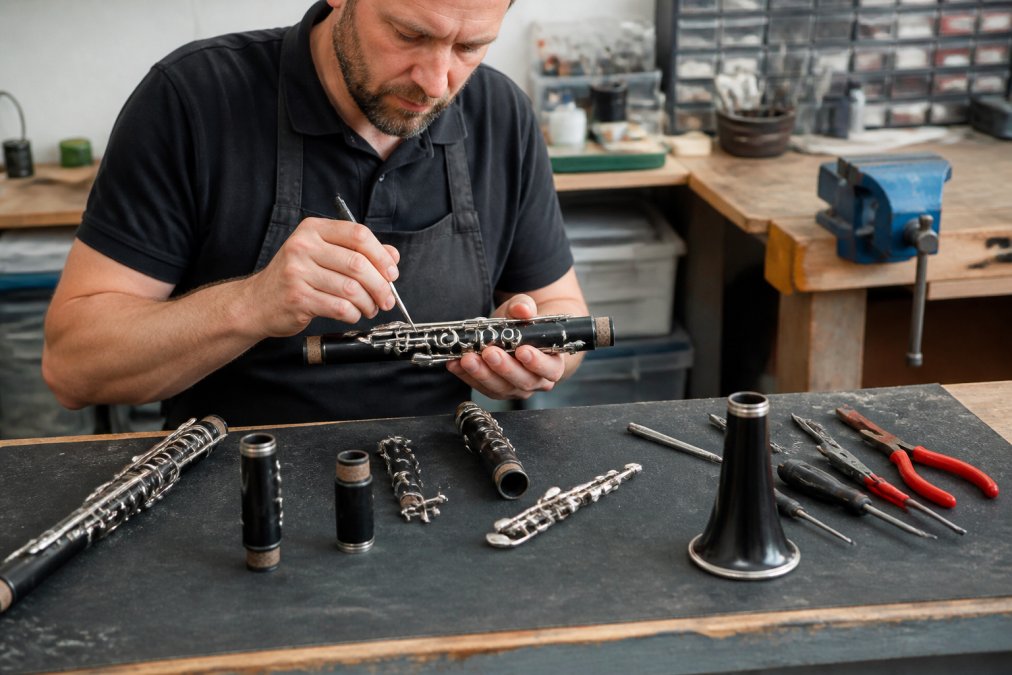
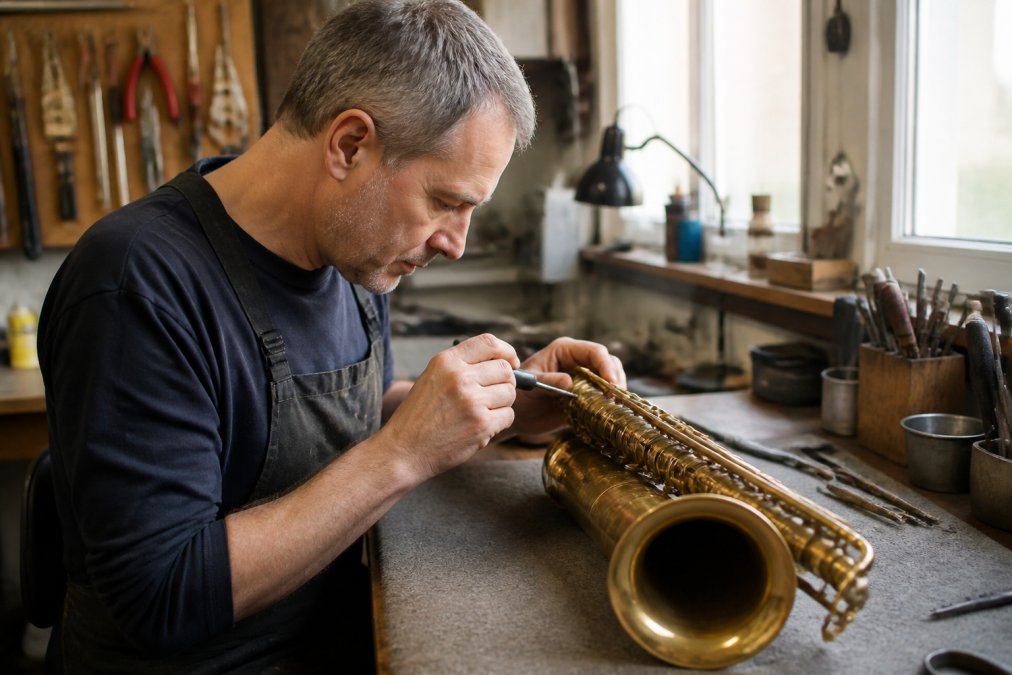
Finding reliable musical instrument repair hampshire services starts with understanding what a proper workshop actually does. A good repair centre assesses the instrument, explains the fault in plain terms, and gives you a clear quote before any work begins. At Hayes Music, our repair centre handles brass and woodwind instruments with the same care whether it's a beginner's first clarinet or a professional's gigging saxophone.
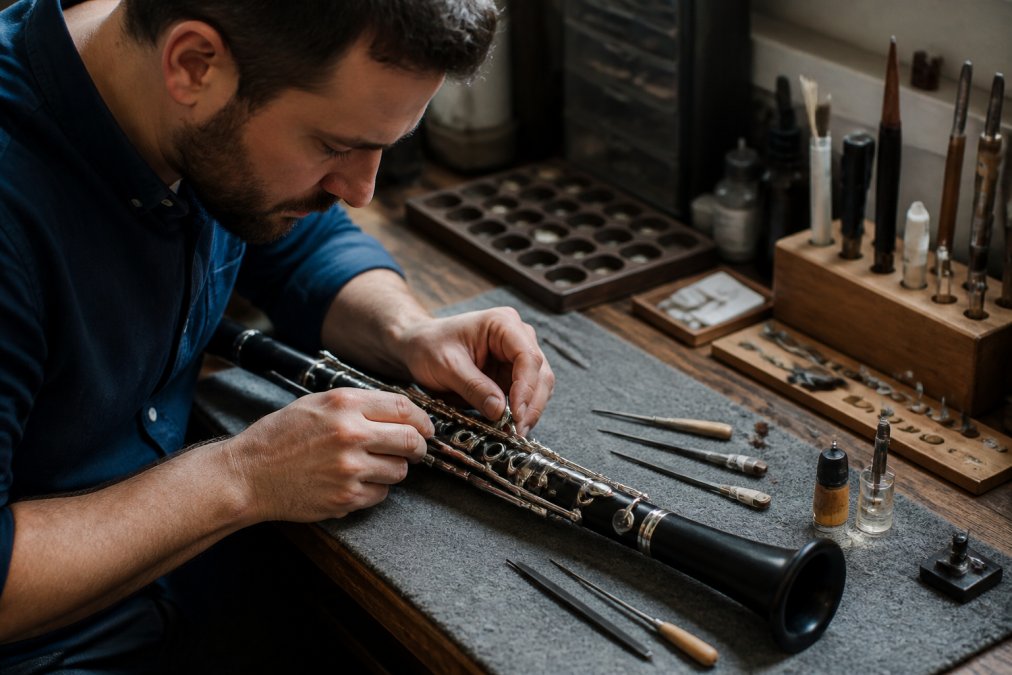
Most repairs fall into three categories: routine maintenance, fault correction, and restoration. Routine work covers things like pad replacement, cork renewal, and key regulation. Fault correction deals with bent rods, leaky joints, or stuck valves. Restoration is for older instruments that need significant attention to play properly again.
What separates a good service from a frustrating one is communication. You should know what's wrong, what it costs, and when it'll be ready before you hand anything over. Any workshop worth using will walk you through that without pressure.
Signs Your Instrument Needs a Service
Your instrument usually tells you something is wrong before it stops working entirely. The key is knowing which signs point to a service and which are just part of normal playing.
Common warning signs include:
- Keys that feel sluggish or stick when pressed
- Air leaking from pads or joints, making notes harder to play
- A change in tone quality that doesn't improve with a new reed or mouthpiece
- Valves or slides that move roughly or seize up
- Visible corrosion, dents, or loose solder joints
A common mistake is waiting until an instrument won't play at all. Small issues like a slightly leaky pad or a bent key rod are cheap to fix early and expensive to ignore. Left alone, a minor leak can throw off your intonation, force you to overblow, and eventually damage the mechanism.
If you notice any of these signs, get the instrument looked at sooner rather than later.
Woodwind Instrument Maintenance Tips to Prevent Costly Repairs
Woodwind instrument maintenance tips matter more than most players realise. A few minutes of care each week prevents the majority of expensive repairs.
Daily Care Habits for Clarinets, Flutes and Saxophones
Swab your instrument after every playing session. Moisture left inside a clarinet or saxophone body causes pad deterioration and can lead to mould in the bore (yamaha.com). Use a pull-through swab appropriate to your instrument and store it somewhere dry.
For flutes, dry the inside of the headjoint and body with a cleaning rod and cloth. Pay attention to the tenons and sockets, where moisture collects and causes corrosion.
Saxophone players should remove the mouthpiece and dry the reed after playing. Reeds stored wet on the mouthpiece grow bacteria and warp, which affects both tone and hygiene (pubmed.ncbi.nlm.nih.gov).
Handle keys gently. Slamming keys closed wears pads faster and bends the keywork over time.
Monthly Checks You Can Do at Home
Once a month, take five minutes to inspect your instrument properly.
- Check pad condition: look for torn, compressed, or discoloured pads
- Test key action: press each key slowly and listen for clicks or sticking
- Inspect corks and tenons: worn cork causes air leaks at joints
- Look for loose screws: a dropped screw can disappear inside the instrument
- Clean the bore: a thorough swab removes buildup that affects tone
These checks won't replace a professional service, but they catch problems while they're still cheap to fix.
How to Choose a Musical Instrument Repair Service in Hampshire
Choosing the right repair service comes down to three things: what they specialise in, how they communicate, and whether they stand behind their work. A generalist shop that "does repairs" is not the same as a dedicated workshop with proper tooling and trained technicians.
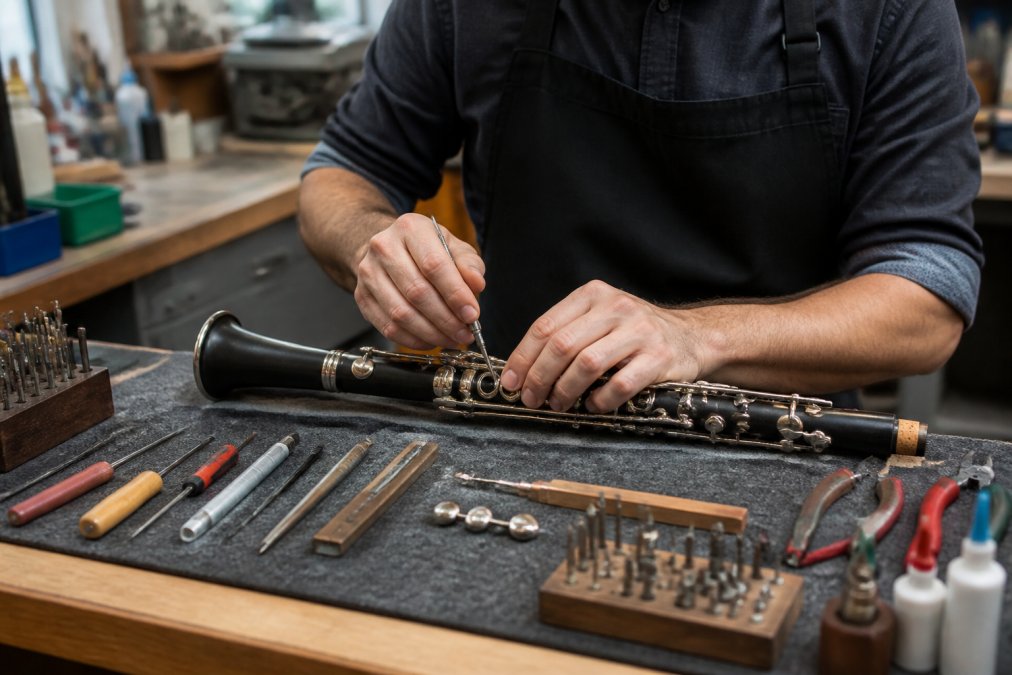
Look for a service that handles your specific instrument type. Woodwind and brass require different skills and tools. A technician who works on saxophones daily will spot issues a general repairer misses.
Ask about turnaround times before you commit. Some workshops quote a week and deliver in three. Others underpromise and overdeliver, which is what you want when you have a rehearsal or exam coming up.
Questions to Ask Before You Hand Over Your Instrument
Before leaving your instrument anywhere, ask these questions:
- What's the diagnosis and what exactly needs doing?
- Is this a repair or a maintenance service?
- What's the total cost, including parts?
- When will it be ready, and will you call if that changes?
- Do you guarantee the work, and for how long?
- Do you have experience with this specific instrument or brand?
A workshop that answers these clearly is one worth using. Vague answers or pressure to commit on the spot are red flags.
Hayes Music has run a full backup service and repair centre for brass and woodwind instruments since 2004, so you can ask these questions in person at our showroom and get straight answers.
Brass Instrument Repair Cost Estimates: What Affects the Price
Brass instrument repair cost estimates vary widely because brass work is rarely one-size-fits-all. Several factors push the price up or down, and understanding them helps you budget sensibly.
The main cost drivers are:
| Factor | Impact on Cost | Notes |
|---|---|---|
| Type of work | Low to high | Routine service costs less than dent removal or valve rebuilds |
| Instrument size | Moderate | Larger instruments use more materials and workshop time |
| Parts required | Variable | Genuine parts cost more than generic equivalents |
| Age and condition | High | Older instruments often need additional work once opened up |
| Turnaround speed | Variable | Priority jobs usually carry a premium |
A straightforward service, such as cleaning, oiling, and adjusting a trumpet, sits at the lower end. Dent removal, solder repairs, and valve work cost more because they demand specialist skill and time.
The honest answer is that no reputable workshop quotes a firm price without seeing the instrument. Anyone who does is either guessing or planning to add costs later. Get a written estimate after inspection, and ask what happens if the technician finds something unexpected once work starts.
Turnaround Times and What to Do While You Wait
Turnaround depends on the job and the workshop's current workload. A basic service might take a few days. A full overhaul or specialist restoration can take several weeks, especially if parts need ordering (Band Instrument Repair).
Ask upfront whether the workshop stocks common parts or orders them in. A repair that hinges on a back-ordered part can stretch from days to weeks.
While your instrument is in for repair, use the time productively:
- Practise on a backup instrument if you have one
- Focus on theory, sight-reading, or ear training
- Check your accessories and replace worn reeds, cork grease, or valve oil
- Book your next service before the busy season
If you're a student preparing for an exam or a gigging musician with dates booked, tell the workshop. A good repair centre will prioritise accordingly and keep you updated if timelines shift.
Hayes Music's repair centre keeps brass and woodwind work in-house, which means fewer delays and clearer communication than services that outsource. If you're not sure whether your instrument needs a service or a full repair, bring it to our showroom and we'll assess it while you wait.
Waiting until an instrument fails mid-performance is a risk no player needs to take. Regular maintenance, early fault spotting, and a repair service you trust keep your instrument playing reliably for years. Hayes Music has supported musicians across Hampshire since 2004 with a full brass and woodwind repair centre, a dedicated practice room, and free on-site parking near the M27. Whether you need a quick service, a specialist repair, or advice on your next instrument, get started with Hayes Music and keep your playing on track.
Frequently Asked Questions
How do I know if my musical instrument needs professional repair?
Common signs include difficulty producing a clear tone, sticky or noisy keys, air leaks around pads, dents that affect playability, or tuning that drifts despite your best efforts. If you notice any of these, it is worth having a technician look at it. Regular servicing every 12 to 18 months for woodwind and brass instruments can catch small issues before they become expensive problems, keeping your instrument in good playing condition.
How often should woodwind instruments be serviced?
Most woodwind instruments benefit from a full service every 12 to 18 months, depending on how often you play. Student instruments used daily in school bands may need attention more frequently. Following basic woodwind instrument maintenance tips, such as swabbing after each session and checking pads for wear, can extend the time between professional services. If you play professionally or in multiple ensembles, an annual check is sensible.
What is the typical turnaround time for instrument repairs?
Turnaround depends on the type of repair and the workshop's workload. Minor adjustments or pad replacements can often be completed within a few days, while more involved repairs like dent removal or full overhauls may take one to two weeks. It is always best to ask for an estimate when you drop off your instrument. Some services offer a priority option if you have a gig or exam coming up.
Is it worth repairing an older musical instrument?
That depends on the instrument's quality, the extent of the damage, and the cost of repair versus replacement. A well-made older instrument often justifies repair, especially if it has sentimental value or a sound you like. For budget student models, a repair bill close to the price of a new instrument may not make sense. Ask a technician for an honest assessment before deciding, and get a written estimate so you can compare.