 how-to
How to Check Instrument Setup: A Step-by-Step Guide
Table of Contents
- Why Checking Your Instrument Setup Matters
- What You'll Need Before You Start
- How to Check Guitar Action Height Adjustment
- Performing an Instrument Intonation Check
- Signs of Poor Instrument Setup You Shouldn't Ignore
- Common Mistakes to Avoid When Checking Setup
- When to Seek Professional Setup Help
- Frequently Asked Questions
Last Updated: September 18, 2026
Why Checking Your Instrument Setup Matters
A poorly set up instrument will frustrate you. It will fight against your playing. Your fingers will hurt, your intonation will suffer, and you'll blame yourself instead of the equipment.
The truth is simpler: most instruments arrive needing adjustment. Strings sit too high off the fretboard. Bridges are misaligned. Valves stick. These aren't defects, they're normal. But they're also fixable. Learning to check instrument setup yourself means you'll spot problems early, know when to call a professional, and understand what your instrument actually needs.
This guide covers the essential checks every musician should perform. Whether you've just bought your first guitar or you're maintaining a brass instrument, these steps will help you assess your setup and catch issues before they become expensive problems.
What You'll Need Before You Start
Before you begin checking your instrument setup, gather a few simple tools. Most are inexpensive and worth keeping in your music bag.
Essential tools:
- A ruler or straightedge (at least 30 cm)
- A feeler gauge set or playing card stock
- A tuner (digital or app-based)
- Good lighting (torch or desk lamp)
- A flat, stable surface to work on
For guitars specifically, add a capo to your kit. For wind instruments, you'll want a mirror and cloth. If you're checking setup on brass or woodwind, access to a professional setup guide for your specific instrument helps.
You don't need expensive equipment. A ruler from a pound shop works fine. The key is having good light and a calm space where you can focus.
How to Check Guitar Action Height Adjustment
Guitar action is the distance between the strings and the fretboard. High action makes playing harder. Low action causes buzzing. The sweet spot depends on your playing style, but most players find 2-2.5 mm on the bass side and 1.5-2 mm on the treble side comfortable.
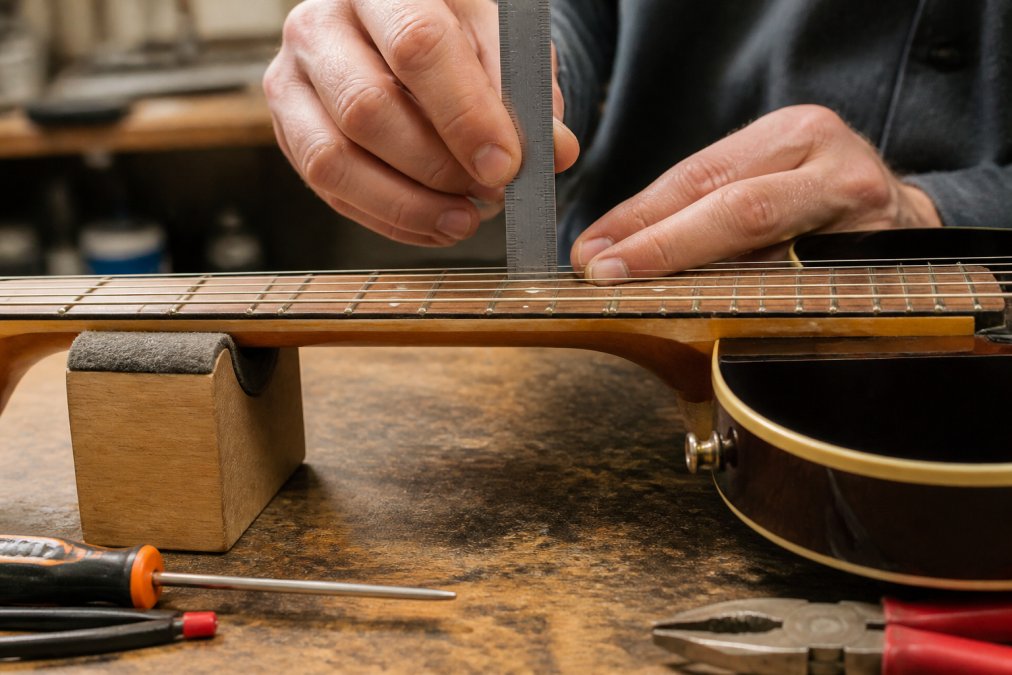
Here's how to measure it:
- Place your guitar on a flat surface with the neck horizontal
- Hold a ruler vertically against the fretboard at the 12th fret (halfway down the neck)
- Measure the gap between the top of the fret and the bottom of the string
- Check both bass and treble sides, the two outer strings
If the action feels too high, the bridge may need lowering or the neck may need truss rod adjustment. If it's too low and you hear buzzing, the bridge needs raising.
Don't adjust the truss rod yourself unless you're confident. One quarter-turn too much can damage your neck. Hayes Music's full backup service and repair centre for brass and woodwind instruments can handle truss rod work quickly if your action needs professional attention.
Performing an Instrument Intonation Check
Intonation is whether your instrument plays in tune. A poor instrument intonation check reveals tuning issues that might be fixable or might indicate deeper problems.
Start with a digital tuner. Play each note on your instrument and watch the tuner display. For guitars, check open strings first, then fretted notes at the 5th, 7th, and 12th frets. For wind instruments, play each note in your normal range.
Wind instruments often struggle at the extremes of their range. A clarinet might play sharp in the high register and flat in the low register. This is normal. The issue becomes a problem only if the variation is extreme, more than 50 cents sharp or flat.
What to look for:
- Open strings or notes should be dead centre on the tuner
- Fretted notes should track consistently across the neck
- The same note played in different octaves should be similar
If your instrument intonation check shows consistent sharp or flat notes, the bridge may need adjusting, or the instrument may need professional service. Hayes Music's full backup service and repair centre for brass and woodwind instruments can assess whether your instrument needs valve adjustment or pad replacement.
Signs of Poor Instrument Setup You Shouldn't Ignore
Some setup problems are obvious. Others creep up slowly and you stop noticing them.
Red flags that demand attention:
- Strings buzz against frets when played normally
- High action makes your fingers hurt after short practice sessions
- The neck looks visibly bowed or twisted
- Valves or keys stick or respond sluggishly
- Intonation drifts badly across the range
- Frets are noticeably worn or uneven
- The bridge leans or sits unevenly
Buzzing strings might mean low action, but they could also signal a cracked fret or a neck that's warped. High action alone isn't dangerous, but it will exhaust your hands and slow your progress.
If your instrument setup shows multiple issues, don't try to fix everything at once. Professional setup addresses the neck, bridge, and action together as a system. Hayes Music's full backup service and repair centre for brass and woodwind instruments can diagnose the root causes and fix them in the right order.
Common Mistakes to Avoid When Checking Setup
The biggest mistake is assuming your instrument is fine because it plays. Many problems hide until you look closely.
Don't skip the straightedge test. Hold a straightedge (ruler) along the fretboard under good light. You should see a slight curve, not a banana shape or a hump. If the neck looks severely bowed, that's a truss rod issue.
Don't measure action in poor light. Shadows lie. Use a torch or move to natural daylight. Measure at the 12th fret, not at the first or last fret, where the angle changes.
Don't adjust anything without understanding why. If you tighten a truss rod to fix high action, you might make it worse. If you lower the bridge too much, you'll get buzzing. Each adjustment affects the whole system.
Don't ignore intonation problems. A guitar that plays sharp at the 12th fret usually needs bridge saddle adjustment or nut work. Wind instruments that play consistently flat might need pad replacement. These aren't "just how it is."
Don't assume your setup is static. Wood moves with humidity and temperature. Strings wear and lose tension. Check your instrument setup every few months, especially if you play regularly or if the seasons change.
When to Seek Professional Setup Help
Some checks tell you everything you need to know. Others tell you it's time to call someone who knows more.
Seek professional help if:
- The neck is visibly bowed or twisted
- Frets are worn unevenly or chipped
- Action is very high or very low and you can't identify why
- Your instrument intonation check shows extreme variation
- Valves, keys, or tuning pegs are stuck or damaged
- The bridge is cracked, warped, or loose
- You've tried a simple adjustment and it made things worse
Professional setup typically takes 1-2 weeks depending on what's needed. Hayes Music's full backup service and repair centre for brass and woodwind instruments handles everything from basic action adjustment to full restoration. Bring your instrument in, describe what you've noticed, and let the professionals take it from there.
The cost of setup is always less than the cost of damage from ignoring problems.
Learning to check instrument setup yourself builds confidence and saves money. You'll catch problems early and understand your instrument better. But knowing when to hand it to a professional is equally important. Hayes Music combines expert repair services for brass and woodwind instruments with a showroom where you can test instruments before you buy. Whether you need setup guidance, professional repairs, or advice on finding the right instrument, the team is ready to help. Visit the showroom or contact us for a quick assessment of your instrument's current condition.
Frequently Asked Questions
How often should I check my instrument setup?
Check your instrument setup every 3-6 months, or immediately if you notice changes in playability or sound quality. Environmental factors like temperature and humidity fluctuations can affect setup, making regular checks essential. If you play frequently or transport your instrument often, monthly checks help catch issues early before they impact your playing.
What are the signs of poor instrument setup?
Poor setup shows through buzzing strings, uneven action across the fretboard, difficulty playing certain notes, or intonation problems. You might also notice the instrument feels uncomfortable to play or produces muted tones. If playability suddenly becomes harder or strings feel too high or too low, these are clear indicators your setup needs attention from a professional technician.
Can I perform a basic instrument setup myself?
You can check your instrument's setup and identify problems yourself using basic tools like a straightedge and tuner. However, making actual adjustments requires specialist knowledge and equipment. Most musicians benefit from having a professional handle setup adjustments, particularly for brass and woodwind instruments where precision is critical for optimal performance.
How does humidity affect my instrument setup?
Changes in humidity cause wood to expand and contract, shifting your instrument's setup significantly. In the UK's variable climate, wood instruments are especially vulnerable to humidity fluctuations. Monitor indoor humidity levels and store instruments in stable conditions to minimise setup drift. If you notice playability changes with seasonal shifts, have a technician check your setup.