 how-to
How to Choose a Beginner Saxophone in 2026
Table of Contents
- What to Look for in a Beginner Saxophone
- Alto vs Tenor Saxophone for Beginners
- Renting vs Buying a Saxophone
- Essential Saxophone Accessories for Students
- Where to Buy a Beginner Saxophone
- Common Mistakes to Avoid
- Conclusion
- Frequently Asked Questions
Last Updated: September 16, 2026
What to Look for in a Beginner Saxophone
Choosing how to choose a beginner saxophone starts with one question: does the instrument make the first year easier or harder? A beginner saxophone is a student-level instrument designed with lighter key action, a manageable weight and a mouthpiece that helps new players produce a stable tone without fighting the horn. At Hayes Music, we've watched hundreds of first-time players walk into our Hampshire showroom, and the ones who stick with it almost always chose an instrument that fitted them rather than one that simply looked impressive on a shelf.
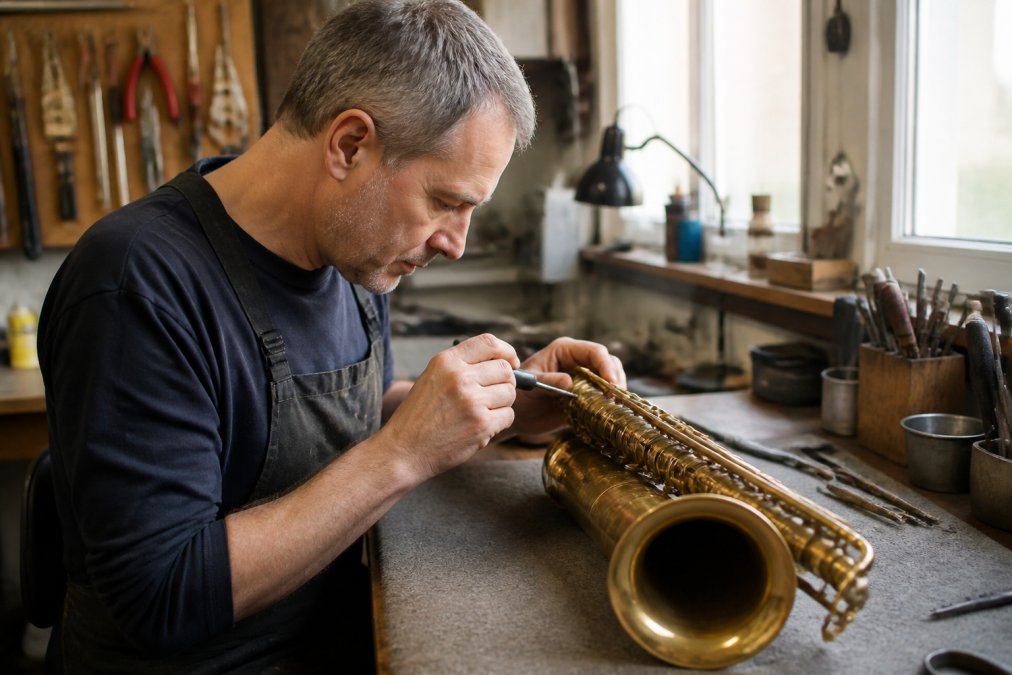
Here's the part most buyers get wrong. They assume a cheap instrument is a sensible starting point and an expensive one is a reward for progress. In practice, a poorly set-up saxophone is the single biggest reason students quit in the first term. The keywork leaks, the low notes won't speak and the student blames themselves rather than the instrument. A well-adjusted student model beats a badly adjusted professional model every time.
Key Features That Matter
The features that decide whether a beginner saxophone works for a student are the ones that affect effort and comfort, not the ones that look best in photographs.
- Key action: Light spring tension reduces finger fatigue during the first months of practice.
- Neck and mouthpiece: A well-matched mouthpiece makes the first notes far easier to produce.
- Weight and balance: An instrument that sits comfortably on the neck strap prevents poor posture.
- Adjustability: A movable thumb rest and neck strap ring help the saxophone fit different body sizes.
- Case quality: A sturdy case with proper padding protects the instrument between lessons and home.
What most guides miss is that a "student" label on a box means very little. Two instruments with identical specifications can play completely differently depending on how they were set up before sale. That setup, not the badge, is what you're really paying for.
Materials and Build Quality
Material choice matters less than build quality at the beginner level. Most student saxophones use a brass body with a lacquer finish, and that combination is perfectly capable of carrying a player through several grades. What separates a durable instrument from a fragile one is the thickness of the keywork, the quality of the pads and how precisely the tone holes are finished.
A common mistake is assuming that a heavier instrument is automatically better made. Weight usually reflects the thickness of the body metal, which affects tone and durability, but it also makes the saxophone harder to hold for a younger student. Balance and setup matter more than grams on a scale.
Alto vs Tenor Saxophone for Beginners
For most beginners, the alto saxophone is the better first instrument. It is lighter, its mouthpiece and reeds are easier to control, and the vast majority of tutor books and exam syllabuses are written with the alto in mind. The tenor saxophone suits players who are physically larger, who prefer a deeper voice, or who already have some experience on another instrument.
The alto vs tenor saxophone for beginners decision usually comes down to three practical factors:
| Factor | Alto Saxophone | Tenor Saxophone |
|---|---|---|
| Size and weight | Smaller, easier to hold | Larger, heavier on the neck |
| Reed and mouthpiece | Easier to control | Requires more air support |
| Repertoire and tuition | Widest beginner support | Better suited to jazz and band work |
If a student is unsure, the alto is the safer starting point. It is easier to produce a clean tone on, and the skills transfer directly to the tenor later if they choose to switch.
Renting vs Buying a Saxophone
Renting vs buying a saxophone is the decision most families wrestle with, and there is no single right answer. Renting lowers the upfront commitment and lets a student test whether they genuinely enjoy playing before a larger outlay. Buying makes sense when the student is committed, when the instrument will be used for years, or when a family prefers to own an asset rather than pay indefinitely.
Pros and Cons of Renting
Renting spreads the cost and removes the risk of an unused instrument gathering dust. If a child loses interest after a term, the family simply returns the saxophone. The trade-off is that rental fees accumulate, the instrument is never yours, and availability of specific models can be limited.
- Pros: Lower upfront cost, no long-term commitment, maintenance often included
- Cons: Ongoing payments, no ownership, limited choice of model
When Buying Makes Sense
Buying makes sense when the student has shown genuine commitment, typically after a term or two of lessons. At that point, a well-set-up student instrument will hold its value and can be serviced and maintained over many years. Parents often find that buying a quality student model costs less over three years than renting, and the student has an instrument they can grow with.
A practical middle path is to rent first and buy later, using the rental period to confirm the student's interest before committing.
Essential Saxophone Accessories for Students
Essential saxophone accessories for students go beyond the instrument itself, and forgetting them is one of the most common reasons a new player struggles in the first week.
- Reeds: Buy several in a beginner strength, as reeds wear out and vary between boxes.
- Neck strap: A padded strap reduces strain during longer practice sessions.
- Cleaning kit: A pull-through swab and pad saver keep moisture out of the instrument.
- Cork grease: A small tube prevents the neck from sticking and protects the cork.
- Music stand: Proper posture starts with a stand that holds the music at eye level.
- Tutor book: A structured method book matched to the student's level keeps progress steady.
Where to Buy a Beginner Saxophone
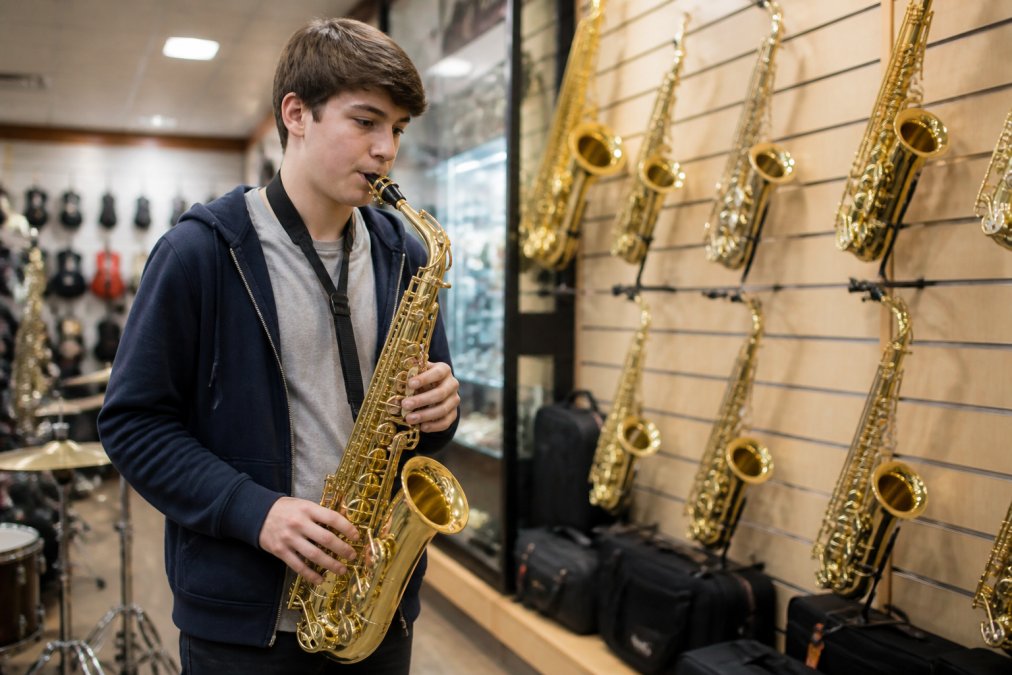
Where to buy a beginner saxophone matters as much as which one you buy. A specialist retailer will set the instrument up before it leaves the shop, check the keywork and pads, and offer servicing afterwards. An online marketplace may sell the same model for less, but it arrives in a box with no adjustment and no support if something goes wrong. Professional guidance remains the most reliable safeguard when choosing a musical instrument, ensuring that your initial investment serves as a foundation for years of progress rather than a source of mechanical frustration.
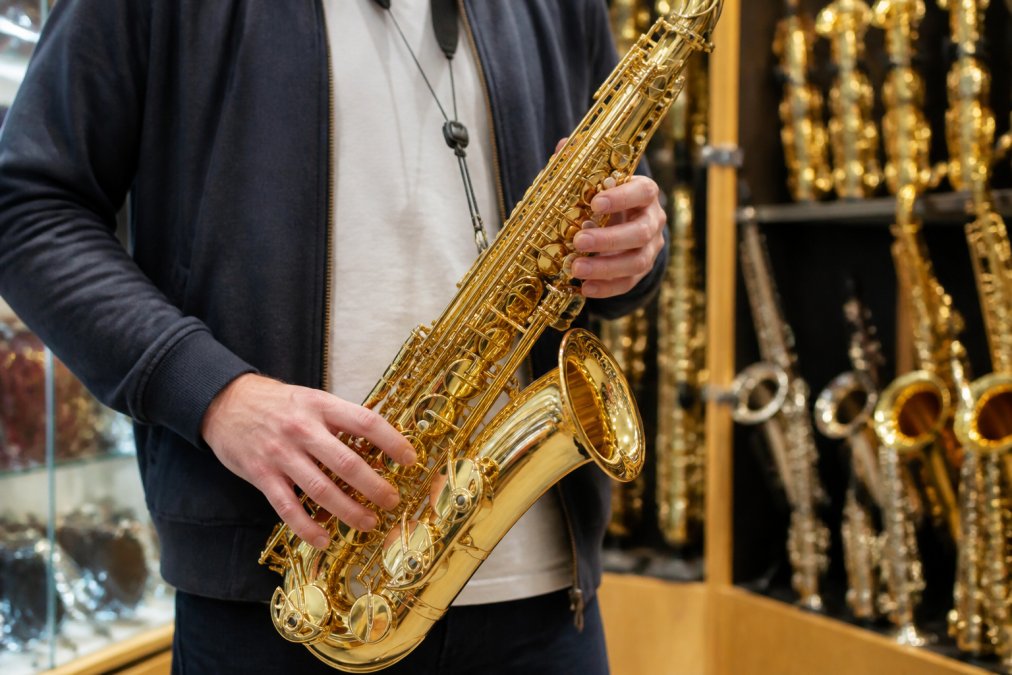
This is where a physical showroom earns its keep. A student can hold the instrument, test the weight on a neck strap and hear how it sounds before committing.
Musicians' Union guidance on instrument care and insurance
Common Mistakes to Avoid
The most expensive mistake is buying an instrument that has never been set up. A saxophone straight out of a warehouse box will almost always need adjustment, and a beginner cannot tell whether a problem is their technique or the instrument.
- Buying on price alone: The cheapest option often costs more once setup and repairs are added.
- Skipping the trial: Not holding the instrument before buying leads to poor fit and early frustration.
- Ignoring the mouthpiece: A mismatched mouthpiece makes the first notes unnecessarily difficult.
- Forgetting accessories: Arriving at the first lesson without reeds or a neck strap wastes valuable time.
- Choosing tenor too early: Starting on a heavier instrument can discourage a younger player.
Conclusion
The gap between a student who thrives and one who gives up often comes down to the instrument in their hands and the support behind it. A beginner saxophone that is correctly set up, properly fitted and backed by real servicing removes the obstacles that turn enthusiasm into frustration.
Frequently Asked Questions
Is it better to start on an alto or tenor saxophone?
For most beginners, the alto saxophone is the better choice. It is smaller and lighter, making it easier to hold and handle, which helps new players develop proper posture and technique. The alto also requires less air to produce a sound, so you won't tire as quickly. Tenor saxophones are larger and need more breath support, which can be challenging at first. That said, if you love the deeper tone of a tenor, it's not impossible to start there. The key is to try both if you can and see which feels more comfortable.
What accessories do I need when buying my first saxophone?
At a minimum, you'll need a few essential accessories to get started. A mouthpiece and ligature are crucial; many student saxophones come with these, but upgrading the mouthpiece can improve tone and ease of playing. You'll also need reeds (size 2 or 2.5 is typical for beginners), a neck strap to support the instrument's weight, and a cleaning kit to keep it in good condition. A padded case is essential for protection. Some players also use a stand for easy access during practice. Your teacher or a specialist retailer can recommend specific items.
Should a beginner buy a new or second-hand saxophone?
Both options have merit. A new saxophone comes with a warranty and is free from wear, but costs more. A second-hand instrument can be a budget-friendly alternative, but you must check its condition carefully. Look for dents, worn pads, and sticky keys. Ideally, have a repair technician inspect it before purchase. If you buy second-hand, factor in the cost of a service. A reputable dealer often sells refurbished instruments that play like new, offering a good middle ground.
How much should I expect to spend on a beginner saxophone?
Prices for beginner saxophones vary widely depending on brand, condition, and whether you buy new or used. Prices for beginner saxophones vary widely depending on brand, condition, and whether you buy new or used. Renting is another option. Remember that a very cheap instrument may be poorly made and hard to play, which can discourage beginners. It's worth investing in a quality instrument from a reputable source.