 How-to
How to Oil a Trombone Slide Safely Each Day
Table of Contents
- Is It Safe to Oil a Trombone Slide Every Day?
- How Often to Lubricate a Trombone Slide
- How to Apply Trombone Slide Lubricant Correctly
- Trombone Slide Oil vs Cream: Which Suits Your Instrument
- Trombone Slide Cleaning and Maintenance Routine
- Risks of Over-Oiling and Lubricant Migration
- Troubleshooting a Stiff or Sluggish Slide and Booking Your Next Check
- Frequently Asked Questions
Is It Safe to Oil a Trombone Slide Every Day?
Yes, oiling a trombone slide every day is generally safe, but only when you use a small amount of a product made for brass slides and wipe away the excess, since the wrong approach to oiling trombone slides is what causes trouble. The real risk comes from using too much lubricant or the wrong product, which can cause build-up and slow the slide down. Daily care is one of the simplest habits to build.
A common mistake is treating the slide like a machine that needs a heavy coat of oil. In practice, a few drops on the inner tubes are enough. Checking the slide every day is good practice, but oiling it every day is not always necessary. If the slide moves freely and feels smooth, it may not need lubricant that day.
Trombone slides vary in how much lubricant they need, depending on playing time, humidity and the player's hands. Players who play for long periods often find they need to lubricate more often than someone who practises for twenty minutes a day.
Watch out: Never spray household oil or WD-40 onto a trombone slide. These products can damage the lacquer and leave residue that is hard to remove.
Daily oiling depends on the product, not just the habit
Whether daily oiling is safe in practice depends on what you are applying. Read the maker's instructions on the bottle or tube: if it says apply sparingly every few days, daily application is more than the product was designed for.
Playing time matters too. If you play for an hour or more a day, especially in warm or humid conditions, the slide will use up lubricant faster and more frequent application may be justified. If you practise for twenty minutes, the slide is unlikely to need fresh oil every day.
What needing oil every day may be telling you
A common pattern is that players who find they must oil the slide every single day are not under-lubricating but dealing with a slide that is dirty, worn or slightly out of alignment. Residue from old lubricant, dust and dried moisture can make the slide feel sticky within hours of a fresh application, and adding more oil only temporarily masks the problem. If you are reaching for the bottle daily and the slide still feels sluggish, stop adding lubricant and clean the inner and outer tubes thoroughly first. If the slide is clean, correctly lubricated and still stiff the next day, that points to wear, a dent or an alignment issue that a technician should check rather than a need for more oil.
A safe daily routine
If you do choose to oil daily, keep the quantity small and consistent: a few drops on the thicker end sections of the inner slide, work the slide in and out, then wipe away any excess with a clean cloth. Clean and dry the slide after each playing session so fresh lubricant is not applied over old residue. A clean slide needs less oil, and it will move more smoothly.
How Often to Lubricate a Trombone Slide
Most players should lubricate their trombone slide every few days to once a week, depending on how often they play, and a regular rhythm keeps trombone slides moving smoothly without excess build-up. Check the slide each day, and only oil it when the movement starts to feel sticky or slow.
Here is a simple guide to help you decide:
- Daily playing (1 hour or more): Lubricate every 2 to 3 days
- Regular practice (20 to 45 minutes): Lubricate once or twice a week
- Occasional playing: Lubricate before and after use, or when the slide feels stiff
Hot or humid weather can make the slide stick sooner. If you notice the slide is harder to move after a warm rehearsal, wipe it down and reapply a small amount of lubricant.
The article gives the following guide to how often to lubricate a trombone slide, based on how much you play.
| Playing pattern | Lubrication frequency | Note |
|---|---|---|
| Daily playing (1 hour or more) | Every 2 to 3 days | Use more often in hot or humid weather |
| Regular practice (20 to 45 minutes) | Once or twice a week | Oil only when movement feels sticky or slow |
| Occasional playing | Before and after use, or when stiff | Wipe down and reapply a small amount if stiff after a warm rehearsal |
How to Apply Trombone Slide Lubricant Correctly
Start by wiping the inner and outer slide with a soft, dry cloth to remove dirt and fingerprints. Dirt and residue left on the slide can mix with lubricant and form a sticky layer, so cleaning first matters.
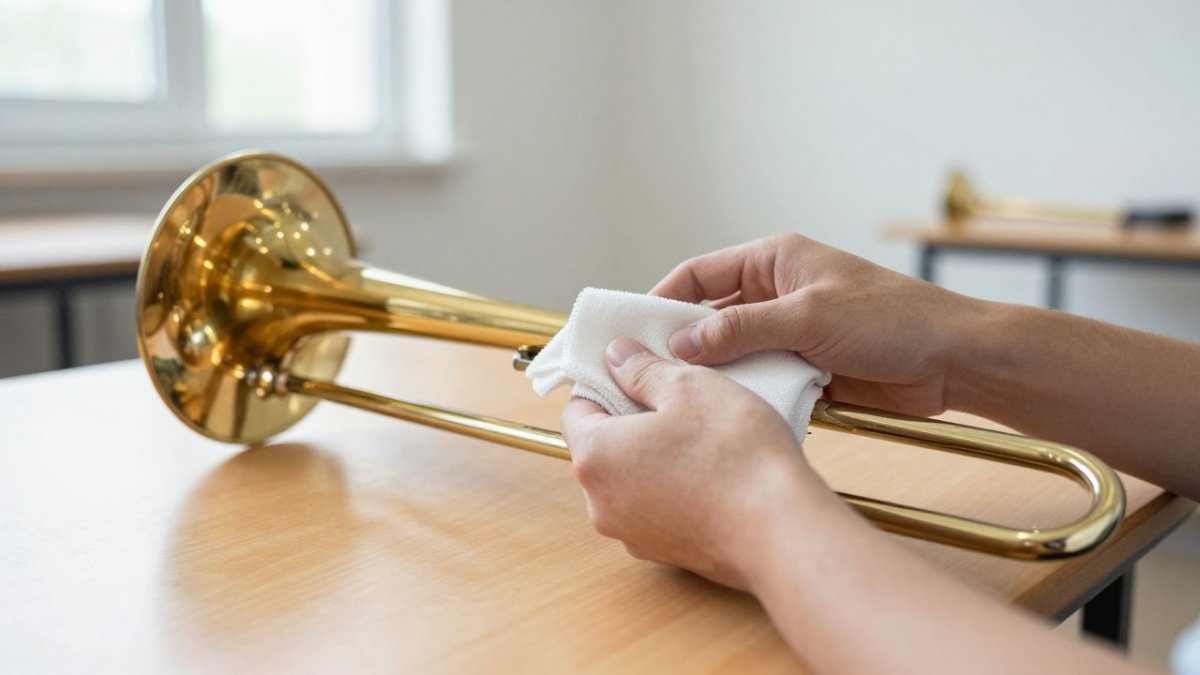
Next, apply a small amount of slide oil or cream to the thicker end sections of the inner slide. Use only a few drops, then move the slide in and out a few times to spread it evenly.
Finally, wipe away any excess with a clean cloth. The slide should feel smooth, not greasy. Too much lubricant can drip onto the bell, collect dust and cause the slide to feel sluggish.
Clean and dry the slide after each playing session, and check that the inner tubes are not coated in lubricant. A clean slide needs less oil, and it will move more smoothly.
Measured application: how much is a few drops?
A common pattern among players who over-oil is that they judge quantity by feel rather than by a fixed measure. A practical guide is two to three drops of slide oil per inner tube, or a pea-sized amount of slide cream spread thinly along the thicker end sections. Apply to the inner slide only, never directly into the outer tubes, and work the slide in and out a few times so the lubricant spreads evenly before wiping off the excess. If the slide feels greasy rather than smooth, you have used too much; wipe it down and start again with less.
Product-specific application
Oils, creams and hybrid products are not interchangeable and should be applied according to their own instructions. Thin slide oils spread easily and suit frequent, light application, so a few drops are usually enough. Slide creams are thicker and last longer between applications, so they need a thinner, more even film and benefit from being worked in thoroughly before the excess is wiped away. Hybrid products sit between the two and vary by maker, so follow the bottle or tube rather than assuming the same quantity as an oil. Using one product on top of another without cleaning first is a common cause of sticky residue.
A safe cleaning and reapplication procedure
When the slide needs fresh lubricant, clean before you reapply rather than adding oil over old residue:
- Wipe the outer slide with a soft, dry cloth to remove fingerprints and moisture.
- Run a clean cloth through the inner slide, or use a slide brush if the tubes feel gritty.
- Rinse or wipe away old lubricant residue until the tubes are clean and dry.
- Apply two to three drops of oil, or a thin film of cream, to the thicker end sections of the inner slide.
- Work the slide in and out a few times, then wipe away any excess with a clean cloth.
- Test the slide movement before putting the instrument away; it should feel smooth, not greasy.
Watch out: Do not apply fresh lubricant over old residue or mix different products without cleaning first. Layered lubricant is a common cause of a slide that feels sticky shortly after oiling, and it can be mistaken for a need for more oil.
Trombone Slide Oil vs Cream: Which Suits Your Instrument
Slide oil is thin and spreads easily, which makes it a good choice for players who want a light coat. Slide cream is thicker and tends to last longer between applications, so it suits players who play less often. Some players prefer a hybrid lubricant that combines both qualities.
Choose one made specifically for trombone slides rather than general-purpose lubricants.
Best for: Players who want a light, easy-to-apply lubricant for regular practice. Skip if: You play very rarely and want a product that lasts for weeks at a time.
Trombone Slide Cleaning and Maintenance Routine
A simple routine keeps your slide in good shape and reduces the need for frequent lubrication. Try this every few playing sessions:
- Wipe the outer slide with a soft cloth after each use
- Run a clean cloth through the inner slide to remove moisture and dirt
- Remove the slide and clean the tubes with a slide brush if they feel gritty
- Apply a small amount of lubricant to the inner slide once it is clean and dry
- Check the slide for smooth movement before putting the instrument away
Empty the water key regularly, as moisture can drip onto the slide and cause build-up. Store your trombone in its case away from direct heat and damp.
Risks of Over-Oiling and Lubricant Migration
Over-oiling is the most common problem with slide maintenance. Excess lubricant can travel down the slide and reach the outer tubes or the bell, where it collects dust and dirt. Over time, this build-up makes the slide harder to move, not easier.
Lubricant migration happens when too much oil spreads beyond the inner slide. You may notice a greasy film on the outer tubes or drops on the bell after playing. If this happens, clean the slide thoroughly and reapply only a few drops next time.
Too much lubricant can also affect your grip. Fingerprints and oil can make the slide slippery, which may affect how precisely you move it.
Watch out: Repeated over-oiling is a sign that you are using too much product, not that the slide needs more. Wipe off the excess and apply less next time.
Troubleshooting a Stiff or Sluggish Slide and Booking Your Next Check
If your slide still feels stiff after cleaning and oiling, check for dirt, dents or corrosion along the inner tubes. Wipe the slide again and reapply a small amount of lubricant. If the problem continues, the slide may need professional attention.
Hayes Music offers a full backup service and repair centre for brass and woodwind instruments, so a technician can check the alignment and condition of your slide. You can find more information about fast woodwind repair services that cover slide and valve issues in our full guide.
For players in the Hampshire area, our local musical instrument repair guide explains which services are available near you. If you want a full check of your trombone, you can also read our step-by-step guide to checking instrument setup, which covers the rest of the instrument.
Regular maintenance keeps your slide moving smoothly for years. Start with a clean slide, use a small amount of lubricant and book a professional check if something feels wrong.
Frequently Asked Questions
Is it safe to oil a trombone slide every day?
Oiling a trombone slide every day is generally safe if you use a very small amount of a proper slide lubricant and keep the inner and outer slide clean. The real risk comes from over-oiling, because excess lubricant spreads along the tubes, collects dirt and can build up into a sticky residue that makes the slide harder to move. Many players check the slide daily but only lubricate when it feels stiff or sluggish. If you find yourself needing lubricant every single day, it is worth having a technician look at the slide, since the cause may be dirt, wear or poor fit rather than a lack of oil.
How often should you lubricate a trombone slide?
Most players lubricate their trombone slide when it begins to move less freely, rather than on a fixed daily schedule. For regular players, a light application every few days to a week is typical, with a thorough clean carried out less often. Always wipe the slide dry after playing, and check the movement before each session. Frequency depends on how much you play, your playing environment and the lubricant you use, so adjust your routine to what the slide actually needs rather than following a rigid timetable.
Can too much trombone slide oil cause problems?
Yes. Too much oil can migrate along the slide, leaving a film that attracts dirt and dust and causes the slide to feel sticky rather than smooth. Excess lubricant can also reach the joints and inner sections where it is harder to remove. To avoid this, apply only a few drops to the thicker end sections of the inner slide, spread them with a light motion, and wipe off any surplus with a soft cloth before playing.