 How-to
How Long Does It Take to Learn Violin? A Realistic Timeline
Last Updated: 21 November 2026
Quick Summary
Most adults can play simple tunes on the violin within three to six months of regular practice, though learning to play well takes years. Most people reach a comfortable intermediate level after two to four years. Practising little and often helps you learn violin more steadily than cramming once a week.
- Most beginners can play a simple melody within three to six months.
- Most people reach a comfortable intermediate level after two to four years.
- Beginners should aim for 15 to 30 minutes of practice a day in year one.
- Ten minutes every day usually beats an hour once a week.
- Skipping posture work early often leads to tension that is hard to undo later.
Table of Contents
- How Long Does It Take to Learn Violin: The Short Answer
- Beginner Stage: The First Six to Twelve Months
- How Long Does It Take to Play a Song on Violin
- Intermediate Stage: Years Two to Four
- How Much Should a Beginner Practise Violin
- Violin Practice Routine for Beginners
- Learning Violin as an Adult: What Changes and What Stays the Same
- Booking Your First Violin and Lessons at Hayes Music
- Frequently Asked Questions
How Long Does It Take to Learn Violin: The Short Answer
Most adults can play simple tunes on the violin within three to six months of regular practice. Learning to play well takes years. Students who practise little and often tend to progress more steadily than those who cram once a week.
If you want a single figure, most people reach a comfortable intermediate level after two to four years. Your learning speed depends on how often you practise, the quality of your teacher, and your natural aptitude. Practice frequency matters most.
Factors that change your timeline:
- How many days a week you practise
- Whether you have a teacher, and how often you see them
- Your age and previous musical experience
- Your instrument's setup and whether it is comfortable to play
Beginner Stage: The First Six to Twelve Months
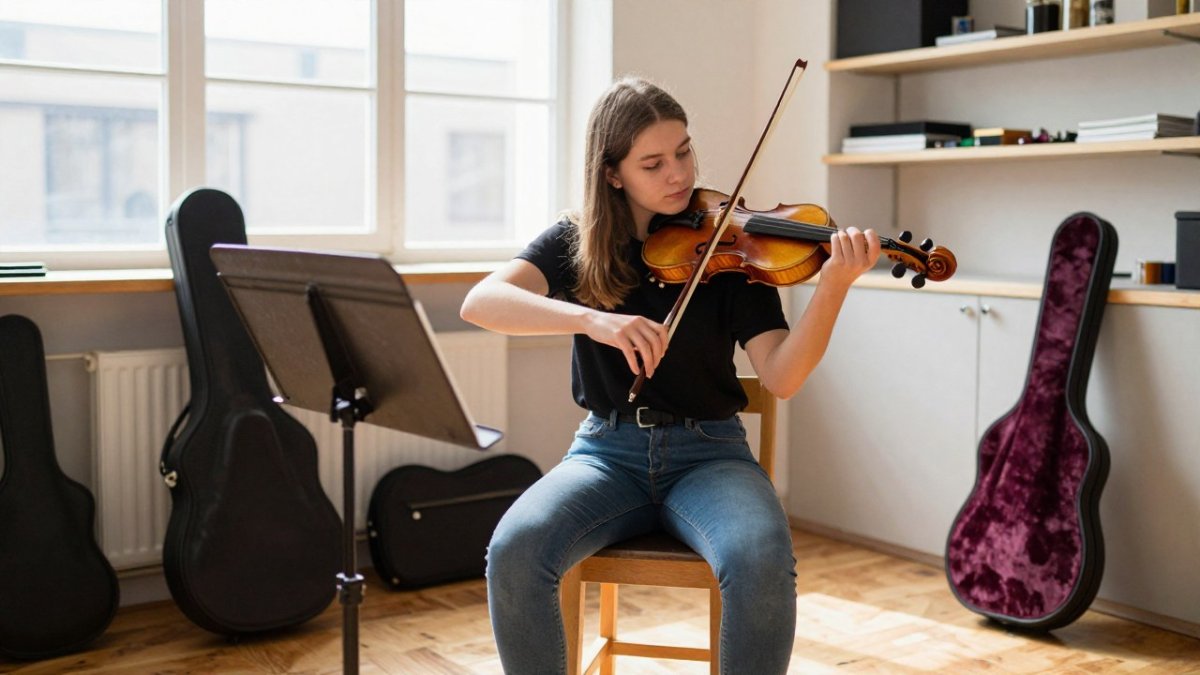
The first year is about building the basics. You will learn how to hold the bow, produce a clean sound, and read simple notes. Progress feels slow at first, because violin is a physically demanding instrument with very little margin for error.
Expect the following in your first year:
- Weeks one to four: Getting a steady bow hold and first open-string notes
- Months two to four: Playing simple scales and first short pieces
- Months five to twelve: Shifting into higher positions and playing with more control
Watch out: Skipping posture work in the first months often leads to tension that is hard to undo later.
Setting Up Your Instrument and Posture
A properly set-up violin makes early learning far easier. Strings that sit too high make pressing down painful, and a poorly fitted chin rest causes neck strain.
Good posture comes next. Keep your shoulders relaxed, your left wrist straight, and your bow arm loose. Practise in front of a mirror for a few minutes each session.
The first year follows a fairly predictable pattern, as summarised below.
| Period | Milestone | Typical focus |
|---|---|---|
| Weeks one to four | Steady bow hold and first open-string notes | Basic bow hold and sound |
| Months two to four | Simple scales and first short pieces | Scales and short pieces |
| Months five to twelve | Higher positions and more control | Shifting and control |
How Long Does It Take to Play a Song on Violin
Most beginners can play a simple melody, such as a short folk tune, within three to six months. Pieces with fast passages or unusual rhythms usually take longer.
Once you can play open strings and first-position notes, you can start on simple tunes. Choose songs that use only a few notes at first. This keeps your focus on tone and bowing rather than finger stretches.
Intermediate Stage: Years Two to Four
At this stage you will start playing more demanding repertoire. Shifting, vibrato and double stops become part of your routine. Many students also begin preparing for graded exams during this period, which gives structure to their practice.
Progress slows at this point, so set clear goals. A common mistake is repeating pieces you already know instead of tackling new technical challenges. Try one new skill each month, such as a new shift or a new bowing pattern.
How Much Should a Beginner Practise Violin
Most teachers recommend short daily practice rather than long weekly sessions. Many beginners find 15 to 30 minutes a day works well during the first year. As you progress, you can extend this to 45 to 60 minutes.
Consistency matters more than length. Ten minutes every day usually beats an hour once a week.
Violin Practice Routine for Beginners
A good beginner routine keeps sessions short and focused. Try this simple structure:
- Warm-up (5 minutes): Open strings and slow bow strokes
- Technique (5-10 minutes): Scales or finger exercises
- Repertoire (10-15 minutes): Your current piece, played slowly in sections
- Fun (5 minutes): Play a tune you enjoy
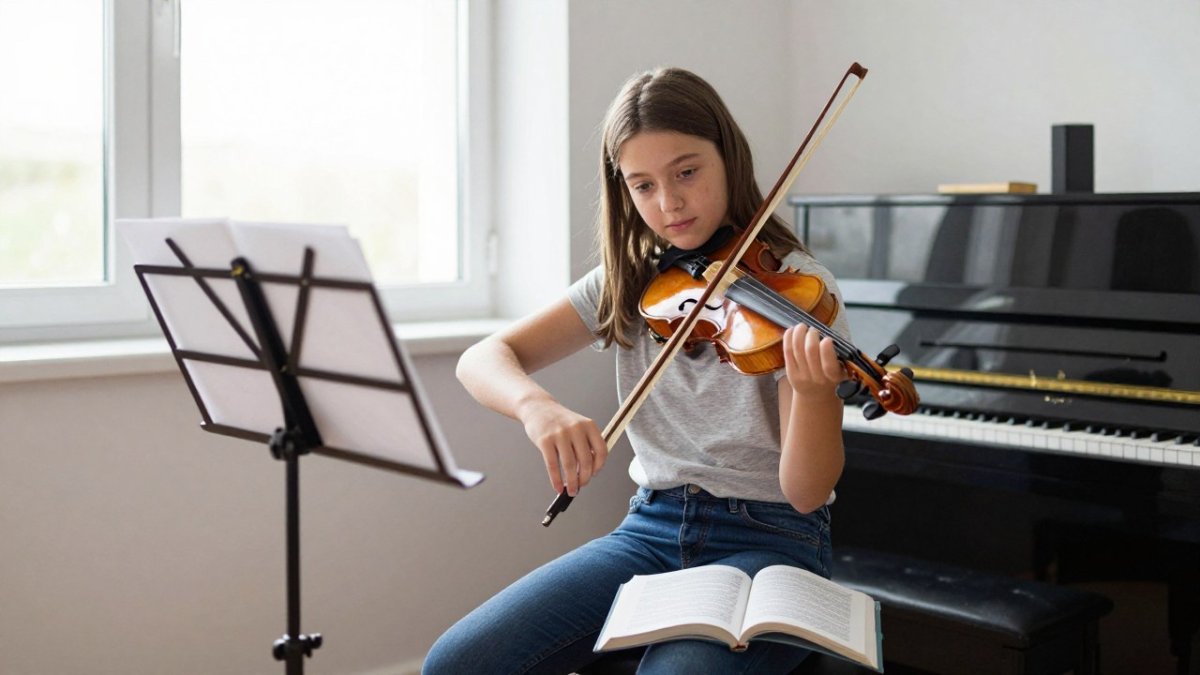
For sheet music, a standard orchestral or student method book gives you structured pieces to work through. Keep your music, rosin and spare strings together so you never lose practice time searching for them.
Learning Violin as an Adult: What Changes and What Stays the Same
Adults often learn violin as quickly as children in the early months, because they understand instructions and can practise with purpose. The main differences are time and the body. Adults may have less daily practice time, and stiffer hands or shoulders can slow down posture work.
What stays the same is the need for good habits. Adults who build a steady routine and get regular feedback from a teacher tend to progress steadily. Your motivation is often your biggest advantage.
Booking Your First Violin and Lessons at Hayes Music
Starting with the right instrument makes the first year much easier. Hayes Music can help you choose a beginner outfit that suits your size. Pricing depends on the instrument, accessories and any setup work, so please check our website or contact us for a current quote.
If you are buying for a young player, a fractional-size outfit fits better than a full-size instrument. You will also need a protective case for transport and storage. Visit our Hampshire showroom to try instruments in person.
Browse beginner violin outfits to see the options we stock for new players. A reader ready to start can also view the Hidersine Inizio 1/4 outfit for fractional-size student instruments.
Replacement strings are part of regular upkeep, so pick up a matching 3/4 string set when yours wear down. Keep your instrument safe with a protective violin case, and find graded orchestral and student music books to build a practice routine.
Starting violin is easier when you have the right instrument, a clear routine and expert support close by. Visit Hayes Music in Hampshire to try instruments before you buy, or ask our team for help choosing your first outfit.
Frequently Asked Questions
How long does it take to learn violin as a beginner?
Most beginners can produce a clean open-string sound and simple first-position tunes within the first few months of regular practice. Reaching a confident, reasonably in-tune level for basic pieces typically takes one to two years of steady lessons and daily practice. Progress varies with practice frequency, teacher quality and natural aptitude, so treat these as broad guides rather than fixed deadlines. Current prices depend on the model and any accessories, so check the website or ask for a quote.
Can adults learn to play the violin?
Yes. Adults can learn violin at any age and often progress quickly because they can understand technique and set realistic goals. Adults usually need more patience with bow control and left-hand finger strength, which take consistent short sessions to develop. Lessons with a teacher who understands adult learners make a noticeable difference. A regular routine of even 20 to 30 minutes a day tends to build skill faster than occasional long sessions.
How many hours a day should a beginner practise violin?
Most teachers recommend 15 to 30 minutes a day for beginners, practised consistently rather than in one long block. Short daily sessions help with posture, bow control and finger placement without causing tension or fatigue. As skills develop, sessions can gradually lengthen. Quality matters more than duration, so focus on slow, accurate playing during each session.
Is violin harder to learn than piano?
Violin is generally considered harder to start because you must find correct pitches with your fingers and control the bow at the same time, with no fixed keys to guide you. Piano makes early notes easier to produce and hear. Violin rewards patience with a more expressive, nuanced sound once technique settles. Many students find the first year the most challenging, after which progress feels more steady.