 blog
blog
Best Clarinet Reeds for Beginners: 2026 Guide
Table of Contents
- What Makes a Clarinet Reed Right for a Beginner
- Clarinet Reed Strength Guide: Choosing the Right Number
- Cane or Synthetic: Which Reed Suits a New Player
- How to Break In Clarinet Reeds So They Last Longer
- How to Choose the Best Clarinet Reeds for Beginners in Store
- Caring for Reeds: Storage, Rotation and Replacement
- Conclusion
- Frequently Asked Questions
Last Updated: September 11, 2026
What Makes a Clarinet Reed Right for a Beginner
Ask any woodwind teacher what causes the most frustration in a beginner's first term, and they will not say the notes or the fingerings. They will say the reed. This guide from Hayes Music is built around that single fact: the best clarinet reeds for beginners are the ones that let a new player make a sound on day one, then keep making it for weeks.
A clarinet reed is a thin strip of cane that vibrates against the mouthpiece to produce sound. Its strength, cut and condition decide how much effort a player must apply before the instrument responds.
Here is the part most guides get wrong. Beginners do not need the same quality of reed as a conservatoire student. They need consistency, a softer strength, and a reed that forgives an unsteady embouchure. Buy too hard and the instrument fights back.
Yamaha's guide to clarinet reeds and mouthpieces
Clarinet Reed Strength Guide: Choosing the Right Number
Reed strength is measured on a numbered scale, and for a new player the number matters more than the brand. Most beginners start at 1.5 or 2 and move up only when their tone has settled (yamaha.com).
Strength 1.5 and 2: The Usual Starting Point
A 1.5 or 2 reed vibrates easily, so a beginner can produce a note without clamping down. The trade-off is a slightly thinner, less controlled tone, which is exactly the right compromise in the first few months. Strength 2 is the most common starting point for players aged roughly ten and above; younger players often do better on 1.5.
Signs Your Reed Is Too Hard or Too Soft
- Too hard: no sound at all, a thin squeak, or a face that aches after ten minutes
- Too soft: a buzzy, honking tone that collapses on low notes and closes up on high ones
- Just right: the note speaks with steady breath pressure and the pitch stays stable
A common mistake is treating a hard reed as a sign of progress. It is not. It is a sign the player is working against the instrument rather than with it.
Cane or Synthetic: Which Reed Suits a New Player
Cane reeds are the traditional choice and the right one for most beginners, because they teach a player to listen and adjust. They are also cheap enough to replace without guilt. Their weakness is variability: two reeds from the same box can behave completely differently.
Synthetic reeds are made from a moulded polymer and play the same way every time. For a beginner who practises in short bursts and cannot yet tell a bad reed from a bad day, that consistency has real value. The drawbacks are a brighter tone and a higher upfront cost per reed.
| Reed Type | Consistency | Tone | Best For |
|---|---|---|---|
| Cane | Varies reed to reed | Warm, traditional | Most beginners, ensemble playing |
| Synthetic | Identical every time | Brighter, more direct | Players who practise irregularly |
Most teachers still recommend starting on cane and keeping one synthetic in the case as a backup for exam day.
How to Break In Clarinet Reeds So They Last Longer
Break in a new reed slowly and it will play well for longer. The fibres need to absorb moisture gradually rather than being soaked on first use.
The method is simple. Wet the reed for a minute, play it for five to ten minutes, then let it dry flat (yamaha.com). Repeat this over three or four days, adding a few minutes each session. Never leave a new reed soaking in a glass of water, and never play a fresh reed for an hour straight.
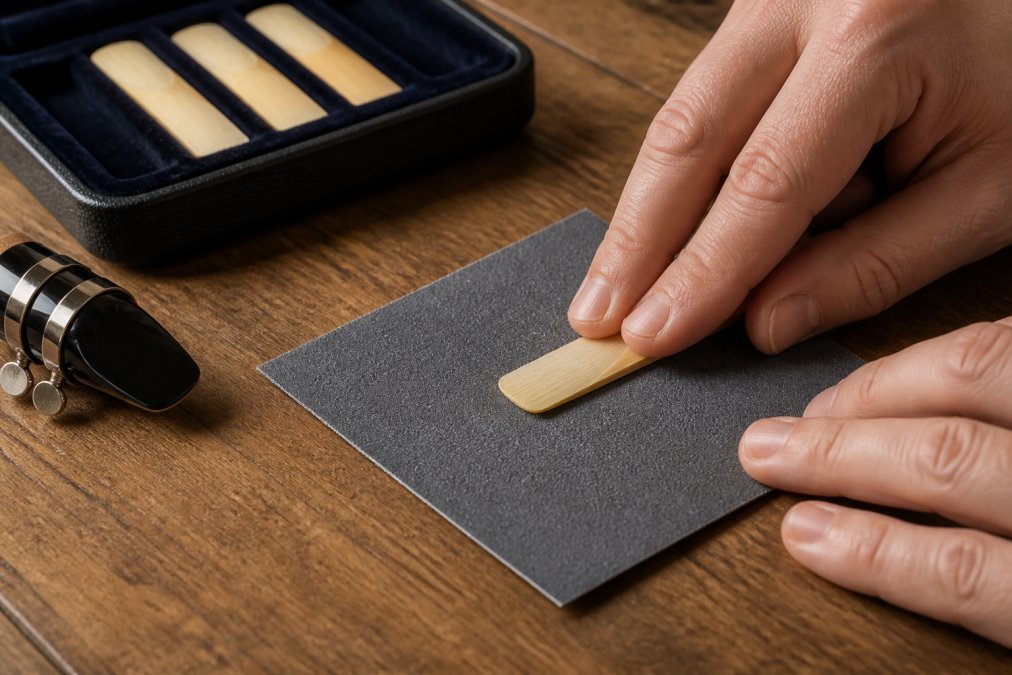
The thing nobody tells you about breaking in reeds is that the first session matters least. It is the third and fourth short sessions that settle the reed into its final shape.
How to Choose the Best Clarinet Reeds for Beginners in Store
Buying in person beats buying blind, and this is where a physical shop earns its keep. You can compare strengths side by side, check the cut of the reed against the mouthpiece, and ask someone who plays.
A practical in-store checklist:
- Bring your mouthpiece, not just the instrument
- Ask to try a 1.5 and a 2 in the same brand
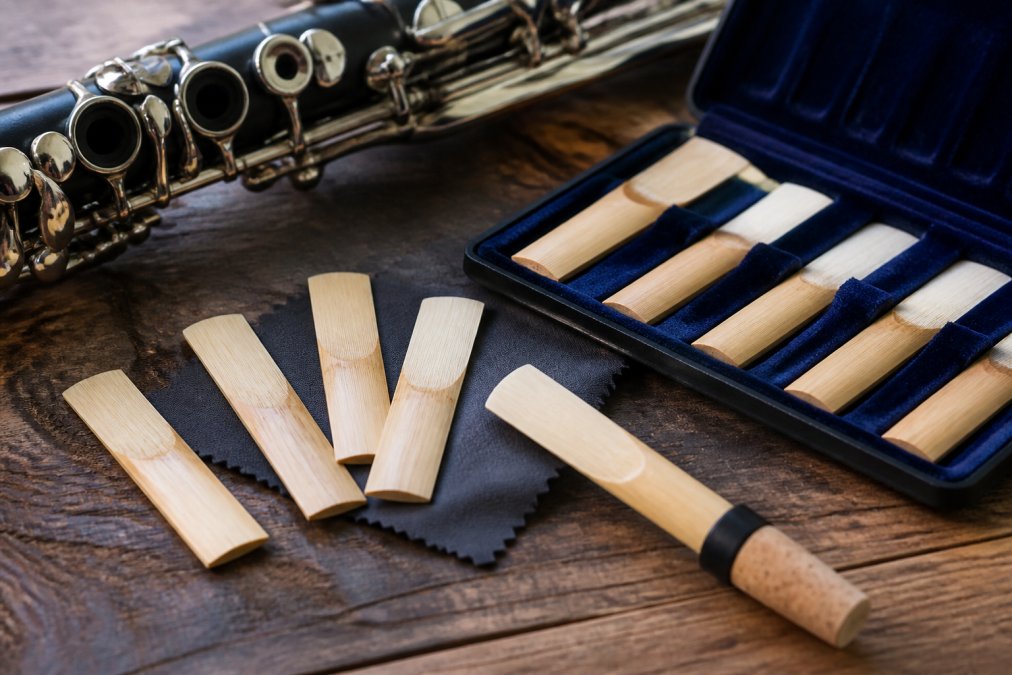
- Hold the reed up to the light: look for even, straight grain
- Check the tip is square and undamaged
- Buy a box of ten, not a single reed, so you can rotate
Hayes Music keeps a dedicated practice room in its showroom, so a beginner can play a reed before committing to a box. Staff can also check that the reed sits correctly on the mouthpiece, which rules out one of the most common setup problems.
Caring for Reeds: Storage, Rotation and Replacement
Rotate at least three reeds at a time and each one lasts noticeably longer. Playing one reed to death in a single week is the fastest way to burn through a box.
Store reeds flat in a ventilated reed case, never loose in the instrument case where the tip can catch. After playing, wipe the reed, let it dry, and put it back. A reed that stays damp grows mould and turns black at the heel.
Replace a reed when the tip chips, when it goes soft and flat within minutes, or when the grain looks warped. For a beginner practising daily, expect to retire reeds regularly. That is normal, not a sign of poor technique.
Conclusion
The gap between a beginner who sticks with the clarinet and one who gives up is often nothing more than a reed that works. Get the strength right, break it in slowly, rotate what you own, and the instrument stops being a fight.
At Hayes Music, we stock beginner reeds across the common strengths, and run a full repair centre for brass and woodwind if something needs adjusting. Our showroom has free on-site parking and an extensive music library for exam publications.
Get started with Hayes Music and find the reed that makes your first note an easy one.
Frequently Asked Questions
What reed strength is best for a beginner clarinet player?
Most beginners start on a strength 1.5 or 2 reed. These are soft enough to produce a sound without pressing hard, which helps you build embouchure strength gradually. As your mouth muscles develop over the first few months, you can move up to a 2.5. A teacher or a specialist retailer can advise on the right moment to change, since it depends on your mouthpiece and how much you practise.
How often should a beginner change their clarinet reed?
A beginner playing 20 to 30 minutes a day will usually get one to two weeks from a cane clarinet reed. Rotate three or four reeds at a time so each one dries out fully between uses, which extends their life. Replace a reed when it looks warped, feels soft in the middle, or the tone turns thin and fuzzy. Buying reeds in boxes of ten keeps you stocked.
Are synthetic reeds better for beginners than cane?
Synthetic reeds last far longer and do not need breaking in, which suits players who dislike maintenance. However, most teachers still recommend starting on cane because it teaches you how reed condition affects tone and response. A common approach is to use cane for practice and lessons, then keep a synthetic reed as a spare for school concerts or exams where reliability matters more than subtle tone.
How do I know if my clarinet reed is too hard?
If you run out of breath quickly, the tone sounds stuffy, or you cannot play low notes without straining, the reed is probably too hard. A reed that is too hard forces you to bite, which tires your jaw and can push your pitch sharp. Try a softer strength, or check that the reed is properly moistened and aligned before assuming the strength is wrong.