 blog
Essential Accessories for New Saxophone Players
Table of Contents
- Why Essential Accessories Matter for Saxophone Players
- Best Saxophone Reeds for Beginners
- Saxophone Maintenance Kit Essentials
- How to Clean a Saxophone After Playing
- Neck Straps, Cork Grease, and Key Oil
- Building Your Accessory Collection Over Time
- Frequently Asked Questions
Last Updated: September 25, 2026
Why Essential Accessories Matter for Saxophone Players
When you first pick up a saxophone, you're focused on learning to play. But beginners often overlook one crucial reality: the right accessories transform your experience. A struggling student with poor maintenance tools will fight the instrument constantly. The same player with proper care items suddenly has better tone, fewer mechanical issues, and genuine enjoyment.
Essential accessories for new saxophone players aren't luxuries, they're foundational. They protect your investment, extend your instrument's life, and directly affect how you sound. Without them, you're essentially trying to perform surgery with a butter knife.
At Hayes Music, we've observed that students who invest in basic accessories often progress faster and stick with the instrument longer. Those who skip them can sometimes hit frustration walls that could have been avoided entirely.
This guide breaks down exactly which accessories matter most, what each one does, and how to build your collection without overspending. You'll know precisely what to buy first and what can wait.
Best Saxophone Reeds for Beginners
The reed is your saxophone's voice. It vibrates to create sound, and a poor reed makes even good players sound amateurish. For beginners, the right reed choice matters more than most realise.
Most new players assume all reeds are basically the same. They're not. Reeds vary by strength (thickness), cut, and material. A reed that's too hard feels impossible to play and discourages practice. One that's too soft produces a thin, squeaky sound.
Beginners typically need softer reeds, usually 1.5 to 2.0 strength. These require less air pressure and embouchure control, making them ideal when you're still building mouth muscles and technique. Harder reeds (2.5+) are for intermediate and advanced players with the physical stamina to support them.
Quality matters enormously. Cheap reeds often have inconsistent cut, uneven strength, and they wear out quickly. Better reeds hold their voice longer and feel more responsive under your fingers. The investment in reliable reeds pays back immediately through better sound and fewer frustrations.
Store reeds properly, in a reed case with humidity control, never loose in a box. A damaged reed is a wasted reed. Many beginners learn this the hard way.
Hayes Music stocks a range of beginner-appropriate reeds from established manufacturers. Getting the right strength for your embouchure makes an immediate, audible difference in your tone.
Saxophone Maintenance Kit Essentials
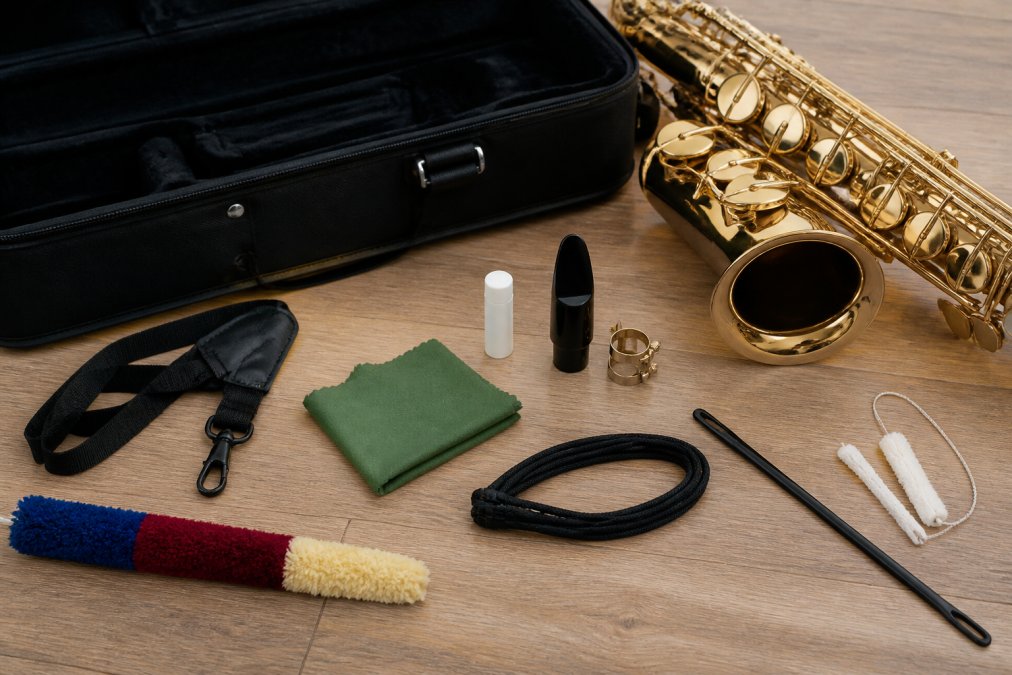
A proper maintenance kit is the difference between an instrument that lasts decades and one that deteriorates within months. The core items are simple, but each one serves a specific purpose.
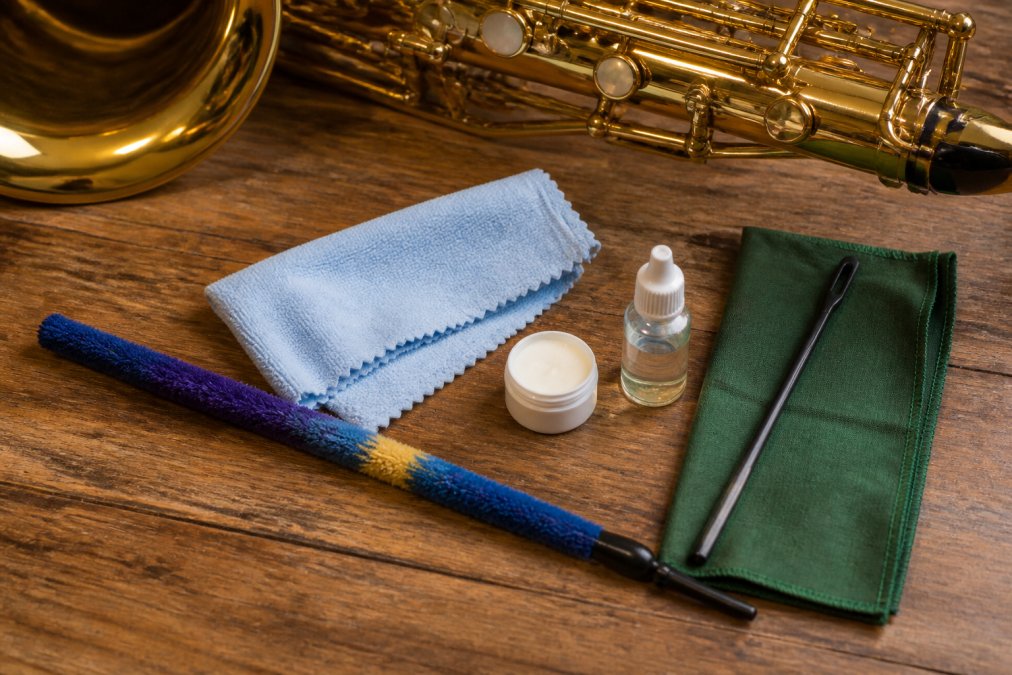
Cleaning swab, This removes moisture from inside the saxophone after you play. Moisture left inside causes pads to swell, springs to rust, and tone holes to clog. A swab takes 30 seconds and prevents hundreds of pounds in repairs. Cotton swabs work, but microfibre swabs are gentler on pads and dry faster.
Cleaning rod, Used with the swab to reach deep into the saxophone's bore. Without a rod, you can't properly dry the instrument. Choose one with a soft grip, metal rods can scratch the interior if you're not careful.
Cork grease, The cork at the neck where the mouthpiece sits dries out over time. Grease keeps it flexible and prevents cracking. A small tin lasts months. Apply sparingly, too much grease attracts dust.
Key oil, Saxophone keys need lubrication to move smoothly. Sticky keys create sluggish response and eventually jam. Use only key oil designed for saxophones; general-purpose oils attract dirt and gum up mechanisms. A tiny bottle lasts a long time.
Polishing cloth, Wipes fingerprints and moisture from the exterior. Regular polishing keeps lacquer looking new and prevents tarnish. Use a soft, lint-free cloth, rough fabrics scratch the finish.
These five items form the foundation. A complete kit costs less than a single lesson and prevents the majority of preventable damage.
How to Clean a Saxophone After Playing
Cleaning your saxophone properly takes five minutes and prevents 90% of mechanical problems. Here's the exact process:
Immediately after playing, While the instrument is still slightly warm, run your cleaning swab through the bore. Attach the swab to your cleaning rod, feed it gently through the saxophone from the bell upward, and pull it out slowly. This removes moisture before it settles on pads.
Dry the mouthpiece and neck, Use a separate cloth to wipe the mouthpiece and the neck's exterior. Moisture collects here and promotes mould growth. If your mouthpiece is removable, detach it and dry the cork separately.
Wipe down the body, Use a soft cloth to remove fingerprints and sweat from the saxophone's exterior. This prevents lacquer damage and keeps the instrument looking new.
Open the case and leave it ajar, Never close your case immediately. Any remaining moisture needs to evaporate. Leave the case open for 10-15 minutes before putting the saxophone away.
Weekly deep clean, Once a week, use a slightly damp (not wet) cloth to gently clean tone holes. Dust and moisture accumulate here. Never use water directly on the saxophone itself.
This routine prevents pad swelling, spring corrosion, and tone hole blockages. It's the single most effective thing you can do to keep your instrument in playing condition.
Neck Straps, Cork Grease, and Key Oil
These three items often get overlooked because they seem minor. They're not. Each one directly affects your comfort and your instrument's longevity.
Neck straps, A properly fitted strap supports the saxophone's weight and prevents neck strain. Beginners often play with poor posture because they're holding the instrument with their hands instead of letting the strap do the work. A padded strap distributes weight evenly across your neck and shoulders. After an hour of playing, you'll feel the difference. Look for straps with adjustable length and quality padding, cheap ones dig into your neck.
Cork grease, The cork at the mouthpiece joint is exposed to constant friction. Without grease, it cracks within months. A cracked cork creates an air leak that affects tone and makes the mouthpiece difficult to remove. A small tin of cork grease costs very little and prevents a costly cork replacement. Apply a thin layer every few weeks.
Key oil, Saxophone keys are precision mechanisms. Without proper lubrication, they stick, squeak, and eventually jam. Use only saxophone key oil, it's formulated to stay on the mechanism without attracting dirt. A single tiny bottle lasts months. Apply sparingly to pivot points and springs. Over-oiling is worse than under-oiling; excess oil collects dust and gums up the mechanism.
Many beginners skip these items because they seem optional. They're not. These three items are as essential as the reeds you play on.
Building Your Accessory Collection Over Time
You don't need to buy everything at once. A smart approach is to start with essentials and add items gradually as your needs become clear.
Month one, Buy a cleaning swab, cleaning rod, cork grease, and a quality reed or two. These four items cost relatively little but prevent the majority of problems. Add a neck strap if your current one is uncomfortable.
Month two or three, Add key oil and a polishing cloth. By now, you'll understand your instrument's needs better and can choose items that match your playing style.
Month four and beyond, Consider specialist items: a humidified reed case if you're buying reeds in bulk, a professional maintenance kit, or a mouthpiece cap. These add convenience but aren't urgent for beginners.
This phased approach lets you learn what you actually need instead of guessing. You'll also discover preferences, some players prefer certain brands of reeds, others have strong opinions about strap padding.
Hayes Music stocks beginner-friendly accessory bundles that combine the essentials. Starting with a bundle often makes more sense than buying items individually, especially when you're learning what matters most.
Getting started with the saxophone is exciting, but it's also an investment in both time and money. The accessories you choose determine whether that investment pays off or whether frustration sets in. Essential accessories for new saxophone players aren't optional extras, they're the foundation that lets you focus on actually learning to play.
The good news is that none of this is complicated or expensive. A basic maintenance routine, the right reeds, and a few quality tools will keep your saxophone in excellent condition for years. Hayes Music can help you find exactly what you need at every stage of your journey. Whether you're just starting out or progressing beyond the basics, having the right accessories makes the difference between struggling with your instrument and enjoying the process of learning.
Frequently Asked Questions
What accessories do I need to start playing the saxophone?
As a new player, you need reeds, a neck strap, cork grease, a cleaning swab, and a polishing cloth at minimum. A maintenance kit containing these items plus key oil and a brush will cover most basic care. You can add specialist items like a reed case or mouthpiece brush as you progress. The specific accessories depend on your saxophone model and playing frequency.
How often should I change my saxophone reeds?
Beginner reeds typically last 3-6 weeks with regular practice (30-60 minutes daily). They wear out faster with heavier playing or if damaged. Signs of a worn reed include difficulty producing sound, squeaking, or uneven tone across the range. Store reeds flat in a reed case to extend their life. Keeping spare reeds on hand prevents interruptions to your practice.
What should be in a saxophone maintenance kit?
A complete maintenance kit includes a cleaning swab, polishing cloth, cork grease, key oil, a small brush for pads, and a mouthpiece brush. Some kits add a reed case and valve oil. These items protect your instrument's pads, keys, and cork from damage and keep the mechanism moving smoothly. Regular maintenance prevents costly repairs and extends your saxophone's lifespan significantly.
Is cork grease necessary for saxophone playing?
Yes, cork grease is essential for beginners. It lubricates the cork on the mouthpiece and neck joint, making assembly easier and preventing air leaks that affect tone. Without grease, the cork can dry out and crack, requiring expensive replacement. A small tin lasts months, so it's a low-cost investment that protects your instrument and improves playability immediately.