 blog
blog
Best Keyboard for Home Music Practice
Table of Contents
- What Makes a Keyboard Suitable for Home Practice
- Weighted Keys vs Synth Action: Which Works Best for Your Playing
- Key Specifications to Consider When Choosing a Practice Keyboard
- Best Keyboard Accessories for Home Practice
- Common Mistakes When Setting Up Your Home Practice Space
- Matching Your Budget to Your Practice Goals
- Frequently Asked Questions
Last Updated: 20 September 2026
What Makes a Keyboard Suitable for Home Practice
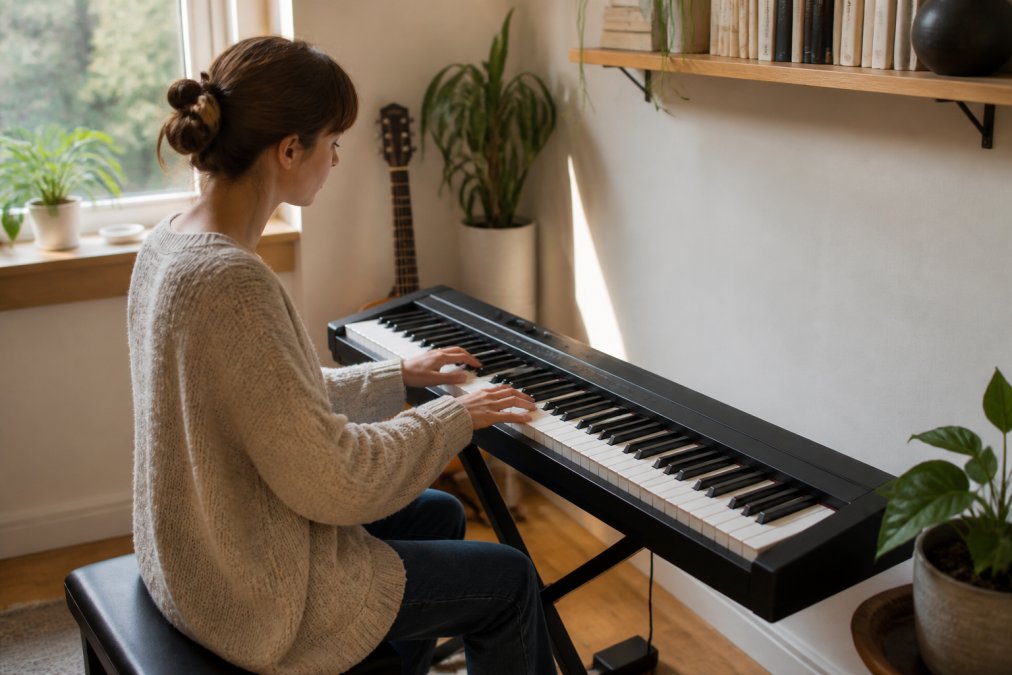
A keyboard for home music practice is an instrument designed to help musicians develop technical skills, learn music theory, and prepare for performance in a domestic setting. The best keyboards balance affordability with sound quality, touch responsiveness, and durability, essential when you're spending hours each week developing your craft.
Home practice keyboards differ from professional stage instruments in several important ways. They're built for consistency rather than portability, with weighted keys that simulate acoustic piano touch. They typically include a variety of built-in sounds, recording features, and connectivity options that support learning.
When you're selecting a keyboard for home practice, you're making an investment in your musical development. The right instrument keeps you motivated through repetitive exercises and challenging pieces. A poor choice can frustrate your progress and discourage regular practice.
Hayes Music stocks a comprehensive range of keyboards suited to home practice, from entry-level models through to professional-grade instruments. Our team can help you identify which specifications matter most for your specific musical goals and budget.
Weighted Keys vs Synth Action: Which Works Best for Your Playing
The fundamental choice when selecting a keyboard for home music practice comes down to how the keys respond to your touch. Weighted keys simulate the hammer mechanism of an acoustic piano, requiring more finger strength and offering natural resistance. Synth action keys are lighter and faster, designed for rapid playing and effects manipulation.
Weighted keys are the better choice if you're training for classical piano or developing strong finger technique. They build hand strength and teach proper touch dynamics. The resistance forces you to use correct technique, you can't fake your way through scales or arpeggios. Many musicians find weighted action more satisfying for serious practice work because it demands precision.
Synth action keyboards suit players working with contemporary music, electronic production, or jazz improvisation. They respond quickly to fast playing and work better with controllers and production software. If you're layering sounds, triggering samples, or playing rapid passages, synth action won't slow you down.
The middle ground is semi-weighted action, which offers some resistance without full piano simulation. It's a practical compromise for players who practise multiple styles or want flexibility without committing fully to either approach.
Your playing style and musical goals should drive this decision. If you're unsure, visiting a showroom where you can test both types makes an enormous difference. Hayes Music offers a dedicated practice room where you can try different weighted and synth action keyboards side by side.
Key Specifications to Consider When Choosing a Practice Keyboard
Number of Keys and Octave Range
Most home practice keyboards come with 61, 76, or 88 keys. The number you need depends on what you're learning and the space available in your practice area.
Eighty-eight keys is the full piano standard. If you're learning classical piano pieces, studying for exams, or want maximum flexibility, 88 keys gives you the complete range without compromise. Professional pianists and serious students typically choose this option.
Seventy-six keys cover most contemporary music, jazz standards, and intermediate repertoire. This size balances functionality with space efficiency, it fits comfortably in smaller rooms without sacrificing range.
Sixty-one keys is the most compact option, suitable for beginners, children, and players with limited space. Many entry-level keyboards for home music practice start at this size. You'll eventually outgrow 61 keys if you pursue serious study, but it's a sensible starting point for young learners.
Touch Response and Built-in Sounds
Touch response refers to how the keyboard registers the speed and force of your playing. Better touch sensitivity means the keyboard responds to subtle variations in how hard you press each key, allowing you to control volume and tone expressively.
A keyboard for home music practice should include touch response adjustment settings. This lets you match the keyboard's sensitivity to your playing style and gradually develop more nuanced technique.
Built-in sounds matter more than many beginners realise. You need convincing piano, electric piano, and organ sounds at minimum. Additional sounds like strings, brass, and pads expand what you can practise. Quality matters, cheap, thin-sounding samples can make practice feel uninspiring.
Look for keyboards offering a variety of sounds. This gives you variety without overwhelming complexity. Layering sounds (playing two sounds simultaneously) adds depth to practice sessions.
Best Keyboard Accessories for Home Practice
The keyboard itself is just the beginning. Strategic accessories transform your practice setup from functional to genuinely useful.
A quality sustain pedal is non-negotiable. It mimics the piano's sustain function, allowing notes to ring and blend. Many entry-level keyboards include a basic pedal, but upgrading to a weighted pedal improves responsiveness and feels more natural under your foot.
A proper music stand keeps sheet music at eye level, preventing neck strain during long practice sessions. Flimsy stands frustrate more than they help. Invest in a sturdy, adjustable stand that won't wobble when you're concentrating.
Headphones let you practise without disturbing others. Closed-back headphones isolate sound, whilst open-back models sound more natural for longer sessions. Comfort matters, you'll be wearing them for hours. Many serious practitioners keep two pairs: one for comfort during extended practice, another for monitoring sound quality during recording.
A keyboard stand provides stability and proper height adjustment. Playing on a table forces awkward posture. A dedicated stand positions the keyboard at the right height for your arms and shoulders, preventing injury and promoting good technique.
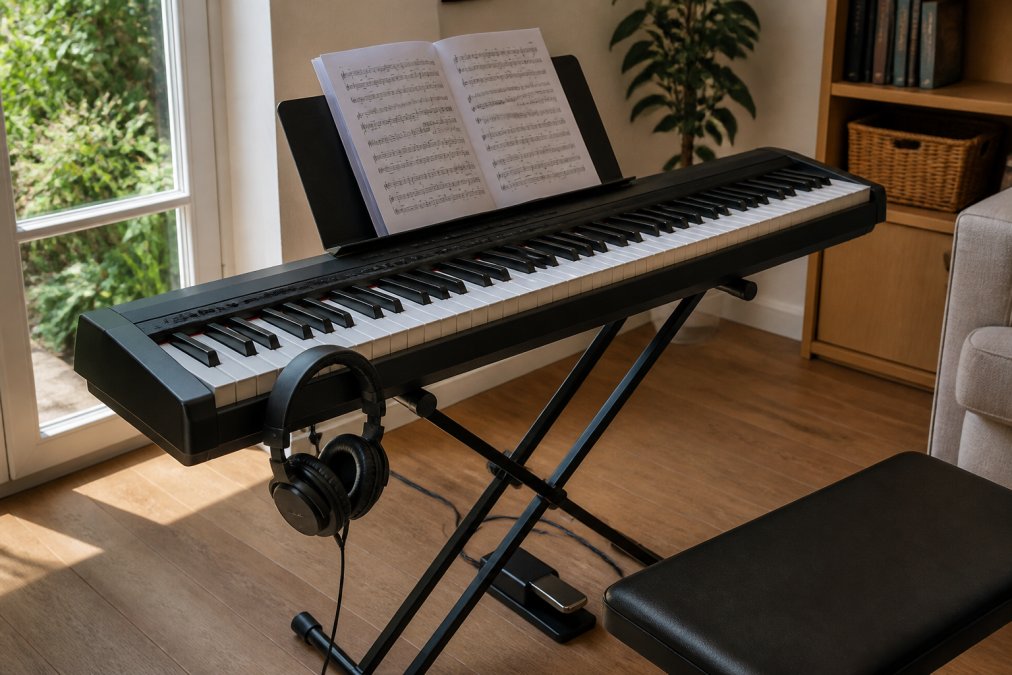
Recording capability matters more than beginners expect. Built-in recording lets you capture practice sessions and review them later. You'll hear mistakes you miss whilst playing and track your progress over weeks. USB connectivity lets you record directly to your computer using music software.
A footstool helps with proper posture, especially for younger players. Your feet should rest comfortably on the floor or a footstool, dangling feet create tension that travels up your legs and back.
Common Mistakes When Setting Up Your Home Practice Space
Most people make predictable errors when establishing their first practice area. Recognising these mistakes helps you avoid wasting money and time.
Placing the keyboard against a wall is a common mistake. Sound reflects off the wall, creating acoustic problems that make it harder to hear what you're actually playing. Position your keyboard in the middle of the room or at least a metre from the nearest wall.
Insufficient lighting leads to eye strain and poor posture. You'll lean forward to read sheet music if the light is dim. Proper lighting, ideally natural light from a window, supplemented with a desk lamp, makes reading easier and keeps you sitting upright.
Ignoring bench height causes back and shoulder problems. Your elbows should sit at roughly the same height as the keyboard when you're sitting (Working safely with display screen equipment). Too high or too low creates tension that builds over months and can cause injury.
Practising in a noisy environment makes it harder to hear subtle mistakes. If you can't hear the difference between a clean performance and a sloppy one, you can't improve. Headphones help, but a quieter space is better.
Choosing a keyboard for home music practice without considering your actual practice habits wastes money. If you're a casual player who practises twice weekly, investing in a professional-grade instrument is unnecessary. Match your equipment to your commitment level.
Matching Your Budget to Your Practice Goals
Your budget should reflect your musical ambitions and practice frequency, not just what you can afford upfront.
Casual players who practise occasionally need a reliable keyboard for home music practice with decent sounds and touch response. Entry-level instruments deliver this without unnecessary features. You'll spend less but still get a functional practice tool.
Serious students preparing for exams or performance need weighted 88-key keyboards with responsive touch and quality sounds. The additional investment in better build quality and realistic action pays dividends when you're practising several hours daily. This is your primary musical tool, it should support your goals.
Professional musicians need instruments matching their performance standards. Sound quality, touch responsiveness, and build durability become critical. Many professionals maintain separate practice and performance keyboards, allocating budget accordingly.
The hidden costs matter. A keyboard for home music practice needs a stand, pedal, headphones, and music stand. Budget for these essentials alongside the instrument itself. Hayes Music can advise on complete setups within your budget, ensuring you're not surprised by unexpected costs.
Avoid the false economy of buying the cheapest option. A budget keyboard that frustrates you sits unused. A slightly more expensive instrument that feels good under your hands and sounds inspiring keeps you practising. The difference in cost is often small but the difference in motivation is substantial.
Frequently Asked Questions
Do I need weighted keys for home music practise?
Weighted keys simulate the resistance of an acoustic piano, helping develop proper finger technique and hand strength. If you're learning classical piano or plan to perform on traditional pianos, weighted keys are valuable. For other genres or casual practise, synth-action keyboards work well and cost less. Your goals and budget should guide this choice.
What is the difference between a digital piano and a keyboard?
Digital pianos focus on replicating acoustic piano sound and feel with weighted keys, pedals, and limited voices. Keyboards offer lighter touch, more built-in sounds and effects, and greater versatility for different genres. Digital pianos suit serious classical study; keyboards suit hobbyists exploring multiple styles. Choose based on your musical direction.
How many keys should a beginner keyboard have?
Most beginners start with 61 keys, which covers five octaves and suits learning standard melodies and songs. If you plan to study classical piano formally, 88 keys (full piano range) is worth considering. For experimentation and non-classical styles, 49 or 61 keys is adequate and more affordable and portable.
What accessories do I need for my home practise setup?
Essential accessories include a sturdy stand, headphones for quiet practice, a sustain pedal, and a music stand. A bench with proper height adjustment protects posture during long sessions. Cable organisers, a keyboard cover for dust protection, and quality cables reduce clutter and equipment wear. Start with stand, headphones, and pedal; add others as your practice evolves.
Selecting the right keyboard for home music practice shapes your musical journey. The best choice matches your playing style, your space, and your commitment level. Visit Hayes Music to try different keyboards in our dedicated practice room. Our team has helped countless musicians find the right instrument for their needs, we'll help you identify which specifications matter most for your goals and show you complete setups that deliver real value.