 blog
Best Beginner Percussion for Toddlers
Table of Contents
- Why Beginner Percussion for Toddlers Matters
- Safe Musical Toys for 1-3 Year Olds: What to Look For
- How to Introduce Rhythm to Toddlers
- Shakers and Maracas for Young Learners
- Drums and Tambourines for Toddler Exploration
- Xylophones and Glockenspiels: First Pitched Instruments
- Choosing the Right Instrument for Your Toddler
- Frequently Asked Questions
Last Updated: September 28, 2026
Why Beginner Percussion for Toddlers Matters
Music development in young children starts earlier than many parents realise. Introducing rhythm and sound to toddlers between one and three years old builds neural pathways that support language development, motor skills, and emotional expression. The best beginner percussion for toddlers isn't about creating musicians, it's about giving them tools to explore cause and effect, develop hand-eye coordination, and experience the joy of making noise.
At Hayes Music, we've worked with parents and educators, helping them choose instruments that genuinely engage toddlers rather than sit unused in a cupboard. The right percussion instruments for this age group are safe, durable, and designed specifically for small hands and developing coordination. They should sound appealing enough to hold attention but not so loud they startle or frustrate.
This guide covers the best beginner percussion for toddlers, what makes an instrument suitable for this age group, and how to introduce rhythm in ways that stick.
Safe Musical Toys for 1-3 Year Olds: What to Look For
When selecting percussion instruments for toddlers, safety and durability come first. Toddlers explore the world by putting things in their mouths, dropping them, and testing their limits. Any instrument you choose must withstand this treatment.
Look for percussion toys made from solid wood or high-quality plastic with no small parts that could detach and become choking hazards. Avoid instruments with sharp edges, loose strings, or finishes that chip easily. Paint and varnish should be non-toxic and food-safe, this matters because toddlers will chew on handles and mallets.
Sound quality matters more than you'd expect. A tinny, harsh sound teaches toddlers to associate music with unpleasant noise. Well-tuned instruments with warm, resonant tones encourage repeated exploration and longer play sessions. The volume should be loud enough to be satisfying but not so loud it causes discomfort or startles them.
Weight is critical. Toddler hands are still developing strength and coordination. An instrument that's too heavy becomes frustrating rather than fun.
Finally, consider washability. Toddler hands are sticky, and outdoor play means dirt and sand end up on instruments. Instruments that can be wiped clean or safely submerged in water stay hygienic and last longer.
How to Introduce Rhythm to Toddlers
Introducing rhythm doesn't require formal lessons or structured practice. Young toddlers learn through play and imitation. Start by playing an instrument yourself, shake a maraca, tap a drum, strike a xylophone key, and watch them copy the motion. This mimicry is how toddlers learn coordination and understand that their actions create sound.
Keep sessions short. Toddlers have attention spans measured in minutes, not hours. Five to ten minutes of exploration is better than thirty minutes of forced practice. Let them lead the play. If they want to bang a drum repeatedly, that's developing rhythm and building muscle memory. If they want to shake a maraca while running around the room, they're connecting movement to sound.
Sing while they play. Pair percussion exploration with nursery rhymes, simple songs, or just your voice. This helps toddlers understand that rhythm and melody work together. They'll start anticipating beats and adjusting their playing to match the song.
Rotate instruments regularly. New instruments hold attention better than familiar ones. If you have access to several types of beginner percussion for toddlers, introduce them one at a time over weeks or months. This keeps the novelty high and prevents boredom.
Create a dedicated space for music play. A corner with a soft mat, a low shelf with instruments, and minimal distractions encourages independent exploration. Toddlers return to familiar spaces and objects repeatedly, which builds familiarity and confidence.
Shakers and Maracas for Young Learners
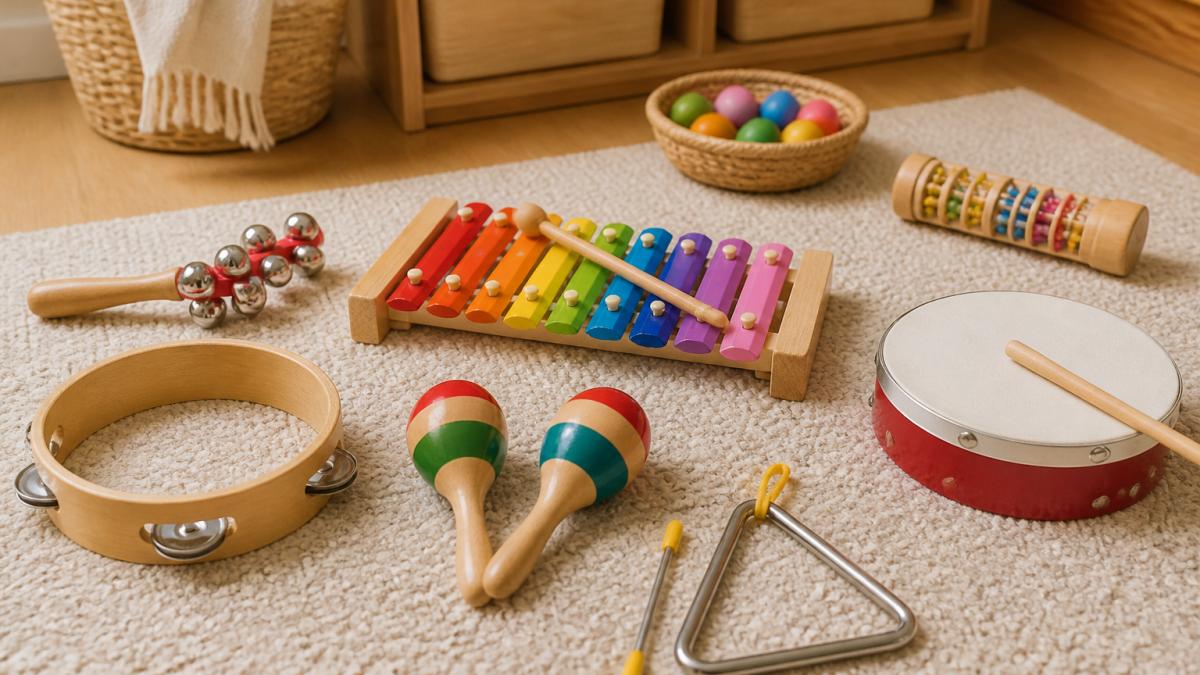
Shakers and maracas are the gateway percussion instruments for toddlers. They require no technique, grip the handle and move your arm, and sound happens instantly. This immediate cause-and-effect relationship is perfect for developing brains.
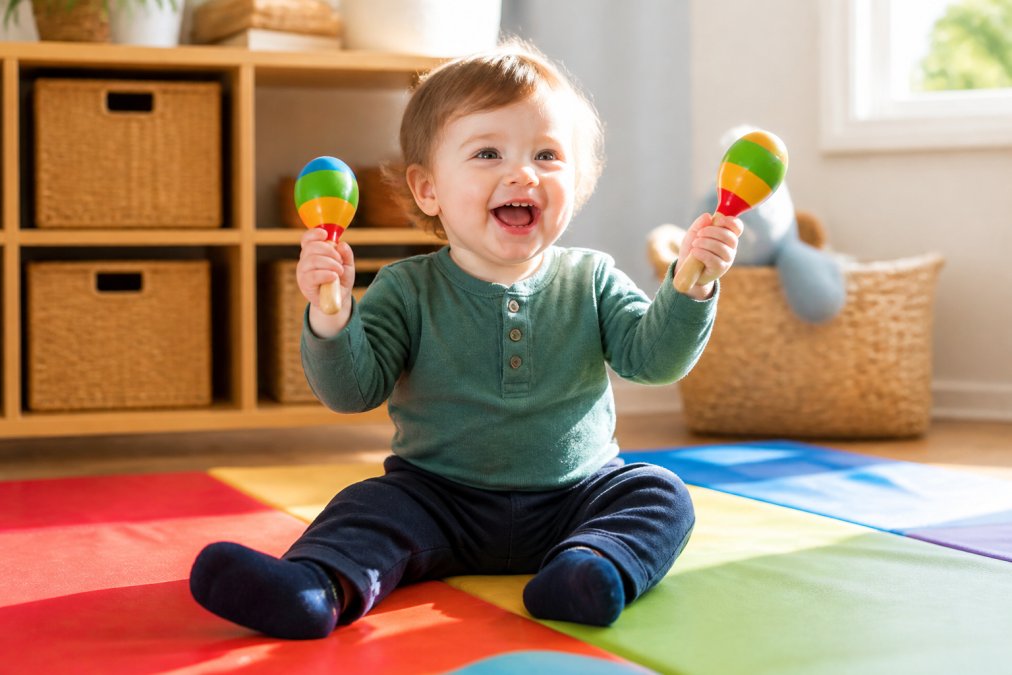
Choose shakers with handles sized for toddler hands, roughly the diameter of a thick crayon. Wooden handles are warmer and more pleasant to grip than plastic. Look for shakers filled with seeds or beads that produce a gentle, pleasant sound rather than a harsh rattle. Plastic shakers filled with plastic pellets often sound tinny and unpleasant.
Maracas come in pairs, which means two hands get to play simultaneously. This develops bilateral coordination, the ability to use both hands together. Wooden maracas with natural finishes tend to sound better and feel sturdier than brightly painted plastic versions.
Pros of shakers and maracas:
- Instant gratification, no learning curve
- Develop arm and wrist strength
- Encourage rhythmic movement and dancing
- Durable and washable
- Affordable entry point into music play
Cons:
- Limited sound variation, shaking is the only technique
- Can become repetitive quickly for older toddlers
- Easy to lose if you have multiple instruments
Best for: Toddlers aged 12 months and up, particularly those who enjoy movement and dance.
Drums and Tambourines for Toddler Exploration
Drums offer more control and feedback than shakers. Striking a drum head produces an immediate, satisfying sound that responds to how hard the toddler hits it. This teaches cause and effect more clearly than shaking.
Small hand drums or frame drums work best for toddlers. They should be shallow enough that a toddler can reach across the drum head with a mallet or hand. Avoid drums with hardware that protrudes or sharp edges where mallets attach.
Tambourines combine percussion with jingles. The metal discs create a shimmering sound that fascinates toddlers. However, tambourines are noisier than drums, and some toddlers find the volume startling. Start with a softer tambourine if you're concerned about sound levels.
Mallets matter. Soft mallets produce warm tones and are safer for toddler hands. Hard wooden mallets can damage drum heads and produce harsh sounds. Many drums designed for toddlers come with appropriately soft mallets, but check before buying.
Pros of drums and tambourines:
- Develop hand-eye coordination and striking accuracy
- Produce louder, more satisfying sounds
- Encourage rhythmic patterns and repetition
- Tambourines add visual interest through jingles
- Drums teach how pressure affects sound
Cons:
- Louder noise may bother sensitive toddlers
- Require slightly more coordination than shakers
- Drum heads can be damaged by rough play
- Tambourines have small metal parts that need checking
Best for: Toddlers aged 18 months and up who enjoy hitting and making loud noises, or those who respond well to visual and auditory feedback.
Xylophones and Glockenspiels: First Pitched Instruments
Xylophones and glockenspiels introduce toddlers to pitch, the idea that different strikes produce different notes. This is the first step toward understanding melody and music structure.
Xylophones have wooden bars, while glockenspiels have metal bars. Glockenspiels produce brighter, more resonant tones. Xylophones sound warmer and slightly less bright. Both work well for toddlers.
Choose instruments with just four to eight bars rather than a full two-octave range. Fewer bars mean fewer choices, which helps toddlers focus. Bars should be clearly colour-coded or numbered so toddlers can start learning pitch relationships.
Mallets are crucial here. Soft mallets produce clear tones without damaging the instrument. Hard mallets create harsh, discordant sounds that discourage exploration. Most quality xylophones and glockenspiels for toddlers come with appropriately soft mallets.
The instrument should be stable and unable to tip over when struck. A toddler hitting a xylophone with force might knock it over if it's not well-designed. Look for instruments with a solid frame and weighted base.
Pros of xylophones and glockenspiels:
- Introduce pitch and melody concepts
- Encourage focused, intentional striking
- Produce beautiful, satisfying tones
- Support early music theory understanding
- Last longer before toddlers outgrow them
Cons:
- Require more coordination than shakers
- More expensive than basic percussion
- Mallets can be lost or damaged
- Some toddlers find the precision demanding
Best for: Toddlers aged two and up, particularly those who show interest in different sounds and exploring cause and effect systematically.
Choosing the Right Instrument for Your Toddler
The best beginner percussion for toddlers depends on your child's age, personality, and interests. Consider these factors when making your choice.
Age and development: Younger toddlers (12-18 months) benefit most from shakers and maracas. Their coordination is still developing, and these instruments reward any movement with immediate sound. Older toddlers (18-36 months) can handle drums, tambourines, and xylophones that require more intentional striking.
Personality and preferences: Does your toddler prefer movement and dancing, or sitting and focused play? Movement-oriented toddlers gravitate toward shakers and drums they can play while moving. Focused toddlers often enjoy xylophones where they can explore different sounds deliberately.
Space and noise tolerance: Drums and tambourines are loud. If you live in a flat or have noise-sensitive family members, shakers and xylophones might be better choices. They produce satisfying sounds without disturbing neighbours.
Budget considerations: Start with one or two instruments rather than a complete percussion set.
Frequently Asked Questions
What are the best percussion instruments for a 2-year-old?
At age 2, toddlers benefit most from instruments they can hold and shake easily: maracas, shakers, and hand drums. These develop hand-eye coordination and gross motor skills. Avoid anything with small detachable parts or sharp edges. Lightweight instruments (under 200g) work best since young toddlers tire quickly. Xylophones with large keys are also suitable if supervised closely during play.
Are drum sets safe for toddlers?
Full drum sets are not recommended for toddlers under 3 years old. Instead, choose single drums or small drum pads designed specifically for young children. These standalone drums are sized appropriately, made from non-toxic materials, and have no pinch points or choking hazards. Always supervise percussion play and check that all parts are securely fastened before each use.
How do I choose a durable percussion set for a toddler?
Look for instruments made from solid wood or high-quality plastic with non-toxic finishes. Check that all parts are glued or riveted permanently, nothing should rattle or come loose. Test the weight: toddlers need instruments light enough to lift easily. Inspect for smooth edges, no sharp corners, and ensure any paint or stain is food-safe. Read safety certifications relevant to toys for young children.
At what age should a child start learning percussion?
Toddlers can begin exploring percussion informally from 12-18 months with shakers and soft mallets under supervision. Structured lessons typically start around age 3-4, when fine motor control and focus improve. Before that, the goal is exploration and play, developing rhythm awareness and enjoying sound-making rather than learning technique. Every child develops at their own pace, so readiness varies.