 How-to
What Happens If You Do Not Grease Trumpet Slides
Last Updated: 7 November 2026
Quick Summary
If you do not grease trumpet slides, friction builds up, the slide starts to drag and jerk, and the joint gradually loses its airtight seal. Over time this causes air leakage, a thinner and less responsive tone, and in the worst cases a slide that seizes completely and needs a technician to free it.
- Ungreased slides progress through five stages, from increased drag to a fully seized slide
- Early stages are usually reversible with cleaning and fresh grease
- Check slides before each session and regrease when they feel dry, stiff or sticky
- Never use valve oil or household oils as a substitute for slide grease
- Do not force a stuck slide, as this can bend the tube or arm
Table of Contents
- Why Trumpet Slides Need Grease in the First Place
- What Happens to Trumpet Slides Left Ungreased Over Time
- How to Grease Trumpet Slides Step by Step
- How Often to Grease Trumpet Slides
- Valve Oil vs Slide Grease: What Each One Is For
- How to Unstick a Trumpet Tuning Slide
- Your Routine for Keeping Slides Moving Smoothly
- Frequently Asked Questions
Why Trumpet Slides Need Grease in the First Place
Trumpet slides only work well when they move freely and stay airtight. Many players have never been shown how to look after their slides, and many of the problems that arise start with the same gap in basic care. Grease keeps the metal of the slide from rubbing directly against the metal of the tube, which is what makes it glide smoothly every time you move it.
The grease also forms a seal. A slide that fits snugly and moves easily stays airtight, so the air you blow stays inside the instrument. For a broader look at the whole instrument, see how to check instrument setup. Without that seal, air escapes at the joint, and the instrument feels and sounds weak.
- Slide grease reduces friction between the inner and outer tubes
- It helps the slide stay airtight during play
- It protects the metal from wear over the years
- It keeps the movement steady when you change position quickly
Many players assume that a few drops of valve oil will do the same job. It does not, and the next sections explain why.
What Happens to Trumpet Slides Left Ungreased Over Time
Leaving a slide without grease does not cause problems overnight. The damage builds in stages, which is why many players do not notice until the slide is already hard to move. Understanding the progression helps you judge when a slide needs attention and when it needs a technician.
Stage one: increased friction and drag. The first change is usually a small amount of drag. The slide still moves, but it needs more effort, and it may catch or jerk at certain points.
Stage two: poor movement and a weakened seal. As the grease film breaks down, the slide no longer fills the gap between the inner and outer tubes as tightly. The slide may wobble or rattle slightly, and the joint stops sealing properly.
Stage three: air leakage and lost response. A leak at the slide joint lets some of the air you blow escape before it reaches the bell. The instrument feels less responsive, the tone can sound thin or unstable, and you may find yourself working harder for the same result.
Stage four: corrosion and residue build-up. Old grease mixed with dust and moisture can dry into a sticky residue that traps dirt against the metal. Left long enough, moisture in the joint can encourage corrosion, particularly on instruments stored in damp conditions or played heavily without cleaning.
Stage five: a seized slide. In the least common but most serious outcome, a slide that has been left dry for a long period can seize completely.
Common signs a slide is running dry:
- The slide sticks or feels stiff when you pull it out
- It moves in short jerks instead of one smooth motion
- The slide wobbles or rattles more than before
- You hear a faint squeak or scraping sound when you move it
- The instrument feels less responsive, even when you play it well
- The tone sounds thin or the instrument is harder to tune
Watch out: If you force a stiff slide, you can dent the tube or bend the slide arm. Stop pulling and let the slide rest, or take it to a repair shop.
The early stages are generally reversible with cleaning and fresh grease, while the later stages usually need professional attention. Checking your slides before each session is the simplest way to catch a problem at stage one.
Left without grease, a slide deteriorates in recognisable stages, each with its own effect on the instrument.
| Stage | What happens | Effect on the player |
|---|---|---|
| One | Increased friction and drag | Slide needs more effort and may catch |
| Two | Poor movement and weakened seal | Slide wobbles and the joint stops sealing |
| Three | Air leakage and lost response | Thin or unstable tone, harder to tune |
| Four | Corrosion and residue build-up | Sticky residue and pitting on the metal |
| Five | A seized slide | Usually needs a technician to free it |
How to Grease Trumpet Slides Step by Step
Greasing a slide takes only a few minutes, and you do not need special skills. Work over a table with a soft cloth underneath, so that any spare grease does not end up on your clothes or the floor.
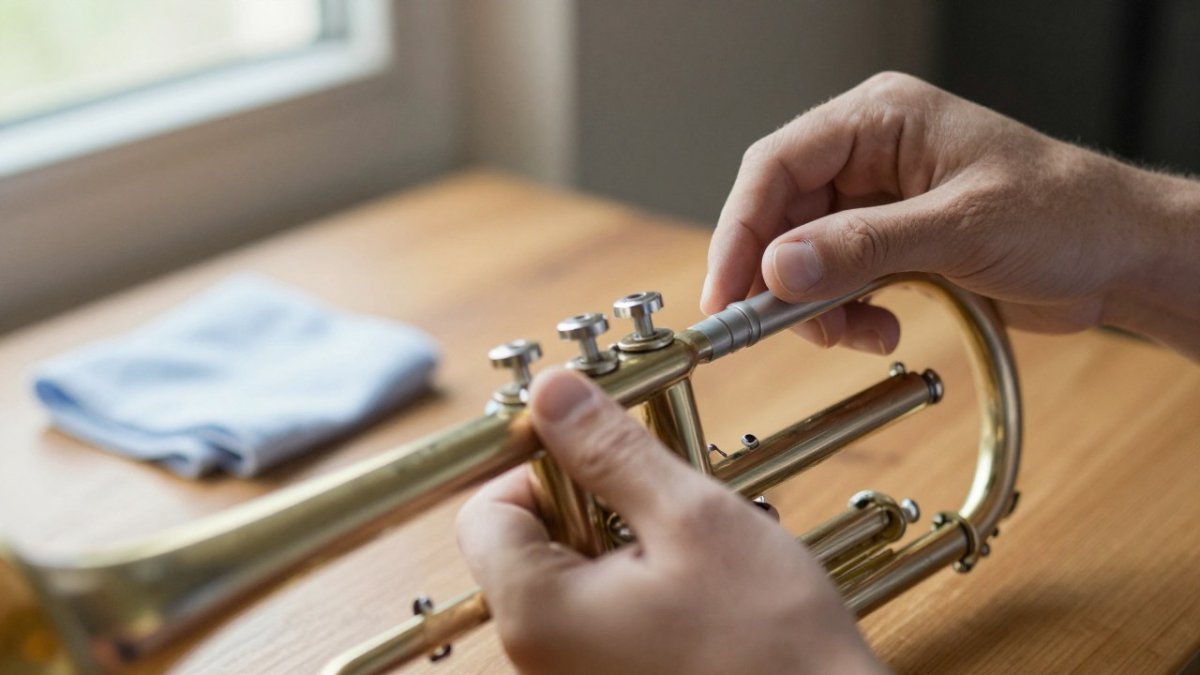
- Remove the slide. Pull each slide out gently and hold it by the tube, not the slide arm, so you avoid bending it.
- Wipe the old grease off. Use a clean, dry cloth to remove the old grease and dirt from the inner and outer tubes.
- Apply a thin layer. Put a small amount of slide grease on the inner tube, enough to give a thin, even coat. Too much grease makes the slide messy and can attract dirt.
- Reinsert the slide. Slide it back into place, lining up the tubes carefully so they do not catch.
- Move it to spread the grease. Work the slide in and out a few times so the grease spreads evenly across the surface.
- Wipe any excess. Clean off grease that has squeezed out at the joint so it does not build up on the outside of the instrument.
Once you have finished, test the slide. It should move smoothly without sticking or jerking.
How Often to Grease Trumpet Slides
Most players should grease their slides regularly, and many do this as part of a weekly routine. Players who practise every day may need to check their slides more often, especially if they play for long periods in warm rooms. Players who use an instrument less often can usually wait longer, but they should still check the slides before each session.
A useful rule is to check the slides before you play, and to regrease them when they feel dry, stiff or sticky. If a slide starts to drag, you probably waited too long.
Valve Oil vs Slide Grease: What Each One Is For
Valve oil and slide grease are not interchangeable. Valve oil is a light, thin oil made for the valves, which move up and down in their casings. Slide grease is thicker and designed to stay on the slides, which move in and out and need a seal that resists being washed away.
Using valve oil on a slide usually leads to a loose, leaky fit, since the thinner oil does not hold the seal as well. Using slide grease on valves can make them slow or sticky, because the thicker grease does not flow the way the valves need.
- Valve oil: For the valves only
- Slide grease: For the tuning and main slides only
- Keep the two products separate so you do not mix them up
How to Unstick a Trumpet Tuning Slide
A stuck tuning slide is one of the most common problems players face, and it is also one of the easiest to make worse. The first step is to be patient. Do not pull hard on the slide arm, because that can bend the tubes and turn a simple problem into a repair job.
Before you try anything, identify which slide is stuck. The main tuning slide and the valve slides all need grease, but they behave differently. A tuning slide that has seized usually responds to gentle persuasion and fresh lubricant, while a valve slide that will not move may have hardened grease or corrosion in the joint that needs a technician. Do not apply valve oil to a stuck slide in the hope that it will free it; the thin oil does not hold the seal and can wash out what little grease remains.
A safe recovery routine:
- Hold the instrument correctly. Grip the main tube firmly in one hand and the slide arm gently in the other. Keep your hands close to the joint so you are not levering the slide arm.
- Try a gentle twist. Twist the slide slightly while pulling, rather than pulling straight out. A small rocking motion often breaks the seal of dried grease.
- Apply a little fresh grease. Put a small amount of slide grease on the exposed inner tube and work the slide slowly in and out. Give the grease a minute to soften the old residue.
- Warm the joint gently. If the slide still will not move, hold the joint in your hands for a minute or two. Warmth can soften hardened grease without risking the metal.
- Stop if it will not budge. If the slide still will not move after these steps, stop and seek help. A professional can free a seized slide safely, and attempting to force it yourself can cause lasting damage.
If you have no grease available: leave the slide in place rather than forcing it. Do not substitute household oils, cooking oil or petroleum jelly, because these can attract dirt, degrade the metal or leave a residue that is hard to remove. Wait until you have proper slide grease rather than risk damaging the instrument.
How to tell if a slide is leaking air: a slide that moves too easily, wobbles at the joint or produces a thin, unstable tone may be leaking. If the instrument feels less responsive after you have ruled out valve problems, ask a technician to check the slide fit.
Hayes Music's repair team can look at a stuck slide and advise you on the best fix. Their repair service handles brass and woodwind instruments, and if you are in Hampshire you can also find local help through the Hampshire repair guide.
Your Routine for Keeping Slides Moving Smoothly
A simple routine will prevent most slide problems. Set aside a few minutes each week to look after your instrument, and you will avoid the stiffness, jerking and air leaks that come from neglect.
- Check each slide for stiffness before you play
- Clean the old grease off every week or two
- Apply a fresh, thin layer of slide grease when the slide starts to drag
- Keep valve oil and slide grease separate
- Store the instrument in its case away from heat and damp
- Take the instrument to a repair shop if a slide will not move
If you are unsure about what your instrument needs, speak to the team at Hayes Music, who can advise on choosing the right products.
Frequently Asked Questions
What happens if you do not grease trumpet slides?
The slides gradually become stiff, harder to move and eventually can stick, particularly the tuning slide. Without lubrication, metal rubs against metal and dried residue builds up, which increases friction and can cause the slides to seize. Regular greasing keeps movement smooth and makes it far less likely that an ungreased slide will need professional attention, so checking them regularly is a simple habit worth building.
Can you use valve oil instead of slide grease?
Valve oil is thin and designed for the valves, so it does not provide the same protection for the slides. Slide grease is thicker and stays in place on the moving tubes, reducing friction where the slides meet. Using valve oil on slides is not recommended as it can run out of the joint quickly. Use a proper trombone or trumpet slide cream or grease for the slides and keep valve oil for the valves.
How do you unstick a trumpet tuning slide?
Start by gently working the slide back and forth without forcing it, keeping the instrument supported so no tubing bends. Apply a small amount of slide grease along the inner tube and try again. If it still will not move, do not use excessive force, as this risks dented or cracked tubing. Take the instrument to a qualified repair technician. Hayes Music's repair service covers brass and woodwind instruments.
How often should you grease trumpet slides?
Most players clean and grease their slides regularly, with the frequency depending on how often they play and how humid their environment is. Checking the slides during routine maintenance, and cleaning them whenever they feel sticky or gritty, is a sensible approach. Pricing for repairs or servicing depends on the work required, so contact Hayes Music directly for a current quote.