 blog
How to Choose Professional Woodwind Instrument Servicing
Last Updated: November 17, 2026
Quick Summary
Professional woodwind instrument servicing in the UK is the scheduled inspection, cleaning, adjustment and repair of a flute, clarinet, saxophone, oboe or bassoon by a trained technician, keeping the instrument in tune, sealing properly and holding its value. Servicing falls into three levels: a light setup, a routine service and a full overhaul, with the right level depending on the instrument's age, condition and how much it is played.
- A routine service is typically needed annually for regular players, while overhauls come every few years.
- Ask for a written quotation before work begins, separating labour from parts.
- Book ahead of seasonal peaks such as the weeks before a school term.
- Swab the bore after every session and dry pads with blotting paper, not a cloth.
- Match the technician to the instrument: oboes and bassoons need different skills from flutes and saxophones.
Table of Contents
- What Professional Woodwind Servicing Covers
- Woodwind Servicing Price List: What Affects the Cost
- Finding a Flute Repairer You Can Trust
- Saxophone Repairs and Servicing: What Gigging Players Need to Know
- Woodwind Instrument Maintenance Between Services
- How to Choose a Qualified Woodwind Technician
- Book Your Woodwind Service with Hayes Music
- Frequently Asked Questions
What Professional Woodwind Servicing Covers
Professional woodwind instrument servicing in the UK is the scheduled inspection, cleaning, adjustment and repair of a flute, clarinet, saxophone, oboe or bassoon by a trained technician, keeping the instrument in tune, sealing properly and holding its value. The scope of woodwind servicing depends on how the instrument plays and how often it is used. A woodwind instrument is a precision machine: pads must seat against tone holes, springs must return keys at speed, and corks and tenons must seal joints airtight. When any one fails, the player compensates without realising it, and tone, tuning and response suffer.
Service levels explained: setup, service and overhaul
Woodwind servicing generally falls into three levels: a light setup, a routine service and a full overhaul. The right level depends on the instrument's age, condition and how much it is played.
| Service level | What it involves | Typical frequency |
|---|---|---|
| Setup | Pad check, regulation, play-test | New or stored instruments |
| Service | Strip, clean, re-cork, re-pad, regulate | Annually for regular players |
| Overhaul | Full disassembly, all pads and corks replaced, rebuild | Every few years or on older instruments |
Woodwind Servicing Price List: What Affects the Cost
A woodwind servicing price list is never one flat figure, because cost depends on the instrument, its condition and the work needed. Pricing for woodwind servicing in the UK reflects technician time, parts and mechanism complexity, and depends on quantity, dates and the work required. Ask for a written quotation before work begins; a reputable technician will assess the instrument, explain what they found and quote for parts and labour.
The main factors that move the cost:
How quotes are usually structured
Quoting methods vary between workshops, and pricing for a given instrument depends on its condition and the work required.
A written quotation should separate labour from parts and say what happens if additional work is found mid-service.
Typical turnaround and what affects it
Turnaround depends on the work required and the workshop's queue. Seasonal peaks, such as the weeks before a school term, are busy, so it is worth booking ahead. If you need the instrument for a specific date, say so when you enquire.
When comparing quotes, check that they cover the same work, parts and tests so you compare like for like rather than headline figures.
Comparing quotes without a fixed price list
Because pricing varies, compare quotes on scope rather than the bottom line alone. Check what is included, such as whether the keywork is stripped and re-regulated, whether pads are replaced as standard and whether a play-test is part of the job. Keep the written quotation for your records.
Finding a Flute Repairer You Can Trust
A flute repairer should be able to explain what is wrong, quote for the work and tell you how long it will take before you hand the instrument over. Flutes are unforgiving of poor adjustment: a pad leaking by a fraction of a millimetre costs response in the third octave, and a technician who does not specialise in woodwind may not hear the difference. Ask how quickly a typical service can be turned around, since a school instrument needed for lessons next week cannot wait a month. Our guide to fast woodwind repair services sets out what turnaround to expect.
Watch out: the most common mistake is choosing purely on the lowest quoted price. A cheap re-pad with poor-quality pads often needs redoing within a season, and you pay twice.
Saxophone Repairs and Servicing: What Gigging Players Need to Know
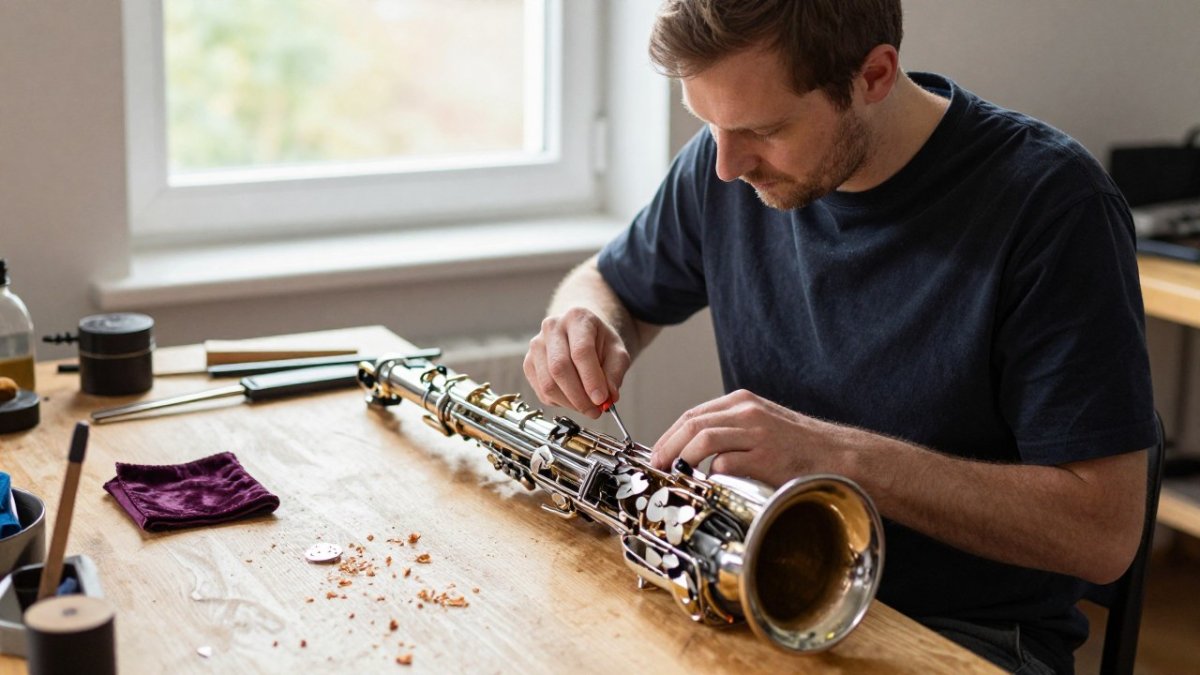
Saxophone repairs and servicing matter most to gigging players, because a saxophone that was fine in the practice room can fail under stage conditions. Gigging players put far more hours on the mechanism than students, and heat, sweat and constant assembly take a toll on corks and springs. Book a service before a busy season rather than during it, and have the instrument checked whenever a key feels sluggish or a note speaks late.
Woodwind Instrument Maintenance Between Services
Woodwind instrument maintenance between professional services protects the work you have paid for. Swab the bore after every session, dry the pads with blotting paper rather than leaving moisture to sit, and keep the instrument in its case when not in use. Avoid sugary drinks immediately before playing, and never store an instrument somewhere hot or damp. For a practical way to check your setup between services, our step-by-step setup check guide walks through what to look and listen for.
- Swab the bore after each playing session
- Dry pads with blotting paper, not a cloth
- Check corks and tenons for dryness
- Store in the case, away from heat
- Note any sticky keys or late-speaking notes for your technician
How to Choose a Qualified Woodwind Technician
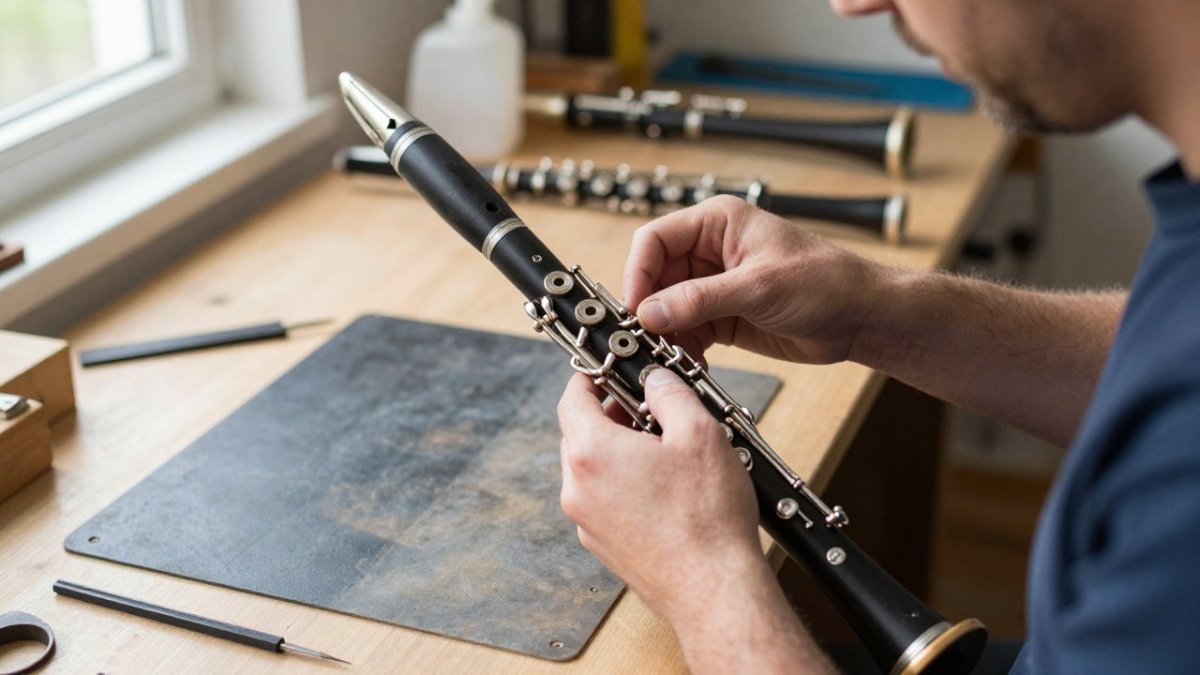
Choosing a qualified woodwind technician comes down to specialism, transparency and aftercare. Look for a workshop that services woodwind specifically, assesses the instrument before quoting, explains what it found and stands behind its workmanship. Ask what happens if a pad fails shortly after a service, and whether the technician will show you the old parts.
A practical checklist before you book
Use the following checklist to compare technicians on the things that affect the outcome, rather than on price alone.
Specialism and experience
- Does the workshop service woodwind as a core part of its work, or is it a sideline alongside brass and general retail?
- Which instruments does the technician service regularly, and are there any they avoid or send elsewhere?
- How long has the technician been servicing woodwind instruments, and do they hold relevant qualifications or training?
- Can they describe recent work on an instrument similar to yours?
Assessment and quoting
- Will the technician assess the instrument in person before quoting, or quote blind over the phone?
- Is the quotation written, and does it separate labour from parts and state whether VAT is included?
- Will they contact you before doing work beyond the quoted scope?
- Do they explain what they found in plain language, including which pads or keys cause the problem?
Workmanship and parts
- What quality of pads, corks and springs do they use as standard, and can you choose a higher or lower grade?
- Is the keywork stripped and re-regulated as part of a service, or only adjusted in place?
- Is a play-test and final regulation included before return?
- Will they show you the old parts or photographs of the work?
Aftercare and guarantee
- What guarantee applies to the workmanship, and how long does it last?
- What happens if a pad fails or a key goes out of adjustment shortly after the service?
- Do they offer a follow-up check or adjustment after the instrument settles in?
- Will they give maintenance advice specific to your instrument and playing routine?
Communication and logistics
- Is there a named person you can speak to about the instrument, rather than a call centre?
- What is the typical turnaround, and can they commit to a date if you need the instrument for a specific event?
- Do they offer collection and delivery, and is the instrument insured in transit?
- How will they keep you updated if the work takes longer than expected?
Red flags worth noticing
A few patterns should prompt caution. A workshop that will not quote in writing, or quotes a suspiciously low figure without seeing the instrument, is worth questioning. So is one that cannot explain what a service includes or treats a full overhaul as the only option for a minor problem. If a technician will not discuss guarantee terms or aftercare, assume there is none. A workshop that cannot tell you who will do the work, or that sends instruments away without saying so, may leave you without a direct route back if something goes wrong.
Matching the technician to the instrument
A technician who is excellent on flutes is not automatically right for a bassoon, and vice versa. Oboes and bassoons involve corkwork, wire springs and adjustment points that differ from the Boehm-system flutes, clarinets and saxophones. If you play an oboe, bassoon or a specialist instrument such as a baroque flute, ask directly whether the workshop services it regularly and can source the right parts. For a student clarinet or a gigging saxophone, a general woodwind specialist is usually more than adequate, provided the checklist above is satisfied.
Watch out: the most common mistake is choosing purely on the lowest quoted price. A cheap re-pad with poor-quality pads often needs redoing within a season, and you pay twice.
Book Your Woodwind Service with Hayes Music
Hayes Music offers a full backup service and repair centre for brass and woodwind instruments, and its showroom features a dedicated practice room. Established in 2004, Hayes Music is Hampshire's largest musical instrument store, serving beginners, parents, teachers and professional players. For local repair options and how to arrange a service, our instrument repair guide for Hampshire explains the process from enquiry to collection.
Whether your flute needs a pre-term setup, your saxophone is due its annual service or a school clarinet has developed a leak, the right workshop makes the difference between an instrument that fights you and one that plays freely. Hayes Music offers a full backup service and repair centre for brass and woodwind, a showroom with a dedicated practice room, and free on-site parking. Get started with Hayes Music and book your woodwind service with confidence.
Frequently Asked Questions
How often should a woodwind instrument be serviced?
How often a woodwind instrument needs servicing depends on how much it is played. Regular maintenance, such as cleaning and swabbing after each session, helps extend the interval between full services.
What is included in a woodwind instrument service?
The scope of a woodwind service varies, and it is worth asking for a written scope before booking so you know what is covered.
How much does woodwind servicing cost?
Pricing depends on quantity, dates and the work your instrument needs, so there is no single figure. For current prices or a quote, please visit the Hayes Music website.
Can a woodwind repairer service any make of instrument?
When choosing a woodwind repairer, experience with your specific instrument type matters. A flute repairer may not handle saxophone keywork with the same fluency, and oboe and bassoon mechanisms require specialist knowledge. Ask whether they regularly work on your instrument.