 blog
10 Best Brass Instruments for School Concert Bands
Last Updated: November 15, 2026
Quick Summary
The best brass instruments for a school concert band are cornet and trumpet for the melody, trombone and euphonium for the middle voices, and tuba for the bass line. Cornet is often the easiest starting point for beginners, and a balanced section needs a spread across these registers rather than ten of the same instrument.
- Cornet is usually easier for beginners, with trumpet preferred for jazz or orchestral work.
- A standard B-flat trumpet weighs roughly 1.1-1.3 kg, manageable from around age eight or nine.
- A euphonium student model is typically around 4-5 kg, so it suits a student with the build to support it.
- Full-size concert tubas can weigh 10 kg or more, so schools often use compact models or stands.
- For beginners, renting or buying a good second-hand student model is a sensible first-year choice.
Table of Contents
- Why the Brass Section Matters in a School Concert Band
- The 10 Best Brass Instruments for School Concert Bands
- Cornet vs Trumpet for Beginners: Which Should a Student Start On?
- Buying, Renting or Second-Hand: Which Option Suits a Student?
- Keeping a School Brass Instrument in Good Condition
- Choosing Your First School Brass Instrument at Hayes Music
- Frequently Asked Questions
Why the Brass Section Matters in a School Concert Band
A school concert band needs its brass section to carry the melody, punch through the rhythm and hold the harmony together. Without a balanced brass line, even a well-rehearsed woodwind section can sound thin. Choosing the right brass instruments for school concert bands is therefore one of the most important decisions a music department or parent can make.
At Hayes Music, Hampshire families and music teachers ask us the same questions: which instrument is easiest to start on, which survives daily practice, and what a school budget should cover. This guide answers them with practical, buying-focused advice.
Brass instruments produce sound by buzzing the lips into a cup-shaped mouthpiece, and the shape of the tubing determines the tone. Conical bores, which widen gradually, give a mellow, rounded sound, while cylindrical bores tend to sound brighter and more focused. Understanding that distinction helps when comparing instruments across the band.
The 10 Best Brass Instruments for School Concert Bands
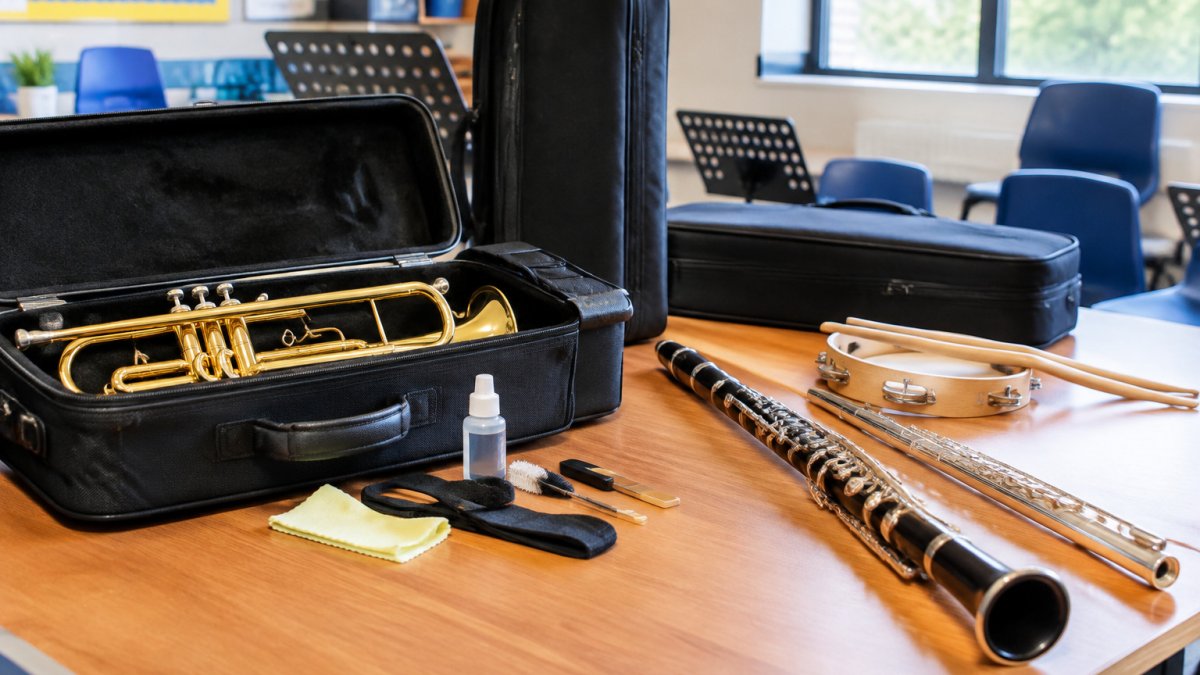
Ten instruments make up most school brass sections, each with a different role. This list covers the core concert band instruments and the ones a student is most likely to be offered first, flagging the student models most commonly supplied in the UK, the physical demands on a younger player, and the value-for-money tier to expect.
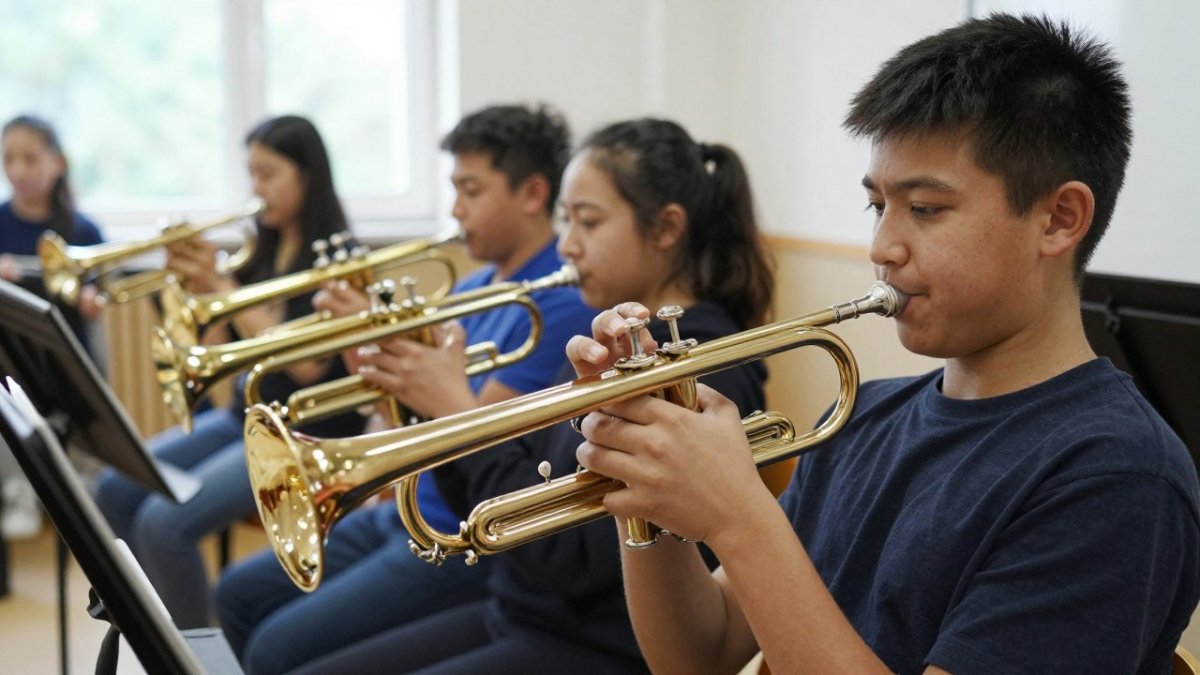
Choice depends on the student's age, hand size, lung capacity and the part the band needs filled. Readers weighing the woodwind side of the band can compare options in our best student clarinet for school guide. A small student may struggle with a tuba's weight and reach, while a confident player may want the euphonium's richer register. The sections below group the instruments by family for side-by-side comparison.
Trumpet and Cornet: The Core of the Band
The trumpet and cornet carry most of the melodic lines in a school band. Trumpets have a brighter, more penetrating tone, while cornets sound slightly warmer and are easier for many beginners to control.
Student models are widely available and usually the right starting point. Look for a sturdy valve block, smooth piston action and an age-appropriate mouthpiece. Valve oil and slide grease keep the instrument responding well, and regular cleaning prevents sticking.
Ergonomics for younger players. A standard B-flat trumpet weighs roughly 1.1-1.3 kg, manageable from around age eight or nine, but the reach to the third valve slide can strain smaller hands. A cornet is shorter and sits closer to the body, often suiting a smaller player better in the first year.
Trombone, Bass Trombone and Euphonium
The trombone uses a slide rather than valves, so intonation depends on the player's ear and arm position. Many schools start students on a tenor trombone, moving to the bass trombone once they need a deeper, fuller sound in the ensemble. The euphonium, with its warm, singing tone and valve system, often works well as a middle voice in the band.
Slide grease keeps the trombone moving smoothly, and students should learn early how to hold it so the slide travels freely.
Ergonomics for younger players. A tenor trombone is long, and reaching sixth and seventh positions can be difficult for a short-armed student. Some schools use an F attachment to reduce the reach, or start a younger player on a smaller-bore student model.
Value-for-money tiers. Student tenor trombones and three-valve euphoniums are the budget-friendly entry point. A bass trombone or a four-valve compensating euphonium is a mid-to-upper-tier purchase and is usually justified only when the band has a genuine need for the lower register.
Tuba, Sousaphone, French Horn and Alto Horn
The tuba anchors the bass line and is usually the heaviest instrument a school band owns. A sousaphone wraps around the player's body and suits marching bands, while a concert tuba stays upright for indoor work.
The French horn offers a mellow, blended sound that fits the middle of the texture. Because its hand-in-bell technique is demanding, many schools introduce it once students have built a solid foundation. The tenor horn, also called the E-flat horn, is a simpler alternative that suits younger players well.
Ergonomics for younger players. A full-size concert tuba can weigh 10 kg or more, so many schools use a three-quarter or compact student tuba, or a tuba stand, so the player is not supporting the full weight.
Value-for-money tiers. A student tuba is a significant outlay, usually a school purchase rather than a family one; a sousaphone is an additional cost and only makes sense if the school marches.
How the Ten Fit Together in a Balanced Section
A workable school concert band brass section needs a spread across the registers rather than ten of the same instrument. A typical balance is several cornets or trumpets on the melody, one or two trombones and a euphonium in the middle, a tuba on the bass, and a French horn or alto horn to blend the texture. When equipping from scratch, the priority order is usually cornet/trumpet first, then trombone and tuba, then euphonium and horn, the outer voices carry the ensemble and the middle voices can be added as players progress.
The table below summarises the main student-level considerations for the instrument families covered in this section.
| Instrument | Key consideration | Value tier |
|---|---|---|
| Cornet and trumpet | Standard B-flat, three valves | Entry-level student model |
| Trombone and euphonium | Slide or valve, heavier euphonium | Entry-level student model |
| Tuba and sousaphone | Heaviest instrument, often shared | Significant school outlay |
| French horn and alto horn | Demanding technique, mid tier | Mid tier |
Cornet vs Trumpet for Beginners: Which Should a Student Start On?
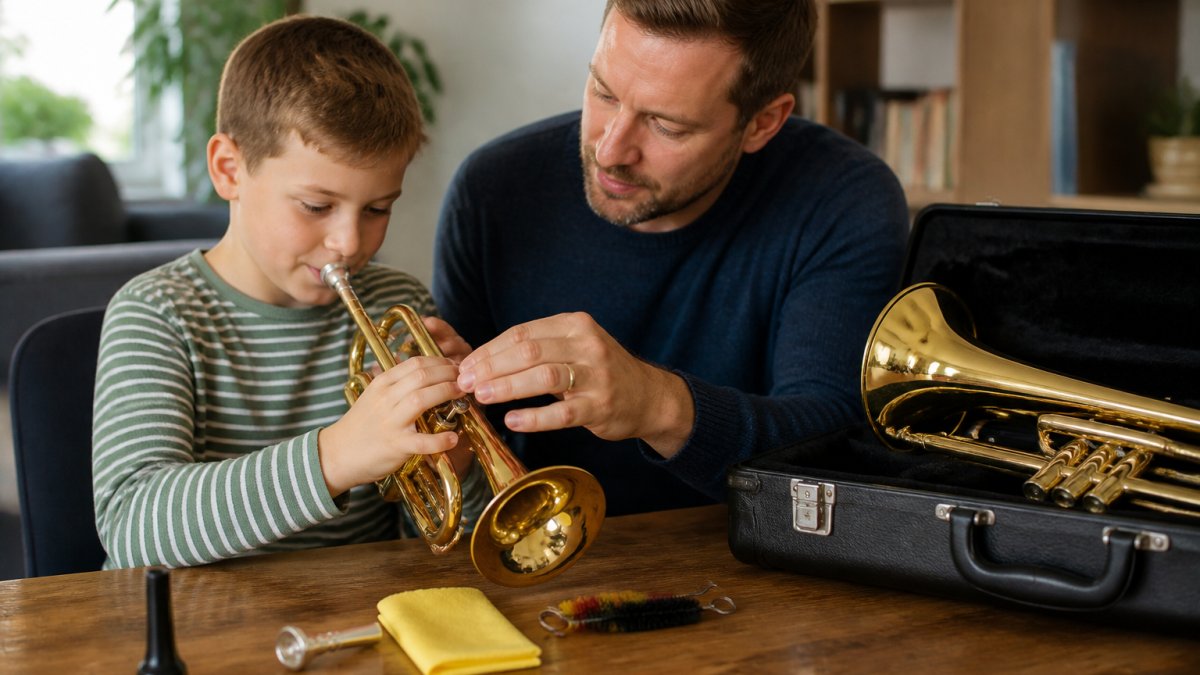
For most beginners, the cornet is the easier starting point, but the trumpet is equally valid if the student wants to play in a jazz or orchestral setting. The cornet's shorter, more conical tubing makes it slightly more forgiving on pitch and tone, which can build confidence during the first few months.
The trumpet produces a brighter sound and is standard in most orchestral and wind band repertoire. Students who plan to move between school bands, youth orchestras and jazz groups often benefit from starting on trumpet. Teachers usually recommend whichever instrument the school's music scheme and the student's chosen ensemble favour.
Watch out: switching instruments mid-course can slow progress, so agree the choice with the music teacher before buying.
Buying, Renting or Second-Hand: Which Option Suits a Student?
Most families weigh three options: buying new, renting or buying second-hand. This section covers the actual procurement decision a school music department or parent has to make, including the cost of ownership over several years.
Renting. Rental schemes are usually arranged through a music service, a specialist retailer or the school itself, and suit a student who may outgrow an instrument or change their mind.
Buying second-hand. Second-hand instruments can offer good value, particularly for trombones and trumpets, because many student models are in circulation.
Cost of ownership. The purchase price is only part of the cost.
A practical decision rule. For a beginner in the first year, rent or buy a good second-hand student model.
Pricing varies widely depending on the make, age and condition, so we recommend contacting Hayes Music directly for a current quote in pounds sterling rather than relying on an estimate.
Keeping a School Brass Instrument in Good Condition
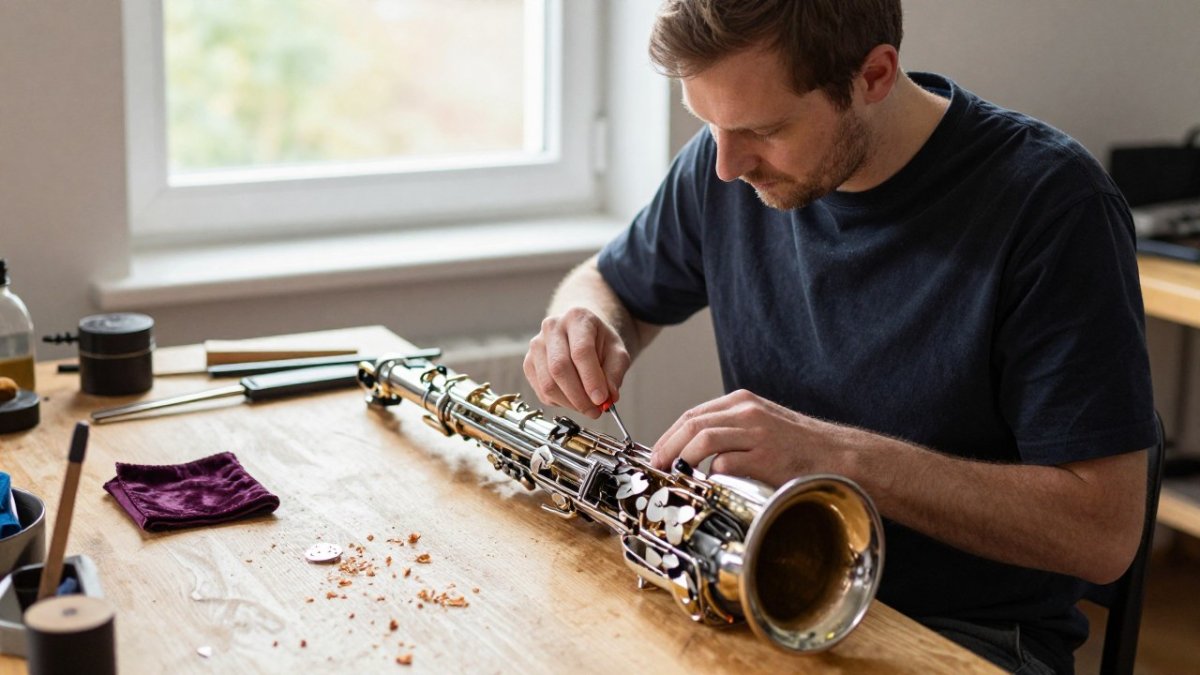
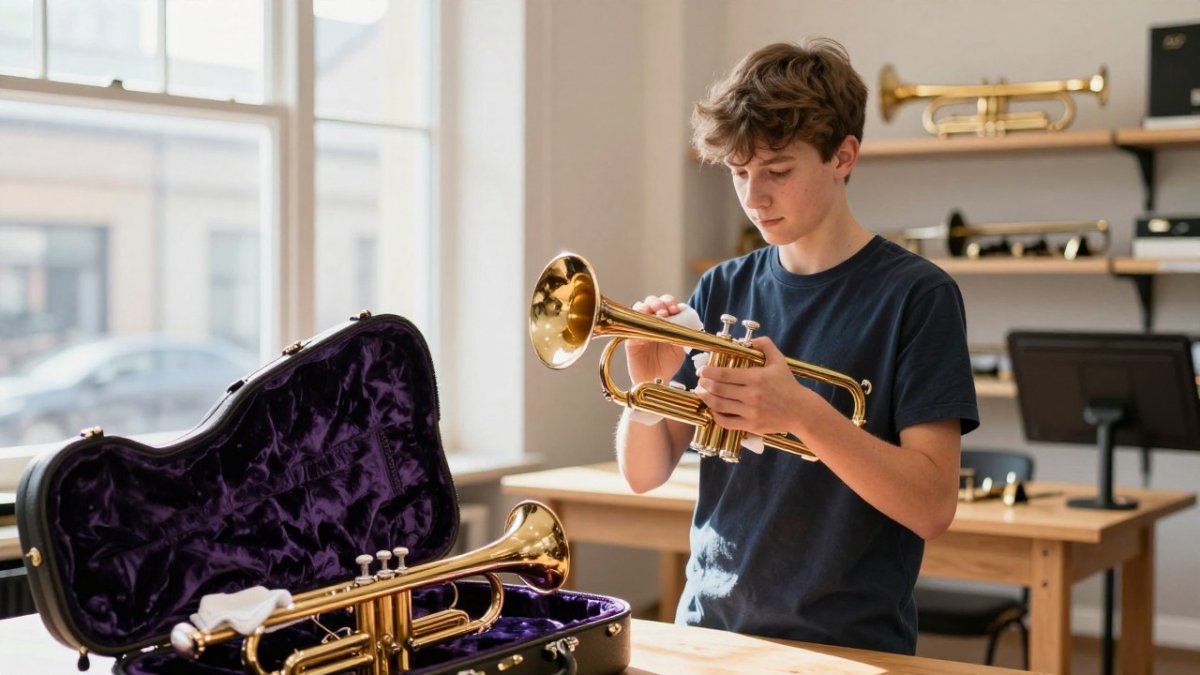
Regular care makes the biggest difference to how an instrument plays and how long it lasts. You can follow our step-by-step guide to checking instrument setup to spot problems early. Wipe it after each session, oil the valves or slides as recommended, and keep the case closed between lessons.
A common mistake is leaving an instrument in a cold car or a hot cupboard, which can crack solder joints and warp the tubing. Another is forcing a stuck valve or slide, which often causes more damage than the original fault. If something feels wrong, stop playing and have it checked.
For a quick self-check before each lesson, look at the following:
- Valves move freely and return quickly when released
- The slide moves smoothly without grating or resistance
- No dents, cracks or loose braces are visible on the tubing
- The mouthpiece sits firmly and is clean inside
- The case latches close properly and the instrument is secure
For repairs, Hayes Music offers a full backup service and repair centre for brass and woodwind instruments, and our Hampshire showroom has a dedicated practice room where students can try instruments before buying. Our guides on checking instrument setup and musical instrument repair in Hampshire explain what to look for and where to get help locally.
Choosing Your First School Brass Instrument at Hayes Music
Selecting a first brass instrument comes down to the student's age, the ensemble they will join and the family's budget. Ask the music teacher which instrument the school needs, then compare student models that suit the student's size and comfort. Trying an instrument in person helps a great deal, because weight, reach and tone are hard to judge from a photograph.
Hayes Music is Hampshire's largest musical instrument store, established in 2004, with a free on-site car park near the M27. Our team can help a student find the right instrument, arrange a repair if something goes wrong, and supply the valve oil, slide grease and tuition books that keep a band player progressing. Visit the shop or get in touch to find the right brass instrument for your school band.
Frequently Asked Questions
Which brass instrument is easiest for a beginner to learn?
Most music teachers start students on cornet or trumpet because they produce a clear note with a small mouthpiece and a simple three-valve fingering system. The cornet is often preferred for younger children, as its shorter tubing and more compact shape are easier to hold and control. Trombone is also a common starting point in school bands, although it requires a longer arm reach and more time to develop accurate slide positions. The best choice depends on the instrument the school band needs and the student's physical size, so it is worth asking the music teacher before buying.
What is the difference between a cornet and a trumpet for school bands?
A cornet has a more conical bore and a shorter, rounder tone, while a trumpet has a brighter, more projecting sound. Cornets are often used in school and brass band settings because they are more forgiving for beginners and blend well within the ensemble. Trumpets are more common in orchestral and jazz playing. Both use the same fingering and similar mouthpieces, so a student who learns one can switch to the other with little difficulty.
Do school concert bands require specific brass instruments?
Most school concert bands ask for a standard set of brass parts, including cornets or trumpets, trombones, a euphonium, tuba and sometimes French horn. The exact instruments depend on the music the school performs and the players available. Before purchasing, parents should check with the music department, as some schools provide instruments on loan or have a preferred model. Hayes Music can advise on which instruments suit common school band arrangements, but schools should confirm requirements directly with their teachers.
How do I maintain a brass instrument to ensure it lasts through school years?
Wipe the instrument after each playing session and clean the mouthpiece regularly. Oil the valves as recommended for your instrument, and grease the slides on trombones so they move smoothly. Store the instrument in its case, away from heat and direct sunlight. Have a qualified technician inspect the instrument once a year, as dents, leaks and worn springs are easier to fix when caught early. Hayes Music offers a repair service for brass instruments, and pricing for repairs depends on the work required, so contact the shop for a quote.