 blog
Beginner Brass Instruments for School: A Parent's Guide
Last Updated: 4 November 2026
Quick Summary
The best beginner brass instruments for school are the cornet, trumpet, tenor horn, trombone, euphonium and tuba. The cornet and trumpet are the most common school starters, while trombone and euphonium suit longer arms and bigger frames. French horn is rarely a first instrument.
- A cornet weighs about 1.1 kg and its case is small enough to fit in a school bag.
- The trumpet suits confident beginners aged nine and up who want the familiar sound.
- The tenor horn is best for children aged eight and up who want a warmer sound.
- The French horn is the hardest brass instrument to start on, so most teachers steer beginners away from it.
- Ask the school music teacher which instruments the band is short of before you decide.
Table of Contents
- Why the School Band Instrument Matters More Than the Brand
- The Best Brass Instruments for Beginners, Compared
- Which Are the Easy Brass Instruments to Learn?
- Matching the Instrument to the Child, Not Just the Music
- Should You Rent or Buy a Brass Instrument?
- What to Check Before You Commit to a Student Instrument
- Book a Showroom Visit and Try Before You Buy
- Frequently Asked Questions
Why the School Band Instrument Matters More Than the Brand
A beginner brass instrument for school is the single biggest factor in whether a child sticks with music.
Most parents assume the brand on the bell decides everything. It doesn't. Fit, weight and what the school actually needs matter far more.
This guide covers the beginner brass options, how to match one to your child, and what to check before you commit. Below, we break down each instrument so you can choose with confidence rather than guesswork.
The Best Brass Instruments for Beginners, Compared
The best brass instruments for beginners are the cornet, trumpet, tenor horn, trombone, euphonium and tuba. Each suits a different age, build and sound.
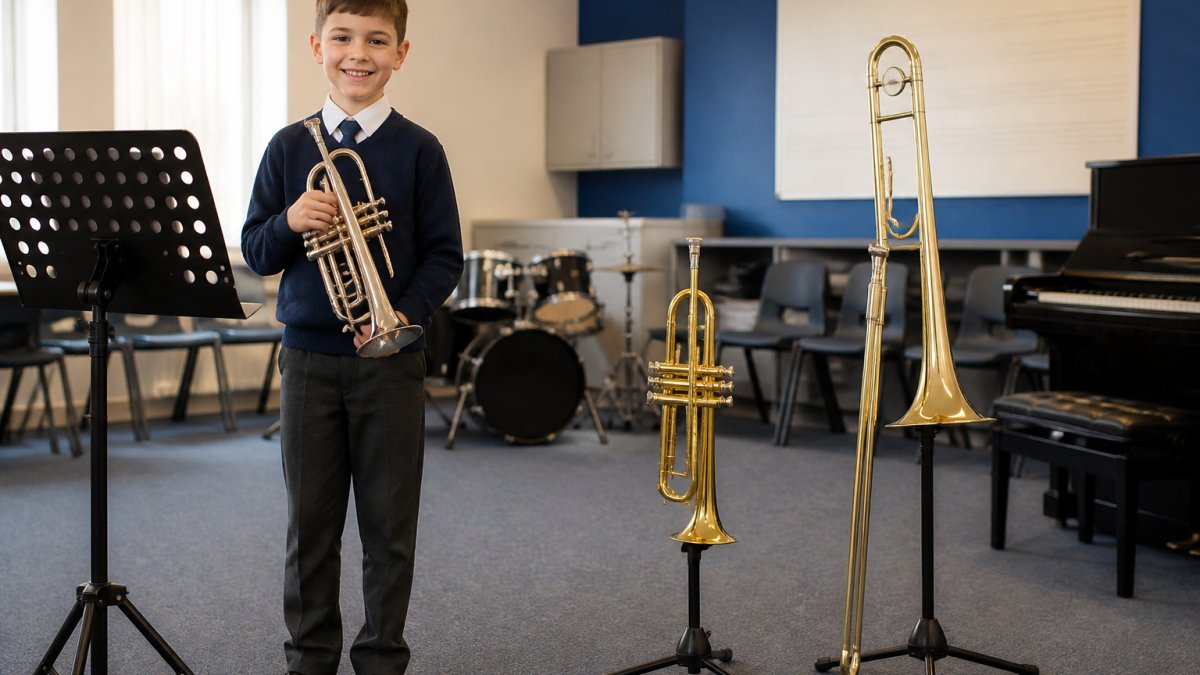
Here is how the main options compare for a school starter, including the practical details that matter once the instrument leaves the shop:
| Instrument | Pitch | Typical weight | Case size | School demand | Best for |
|---|---|---|---|---|---|
| Cornet | Higher | About 1.1 kg | Small, backpack-friendly | Very high in brass bands and training bands | Younger or smaller beginners |
| Trumpet | Higher | About 1.2-1.5 kg | Small to medium | Very high in orchestras, wind bands and jazz | Confident players aged 9+ |
| Tenor horn | Middle | About 1.5-2 kg | Medium | High in brass bands, lower in wind bands | Steady, mellow players |
| Trombone | Lower | About 1.5-2.5 kg (tenor) | Medium to large | High in orchestras, jazz and brass bands | Longer arms, ages 9+ |
| Euphonium | Lower | About 4-5 kg | Large | Moderate; one or two per band | Larger, stronger beginners |
| Tuba | Lowest | About 8-12 kg (3/4 size) | Very large | Moderate; usually one per band | Big frames, older students |
| French horn | Middle | About 2-2.5 kg | Medium to large | Moderate; rarely a first choice | Second or third-year players |
Weights are approximate and vary by model and by whether the instrument is a student or professional build. Always check the actual instrument your child will hold.
Cornet: The Classic First Brass Instrument
The cornet is the classic first brass instrument for a reason. It is lighter than a trumpet, has a softer, rounder tone, and its conical bore makes it more forgiving for young lips.
A common mistake is assuming the cornet is a "lesser" trumpet. It isn't. It has its own voice and its own parts in brass bands and school ensembles.
Best for: smaller or younger beginners who need something light and forgiving. Skip if: your child has been specifically asked for a trumpet by their teacher.
Trumpet: The Most Recognised Option
The trumpet is the most recognised brass instrument, and that recognition helps. Children see it in marching bands and orchestral brass sections, and that familiarity keeps them motivated.
It is slightly heavier than a cornet and demands a little more control from a beginner. For a confident nine-year-old with a good teacher, it is an excellent choice.
Best for: confident beginners aged nine and up who want the familiar sound. Skip if: your child is small or struggles to hold an instrument steady.
Tenor Horn: The Middle Voice
The tenor horn sits between the cornet and the trombone in pitch and is a staple of brass bands. It is heavier than a cornet but easier to hold than a euphonium, and its mellow tone suits children who find the trumpet too bright.
Best for: children aged eight and up who want a warmer sound and a comfortable hold. Skip if: the school only runs a wind band or orchestra, where tenor horn parts are rare.
Trombone, French Horn, Euphonium and Tuba
These lower-pitched options round out the brass family, and schools often need them. A trombone suits longer arms because of the slide, while the euphonium and tuba need a bigger frame and more breath.
The French horn is the hardest brass instrument to start on. Its mouthpiece is small, its pitch is tricky, and progress is slow. Many teachers steer beginners away from it until they have a year or two of experience.
- Trombone: no valves to learn, but the slide needs arm length and a good ear. A tenor trombone case is long and may not fit a small child's bag; check how your child will carry it.
- Euphonium: warm, gentle tone; heavier to hold and needs a sturdy stand or a lap rest for smaller players.
- Tuba: the lowest voice; best for older, larger students. A three-quarter-size tuba is the usual school starter and still weighs around 8-10 kg, so it stays at school in most cases.
- French horn: beautiful but demanding; usually a second or third-year choice. Its small mouthpiece and hand-in-bell technique make it a poor first instrument for most children.
What Schools Actually Need
Ask the school music teacher which instruments the band is short of before you decide; it is one of the most useful questions a family can ask.
Carrying, Storage and Cleaning at a Glance
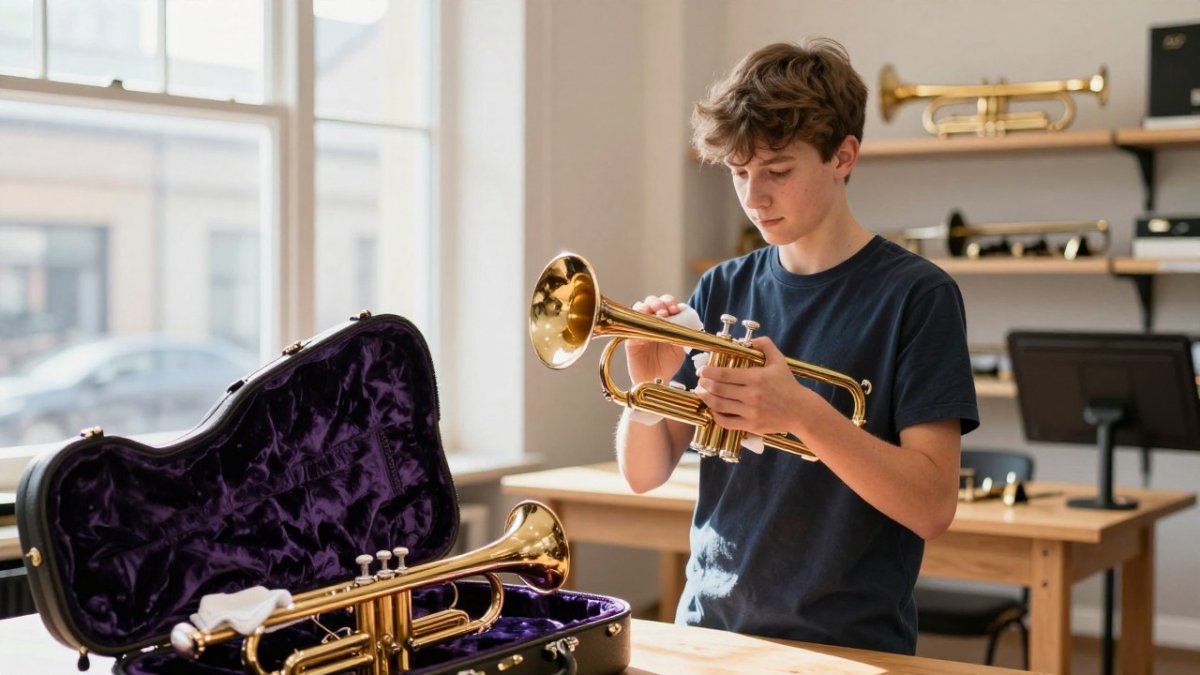
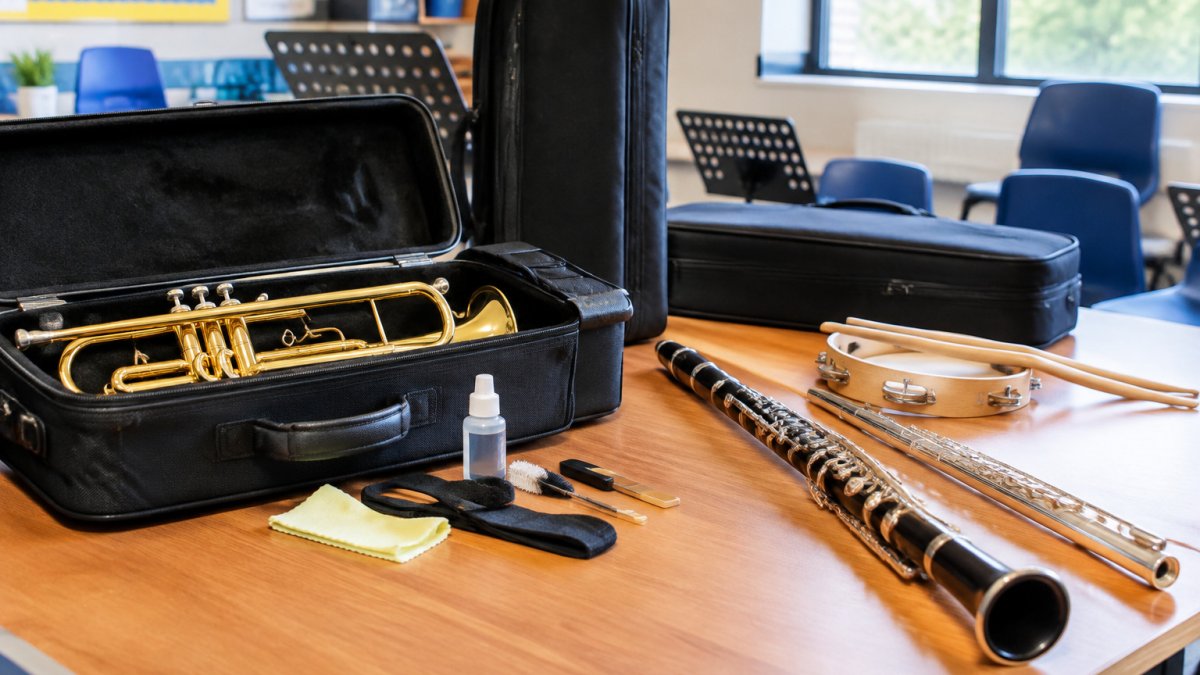
A beginner instrument has to survive the school run. A cornet or trumpet in a hard case fits in a school locker or under a desk. A trombone case is long and awkward on public transport. A euphonium or tuba is usually kept at school and played there. Cleaning matters too: brass instruments need the mouthpiece washed weekly, valves oiled regularly and the inside flushed periodically.
Which Are the Easy Brass Instruments to Learn?
The easiest brass instruments to learn are the cornet and trumpet, followed by the tenor horn.
Difficulty comes down to three things: how the instrument is held, how much breath it needs, and how quickly a beginner gets a decent sound. Cornet and trumpet score well on all three.
The tuba and French horn are harder to start. Their mouthpieces and breath demands ask more of a young player. That doesn't make them bad choices, just slower starts.
Matching the Instrument to the Child, Not Just the Music
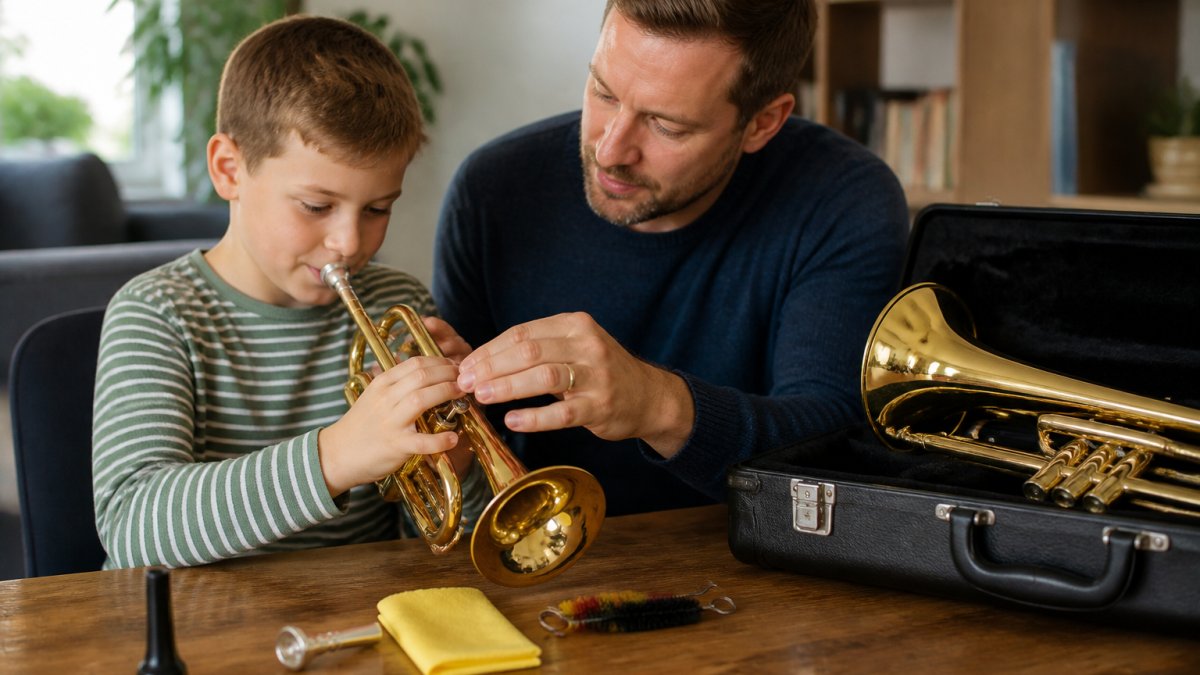
Choosing for the child, not the instrument, is where most families go wrong. A child who can't comfortably hold an instrument will not practise it. Before you look at brands, look at the player.
Work through these questions together:
- Can they hold it comfortably? Weight and reach matter more than age.
- Can they reach the valves or slide? Check with the instrument in hand.
- What does the school need? Some ensembles are short of trombones or tubas.
- What sound do they love? Musical interest keeps practice going.
- How big are their hands? Small hands struggle with some valve layouts.
A child who is small for their age may do better on a cornet than a trumpet, even if the trumpet is the "cool" choice. A taller child with long arms often takes to the trombone quickly. This is a decision guide based on the child, and it beats any brand comparison.
Should You Rent or Buy a Brass Instrument?
Renting is often a sensible first step for a beginner. It keeps the upfront cost low while your child works out whether brass is for them. Buying makes sense once they have played for a term or two and want to continue.
Some schools run instrument loans, so it is worth asking. Ask the music teacher first. A school loan can cover the first term at low cost, which takes the pressure off an early purchase.
What Renting Usually Costs
Rental terms vary by shop and by instrument, but Rental pricing depends on the instrument, the term and the agreement, so please check Hayes Music's website for current prices or request a quote. Always ask whether the rental includes insurance, servicing and mouthpiece, and what happens if the instrument is damaged.
What Buying Usually Costs
Purchase pricing depends on the instrument, condition and current stock, so please check Hayes Music's website for current prices or request a quote. Second-hand student instruments can cost less but need a proper check before purchase. A used instrument that needs a valve re-fit or a slide repair can wipe out the saving.
The Total Cost, Not Just the Instrument
Consider the total cost, not just the instrument. Add lessons, music books, valve oil and maintenance. A typical first-year budget might include:
- Instrument: rental or purchase cost, depending on the instrument and terms.
- Lessons: tuition costs vary by provider; school group lessons may cost less.
- Music and tutor book: the cost depends on the book chosen.
- Accessories: valve oil, a mouthpiece brush and a cleaning cloth.
- Maintenance: a regular service or repair fund is sensible.
Renting spreads the risk; buying rewards commitment. Neither is wrong, but renting first is the safer bet for most families.
Questions to Ask the School Before You Buy
Before you spend anything, ask the music teacher:
- Does the school have loan instruments, and how long can we keep one?
- Which instruments does the band actually need this year?
- Are group lessons included, or is individual tuition extra?
- Is there a recommended local shop or repairer?
- What happens if the instrument is damaged at school?
What to Check Before You Commit to a Student Instrument
Check the setup before you commit, because a badly set instrument will fight your child from day one.
Inspecting an instrument in person is a sensible step where you can manage it. Our step-by-step guide to checking instrument setup shows you what to look for.
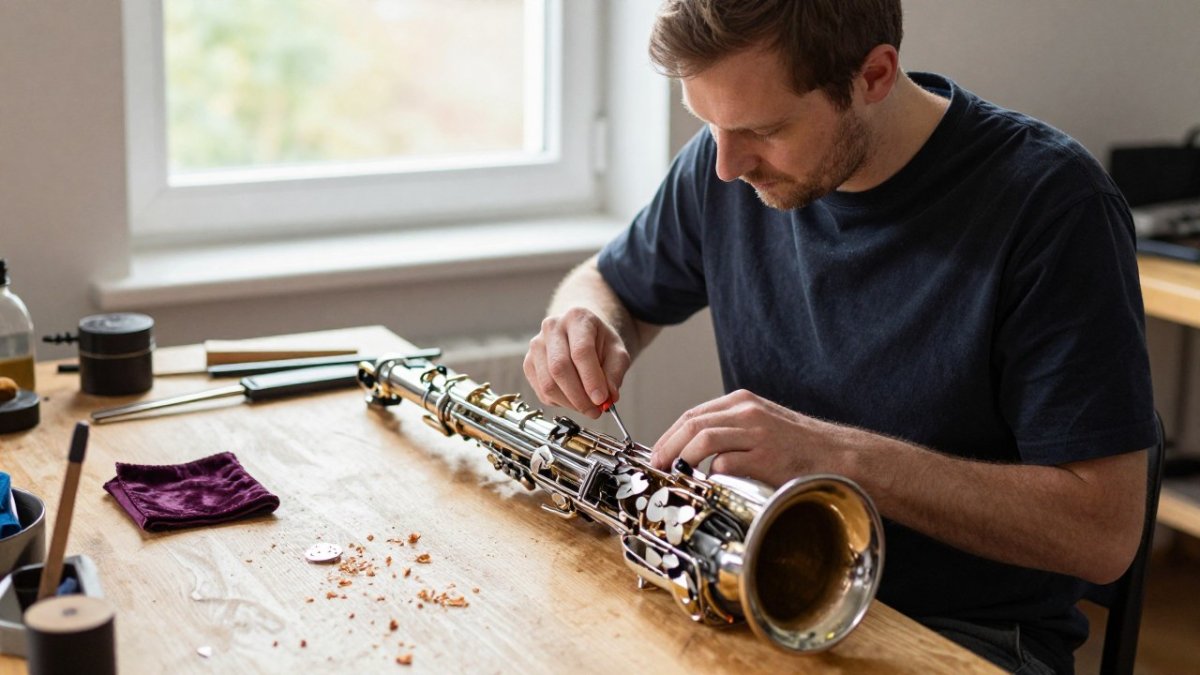
It also helps to know your repair options. Brass takes knocks, and a stuck valve or dented slide needs fixing quickly. Our repair service helps keep instruments playing.
Book a Showroom Visit and Try Before You Buy
Trying an instrument before buying can help you decide. At Hayes Music, our showroom has a dedicated practice room, so your child can hold and play instruments before you decide. We are Hampshire's largest musical instrument store, established in 2004, with free on-site parking near the M27.
If something needs adjusting later, our on-site repair centre handles brass and woodwind.
Get started with Hayes Music and find the right first instrument for your child.
Frequently Asked Questions
What is the easiest brass instrument for a beginner to learn?
The cornet is widely considered the easiest starting point. Its compact size suits smaller hands. The trumpet follows closely, though it is slightly longer and heavier. Trombone is manageable from around age eight, while French horn, euphonium and tuba suit older or larger beginners who can handle the weight and reach.
Should a beginner start on trumpet or cornet?
For most school beginners, the cornet is the safer choice. It is shorter and lighter than a trumpet, which matters for smaller players, and it takes the same B-flat fingering system, so progress transfers easily later. The trumpet has a brighter, more projecting tone and is often preferred for orchestral and jazz work. If your child is set on trumpet and can hold it comfortably, there is no harm starting there.
Should you rent or buy a beginner brass instrument?
Renting suits families who want to test commitment before spending more. Buying makes sense when a child is already enthusiastic and the school has confirmed the instrument suits their ensemble. Either way, check the instrument is properly set up before the first lesson, since a sticky valve or misaligned slide can put a beginner off quickly. A specialist retailer with a repair service may be able to help with adjustments.
What age can a child start learning a brass instrument?
Many children start around age six or seven, usually on cornet because of its size and light weight. Trombone tends to suit ages eight and up, once arm reach is sufficient for the slide positions. French horn, euphonium and tuba are better for older beginners who can manage the weight and larger mouthpieces. The deciding factor is often physical comfort rather than age alone, so try holding the instrument before committing.