 blog
Is a Saxophone Cleaning Kit Worth the Money?
Last Updated: November 1, 2026
Quick Summary
A saxophone cleaning kit is worth the money if you practise regularly or keep your horn in a gig bag, because it removes the moisture and residue that damage pads and keywork. For occasional players, a single swab and cloth may be enough. Kits do not repair bent keys or worn pads, so professional servicing is still needed for those problems.
- A kit pays off most for daily players, since moisture builds up quickly.
- Choose lint-free body swabs, as cheap cotton can leave fibres under the pads.
- Swab the neck and body after every session, then let the instrument air-dry.
- Expect to replace swabs roughly once a year with daily playing.
- Never force a swab through the body, as a snagged swab can bend a key.
Table of Contents
- Is a Saxophone Cleaning Kit Worth It for Most Players?
- What a Saxophone Care Kit Contents Usually Include
- How to Clean a Saxophone After Every Session
- Using a Saxophone Cleaning Swab Correctly
- Cost, Value and Ownership Scenarios Compared
- Saxophone Cleaning Kit Alternatives and When to Use Them
- Deciding Between DIY Care and Professional Servicing
- Frequently Asked Questions
Is a Saxophone Cleaning Kit Worth It for Most Players?
Most saxophonists ask whether a saxophone cleaning kit is worth the money, and the honest answer is that it depends on how often you play and how you store your instrument. A player who practises daily and keeps the horn in a gig bag will benefit far more from a proper kit than someone who plays once a week at home.
The core job of any saxophone cleaning kit is simple. It removes moisture and residue from the body, the neck and the mouthpiece before they cause damage. Moisture left inside the instrument can build up around the pads, corrode the keywork and affect how the saxophone responds over time.
A kit is not a magic fix, though. It cannot repair a bent key or replace worn pads. What it does is give you the right tools to maintain the instrument between professional services. That distinction shapes everything else in this guide.
What a Saxophone Care Kit Contents Usually Include
Most care kits bundle a handful of items, and their quality varies a lot. Before you buy, it helps to know what each piece does and which ones you will actually use.
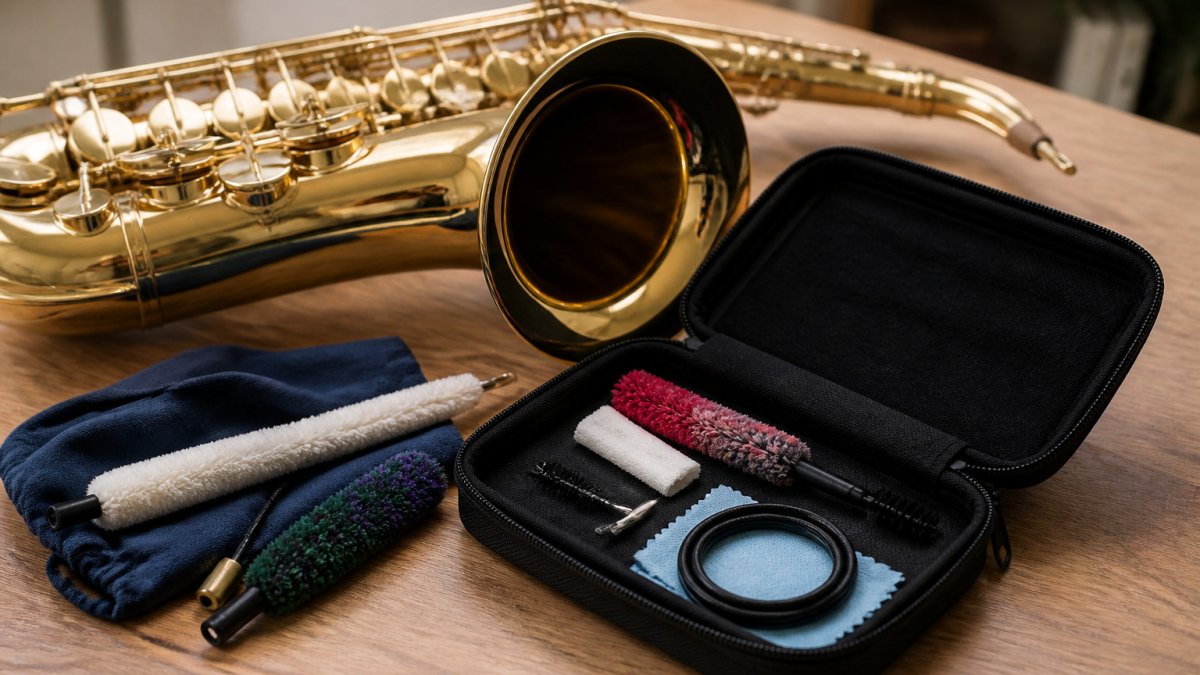
Typical contents include body swabs, a mouthpiece brush, a neck cleaning cloth, cork grease and sometimes a pad or key care item. Each item solves a specific problem, so it is worth checking the list against your own routine rather than paying for extras you will never open.
Body Swabs, Pull-Through Cloths and Mouthpiece Brushes
Body swabs are the workhorses of any kit. They are weighted cords with absorbent material attached, and you pull them through the body and neck to soak up condensation. Look for swabs that are lint-free and absorbent, because cheap cotton versions can leave fibres behind that catch under the pads.
Mouthpiece brushes clean the baffle and the facing, where saliva and reed residue collect. A soft brush does the job without scratching the surface. Pull-through cloths are useful for quick drying after a short session, though they are less thorough than a proper swab.
Cork Grease and Pad Care Items
Cork grease keeps the neck joint from sticking and helps the cork seal properly. A small tub lasts a long time, so you rarely need to replace it often. Pad care items, such as pad savers or simple cleaning papers, protect the pads from dust and moisture between sessions.
Pad care is where people most often overspend. Unless you have a specific problem, you rarely need specialist pad products. A basic routine of drying the instrument properly does most of the work.
How to Clean a Saxophone After Every Session
A short routine after each session prevents most moisture problems. Set aside five minutes and work through these steps in order:
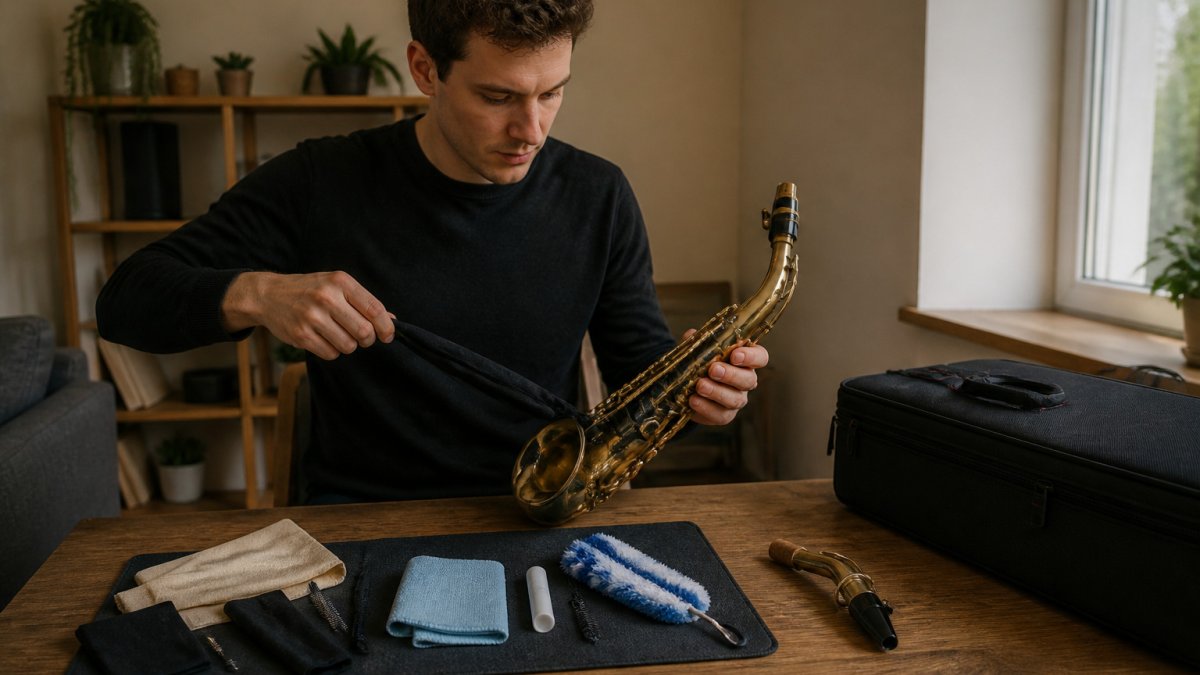
- Remove the reed and wipe the mouthpiece with a soft cloth or brush.
- Detach the neck and pull a dry swab through it, then through the body.
- Check the pads for moisture and let the instrument air-dry with the case open for a few minutes.
- Wipe the outside of the body with a soft, dry cloth to remove fingerprints and sweat.
- Store the instrument in its case, away from radiators and direct sunlight.
Keep the routine consistent. Players who skip the swab after a long session often find condensation has settled into the lower body, which is harder to remove once it dries.
Watch out: never force a swab through the body or pull it hard near the keywork. A snagged swab can bend a key or dislodge a pad, and that repair costs far more than a kit.
Using a Saxophone Cleaning Swab Correctly
A swab is only as effective as the way you use it. Thread the cord through the eyelet, then feed the swab gently into the bell or neck. Pull it steadily through in one direction. Do not yank it or pull it back and forth.
Change the swab if it becomes saturated, and never use a damp swab to dry the instrument, as this only moves moisture around. For soprano, alto and tenor saxophones, the swab length and thickness differ slightly, so check that your kit fits your instrument. A tenor swab will not reach properly into a soprano neck, and the reverse can leave residue behind.
Cost, Value and Ownership Scenarios Compared
The value of a kit depends on how you own your instrument. Rather than relying on a single headline figure, it helps to compare what you would pay for a typical bundle against buying the same items separately, and then match that to your playing frequency.
A basic care kit usually bundles a body swab, a mouthpiece brush, a neck swab and a small tub of cork grease. Prices vary by brand, retailer and bundle contents, so the bundle only represents good value if you will actually use most of what is inside.
Consider three common scenarios:
| Player profile | Playing frequency | Kit value | Notes |
|---|---|---|---|
| Student practising daily | 5-7 sessions per week | High | Moisture builds quickly; a kit pays off through regular use. Expect to replace the swab every 6-12 months. |
| Hobbyist at home | 1-2 sessions per week | Moderate | A basic kit covers most needs; buy only the swabs and brush. Replacement costs are low. |
| Occasional player | Monthly or less | Lower | A single swab and cloth may be enough; a full kit is hard to justify. |
Replacement costs matter as much as the initial outlay. Swabs wear out and need replacing every few months with regular use, and cork grease lasts a long time but does eventually run out. Budget for a new swab roughly once a year if you play daily, and factor that into your ownership cost rather than treating the kit as a one-off purchase.
A bundle can work out cheaper than buying items separately, but only if you use everything in it. A kit with a dozen items you never touch is poor value. Compare the bundle against the individual items you actually need, and check current prices on the Hayes Music website or ask our team for a quote.
Saxophone Cleaning Kit Alternatives and When to Use Them
A dedicated kit is not the only option. Some players manage well with individual items, while others use household alternatives. Each approach has trade-offs, and knowing where routine care ends and professional servicing begins protects both your instrument and your wallet.
Buying items separately lets you choose quality for each part. You might pair a premium swab with a basic brush, for example. This route suits players who know exactly what they need and can be cheaper if you already own some items. Household alternatives, such as soft cotton cloths, can dry the outside of the instrument safely, but they are not suitable for the inside of the body because loose fibres can catch under the pads.
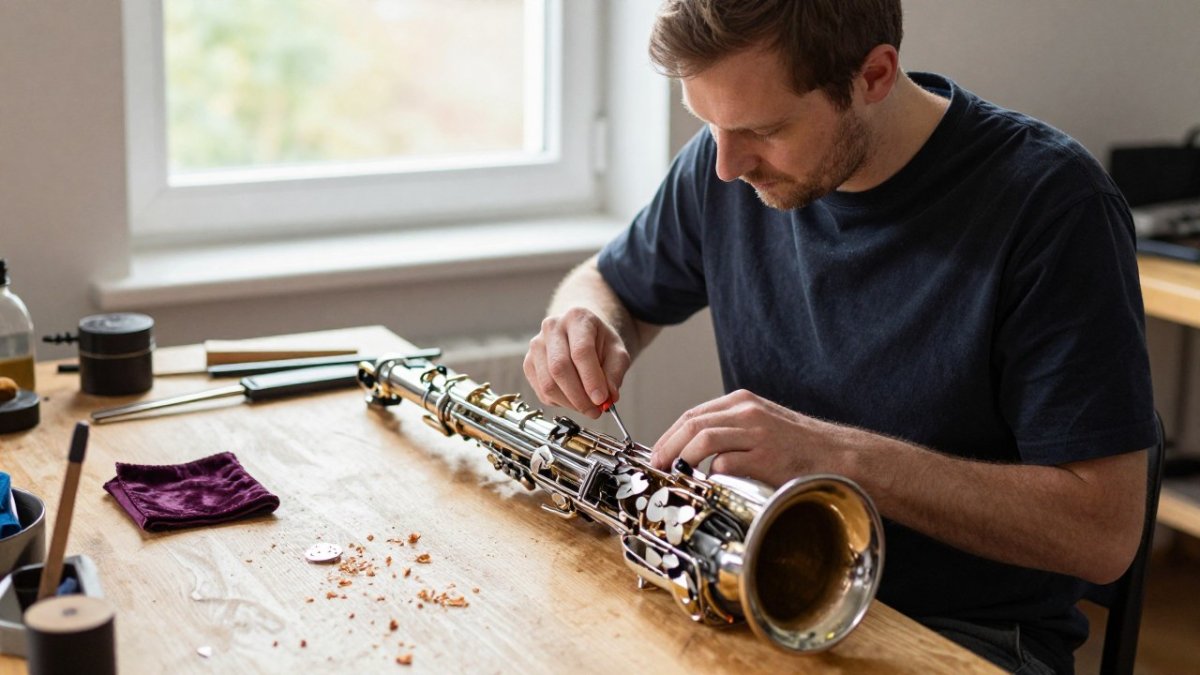
Routine tasks suit DIY care: swabbing, drying, wiping the body and applying cork grease. These take minutes and prevent the moisture and residue that cause most problems. Professional servicing is the right choice for pads that feel sticky or leak, keys that stick or sit unevenly, dents, bent rods and a sluggish response that cleaning does not fix. Attempting these repairs yourself often makes the problem worse, a bent key or dislodged pad can turn a small service into a costly overhaul.
Common cleaning mistakes are worth knowing before you start. Excess cork grease attracts dust and can gum up the neck joint; apply a thin smear and wipe off any surplus. Unsuitable cloths shed fibres that catch under pads, so stick to lint-free swabs. A trapped swab is one of the most common DIY mishaps, never force one through the body or pull it hard near the keywork, as a snagged swab can bend a key or dislodge a pad.
If you are unsure whether a problem is routine or serious, get it checked. A short assessment costs less than a repair caused by a DIY attempt. Our Musicians' Union guidance on instrument care offers general advice on looking after instruments, and it is worth reading alongside manufacturer recommendations.
For a local repair option, you can find out more about book a woodwind service or compare musical instrument repair in Hampshire. If you want a step-by-step check of your instrument's setup after cleaning, our step-by-step setup guide walks through it.
Deciding Between DIY Care and Professional Servicing
A saxophone cleaning kit handles routine care. It does not replace a professional service. Knowing where the line falls protects your instrument and your wallet.
Routine tasks suit DIY care: swabbing, drying, wiping the body and applying cork grease. These take minutes and prevent the moisture and residue that cause most problems.
Professional servicing is the right choice for pads that feel sticky or leak, keys that stick or sit unevenly, dents, bent rods and a sluggish response that cleaning does not fix. Attempting these repairs yourself often makes the problem worse.
If you are unsure whether a problem is routine or serious, get it checked. A short assessment costs less than a repair caused by a DIY attempt. Our Musicians' Union guidance on instrument care offers general advice on looking after instruments, and it is worth reading alongside manufacturer recommendations.
For a local repair option, you can find out more about book a woodwind service or compare musical instrument repair in Hampshire. If you want a step-by-step check of your instrument's setup after cleaning, our step-by-step setup guide walks through it.
Frequently Asked Questions
Can a saxophone cleaning kit damage the instrument?
A cleaning kit is unlikely to damage a saxophone when used correctly, but problems arise from the wrong tools. Abrasive cloths, stiff brushes or overly thick swabs can scratch lacquer, catch on pads or push debris further into the body. Choose soft, lint-free swabs sized for your instrument, avoid metal polish on lacquered surfaces and never force a swab through the bore. If a pad or key feels damaged, stop and have it checked by a repairer rather than trying to fix it with cleaning tools.
Is a saxophone cleaning kit worth buying?
For most regular players, a basic kit is good value because it covers the routine tasks that keep an instrument playing well: removing moisture, cleaning the mouthpiece and protecting the cork. Buying the items separately often costs more and leaves gaps. Casual players who play only occasionally may manage with a single pull-through swab and a soft cloth. Pricing varies by retailer and bundle contents, so check current prices directly with Hayes Music or your preferred supplier before deciding.
How often should you clean a saxophone?
Dry the instrument with a body swab after every playing session, since condensation builds up quickly from breath moisture. A mouthpiece wipe and a quick check of the pads should follow as part of the same routine. A deeper clean of the body and keywork is usually worth doing every few weeks for regular players, or sooner if the instrument has been played in a damp or dusty environment. Consistent short routines do more for longevity than occasional intensive cleaning.
Can you clean a saxophone without a cleaning kit?
Yes, you can clean the basics with household items, but with care. A soft, lint-free cloth can wipe the body and keys, and a clean, dry sock or thin cotton cloth tied to a string can work as a makeshift pull-through. Avoid paper towels, which shed fibres into the bore, and never use water-based cleaners inside the instrument. A purpose-made kit makes these tasks easier and more consistent, which is why many players find it worthwhile over time.
Is a saxophone cleaning kit worth the money? For regular players, yes, provided you use the contents. Choose a kit that matches your playing frequency, learn to swab correctly and keep to a short routine after every session. Hayes Music can help you choose the right kit, or the right service, for your instrument.