 How-to
7 Benefits of Professional Instrument Setup for Students
Last Updated: October 30, 2026
Quick Summary
Professional instrument setup adjusts an instrument so it plays accurately, comfortably and in tune for the student using it. It covers evaluation, hardware inspection, adjustment and cleaning, and can be the difference between an instrument that fights a learner and one that rewards them.
- Most guitars benefit from a setup once or twice a year, and always after a change in string gauge.
- Student instruments should be checked at least annually, ideally before each school term begins.
- A quick home test is to play a chromatic scale and note any buzzes, chokes or weak notes.
- A five-minute routine after each practice session prevents most problems that lead to a workshop visit.
- Many new instruments do not arrive ready to play, so a technician check before the first lesson saves frustration.
Table of Contents
- What a Professional Instrument Setup Involves
- Why Setup Matters More for Students Than Anyone Else
- Signs a Guitar Needs a Setup (and What Other Instruments Show)
- How Often to Get a Guitar Setup and Other Instruments Checked
- Instrument Maintenance for Students: A Simple Routine
- Beyond Guitar: Setup Guidance for Brass, Woodwind and Strings
- How Setup Supports Lessons, Practice and Confidence
- Booking a Setup and Trying Instruments at Hayes Music
- Frequently Asked Questions
What a Professional Instrument Setup Involves
An instrument setup is the process of adjusting a musical instrument so it plays accurately, comfortably and in tune for the person using it. Setup can be the difference between an instrument that fights a learner and one that rewards them. It is not a repair.
A proper professional setup covers four areas:
- Evaluation: checking the instrument from top to bottom before touching anything
- Hardware inspection: testing keys, pads, valves, pegs, bridges and fittings
- Adjustment: correcting string action, neck relief, key height and spring tension
- Cleaning and conditioning: removing old residue and protecting moving parts
Instrument Evaluation and Hardware Inspection
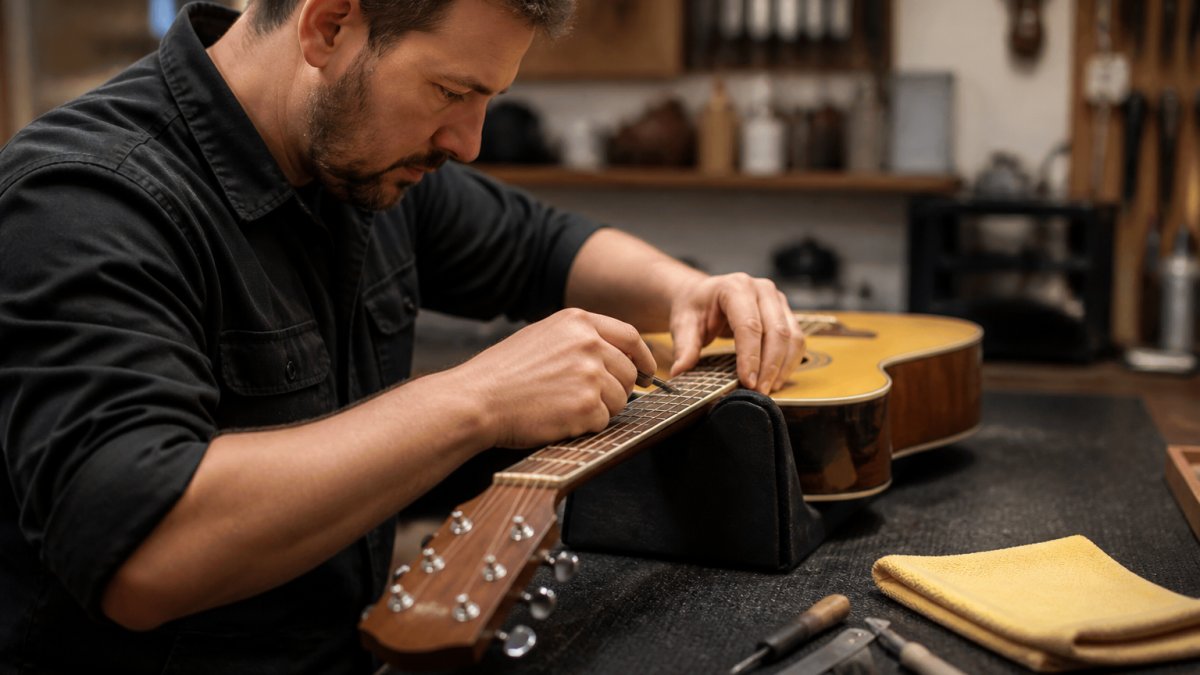
A setup can start with a full instrument evaluation, in which a trained technician plays the instrument, checks it against a reference pitch and looks for wear. On a guitar, that means inspecting the nut, saddle, frets and truss rod.
Hardware inspection catches problems a player cannot see. A slightly loose screw on a saxophone key can cause a leak that makes low notes impossible. A worn felt on a piano key changes how the key responds. These faults are invisible to a beginner but obvious to a technician.
Adjustments That Make an Instrument Easier to Play
The adjustments themselves are where setup earns its keep. String action, meaning the distance between the strings and the fretboard, gets lowered to a comfortable height. The neck gets checked for the right amount of relief so notes ring cleanly without fret buzz. Intonation is corrected so the instrument stays in tune up the neck.
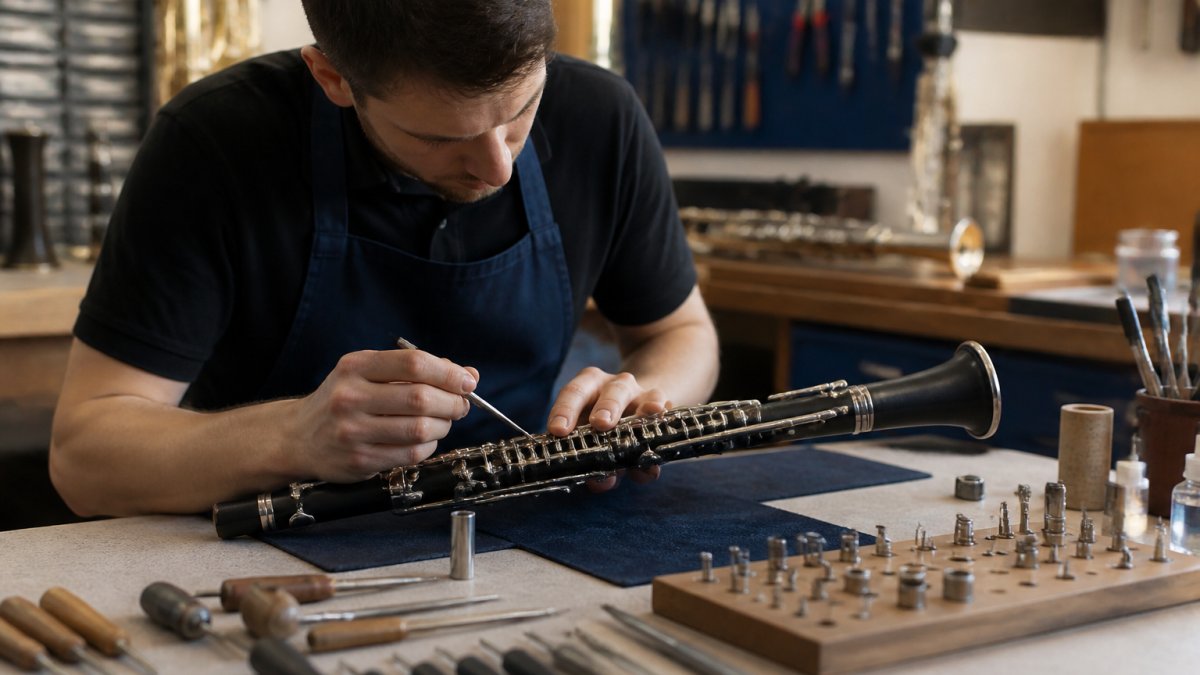
For woodwind and brass, the equivalent work is key height, spring tension and valve alignment. Small changes make a big difference. A student clarinet with correctly set key heights needs less finger pressure, which matters enormously for small hands.
Why Setup Matters More for Students Than Anyone Else
Setup can matter more for students because beginners may have no reference point for how an instrument should feel, and may assume an instrument is hard to play when the problem lies with the instrument.
A student fighting a badly set-up instrument can practise less and lose confidence, so the real cause of a problem is worth checking before blaming the student.
There is a physical side too. Excessive string height and poor key tension force the hands into awkward positions. Over months of practice, that strain adds up.
Signs a Guitar Needs a Setup (and What Other Instruments Show)
A student will rarely tell you their instrument needs a setup. They will tell you it is 'too hard', that the notes 'sound wrong', or that their hand hurts. Learning to read those complaints as symptoms is the first step towards fixing the real problem.
Guitar symptoms
A common sign a guitar may need a setup is fret buzz on notes that should ring cleanly. Other warning signs include strings that feel hard to press, notes that go sharp high up the neck, and tuning that slips within minutes of playing. Recognising these physical indicators is essential because the cumulative signs your guitar needs adjustment often point toward underlying structural issues that require a technician's expertise.
Woodwind symptoms
A clarinet that squeaks in the low register, or a flute that sounds airy and plays flat, usually has a pad leak. A saxophone that is stiff under the fingers may need spring tension adjusted. For a young player, a leaky pad is not just a tonal problem: it forces them to bite harder and blow harder, which builds bad habits that take months to undo.
Brass symptoms
Stiff valves, sluggish slides and a stuffy tone point to residue build-up and worn corks. A trumpet that plays out of tune with itself often has a valve alignment issue. Student brass instruments are particularly prone to this because they are played hard and cleaned rarely.
Bowed string symptoms
Slipping pegs, a bridge that has drifted, or strings sitting too high at the nut all make a violin or cello harder to tune and play in first position. A beginner cannot hear the difference between a poorly fitted peg and their own tuning technique, so the problem often goes undiagnosed for months.
Age-specific warning signs
Young beginners often cannot articulate what is wrong. Watch for these instead:
- Ages 5-7: the child grips the instrument too tightly, complains of hand tiredness after ten minutes, or avoids practising. On a guitar, check string action; on a clarinet, check key spring tension.
- Ages 8-11: the student starts playing out of tune without noticing, or their tone becomes thin. Check intonation, pad seating and valve alignment.
- Ages 12+: the student notices the problem themselves but assumes it is their technique. Ask them to demonstrate; a technician can usually spot a setup issue in under a minute.
If you want to check your own instrument before booking anything, our guide on how to check instrument setup walks through the process step by step.
How Often to Get a Guitar Setup and Other Instruments Checked
Most guitars benefit from a setup once or twice a year, and always after a change in string gauge or a long gap in playing.
How often to get a guitar setup depends on use. A gigging player may want a check every few months.
Woodwind and brass instruments need annual servicing rather than frequent adjustment. Pads wear, corks compress and valves collect residue.
If you are weighing up local options, our guide to musical instrument repair in Hampshire explains what different services cover.
Instrument Maintenance for Students: A Simple Routine
Instrument maintenance for students comes down to a short routine done consistently. Five minutes after each practice session prevents most of the problems that lead to a workshop visit.
- Wipe strings after playing to remove hand oils
- Swab woodwind instruments to clear moisture from the bore
- Grease corks and oil valves on brass instruments monthly
- Keep the case clean and store instruments away from radiators
- Check for loose screws and fittings once a month
- Loosen the bow on string instruments after playing
- Book an annual check before the school year starts
Watch out: storing a wooden instrument next to a radiator or in a cold garage causes cracks and warping that no setup can undo.
Beyond Guitar: Setup Guidance for Brass, Woodwind and Strings
Setup guidance is not just a guitar matter, and for students the stakes are higher because poor setup actively teaches bad technique. Each instrument family has its own setup priorities, and each has specific considerations for young players.
Brass instruments
For brass, the biggest gains come from clean valves and smooth slides. A trumpet or cornet with residue in the valve casing will feel sluggish and play inconsistently; a trombone slide that has not been lubricated properly will stick, which is especially frustrating for a beginner learning slide positions. Valve alignment matters too: a valve that is even slightly out of alignment restricts airflow and makes the upper register harder to reach.
Woodwind instruments
For woodwind, leak-free pads matter most, since even a small leak wrecks tuning and tone. A clarinet with a leaking pad in the lower joint will squeak and force the student to overblow; a flute with a worn headjoint cork will play flat and sound airy. For players who need work done quickly, the guide to fast woodwind repair services explains what to expect.
Bowed strings
For orchestral strings, peg fitting and bridge alignment can affect whether the instrument stays in tune. Slipping pegs are a common problem on student violins, and a bridge that has drifted or is warped affects string spacing and tone. For young cellists and violinists, string height at the nut and bridge affects hand comfort; too high and the student presses too hard, too low and the strings buzz.
A student setup checklist by instrument
Use this as a starting point when you suspect a setup issue:
| Instrument | What to check | Typical student issue |
|---|---|---|
| Trumpet/cornet | Valve alignment, slide lubrication, mouthpiece fit | Stiff valves, stuck slides |
| Trombone | Slide lubrication, water key, counterweight | Sticking slide, difficult positions |
| Clarinet | Pad seating, key height, spring tension, tenon corks | Squeaks, stiff keys, loose joints |
| Flute | Headjoint cork, pad condition, key adjustment | Airy tone, flat pitch |
| Saxophone | Pad leaks, spring tension, neck cork | Stuffy low notes, stiff action |
| Violin/viola | Peg fitting, bridge position, string height | Slipping pegs, hard to press strings |
| Cello | Peg fitting, bridge curve, endpin | Tuning instability, uncomfortable action |
A common mistake is assuming a new instrument arrives ready to play. Many do not, and a quick check by a technician before the first lesson saves weeks of frustration.
How Setup Supports Lessons, Practice and Confidence
A well set-up instrument makes lessons more productive.
Confidence follows. A student who sounds good practises more, and a student who practises more sounds better. Setup is the small, unglamorous input that starts that cycle.
Booking a Setup and Trying Instruments at Hayes Music
At Hayes Music, we run a backup service and repair centre for brass and woodwind instruments.
Our showroom features a dedicated practice room, and we offer free on-site parking. We have been helping musicians since 2004.
Frequently Asked Questions
How does a professional instrument setup help student musicians?
A proper instrument setup makes an instrument easier to play, which matters most when a student is still building strength and technique. Lower, well-adjusted string action and correct intonation mean less effort to produce a clean note, so practice feels less like a struggle. For woodwind and brass players, a setup that checks pads, keys and valves prevents leaks and sticking that make learning unnecessarily hard.
What are the signs a guitar needs a setup?
Watch for fret buzz on notes that used to ring cleanly, strings that feel high and hard to press, tuning that slips soon after tuning up, and notes that sound out of tune higher up the neck. A student complaining of sore fingertips or struggling to barre chords may simply have an instrument with high action. Changes in weather also affect neck relief, so a guitar that played well in autumn can feel different by summer.
How often should a student musician have an instrument set up?
A guitar setup is typically considered once a year by many players, plus a check after any long gap in playing or a big seasonal change. Woodwind and brass instruments are often serviced yearly, with pads, corks and valves checked more often if an instrument is played daily.
Can a poor instrument setup make learning harder?
Yes. An instrument that is hard to press, leaks air or will not stay in tune forces a student to fight the equipment instead of learning technique. That extra effort can lead to frustration. If a child was progressing well and suddenly stalls, a setup check can be a sensible first step before assuming the problem is practice.
A badly set-up instrument quietly drains the joy out of learning, and most families never realise it was the problem. Hayes Music offers a full repair centre for brass and woodwind, a dedicated practice room for trying instruments, and expert guidance from a team that has supported musicians since 2004. Get started with Hayes Music and give your student an instrument that plays as well as they want to.