 blog
Is a Portable Drum Pad Worth It for Beginners?
Last Updated: 1 November 2026
Quick Summary
For most new drummers in the UK, a portable drum pad is worth it, as long as you understand its limits. It is a quiet, low-cost way to build the hand control and timing every drummer needs, though it cannot replace a full drum kit.
- Pads are cheap and fit easily into a bedroom or school bag.
- Practise rudiments, stick control, timing and dynamics on a pad.
- A pad trains your hands, not full kit coordination or limb independence.
- Use a pad alongside full kit playing, not instead of it.
- Ten minutes a day on a pad builds more control than occasional long sessions.
Table of Contents
- What a Portable Drum Pad Actually Is
- What You Can Practise on a Drum Pad
- Practice Pad vs Electronic Drum Kit: Which Suits a Beginner?
- Benefits of a Portable Drum Pad for New Drummers
- Drawbacks and Limitations to Consider
- Choosing the Right Drum Practice Pad Size
- Deciding Whether a Pad Is Right for You and Next Steps
- Frequently Asked Questions
Is a portable drum pad worth it for beginners? For most new drummers in the UK, yes, provided you know what it can and cannot do. The honest answer depends on what you want to get out of your playing. A pad is a quiet, cheap way to build the hand control and timing every drummer needs.
What a Portable Drum Pad Actually Is
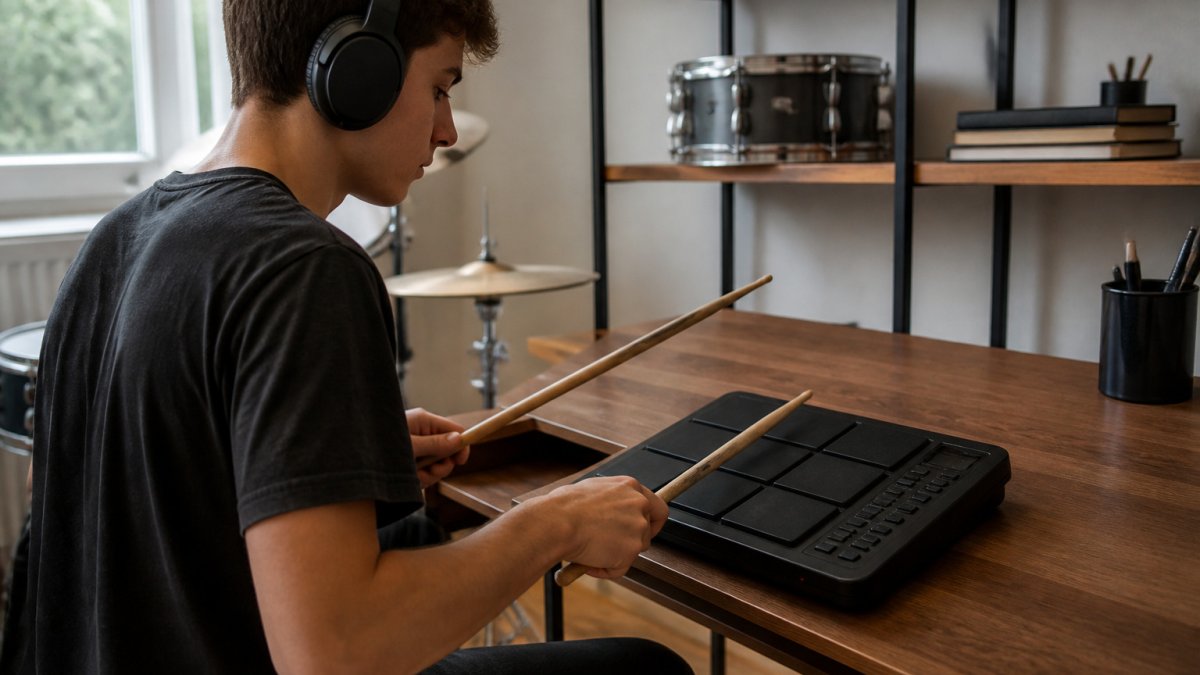
A portable drum pad is a small, flat practice surface, usually rubber or mesh, that rebounds a drumstick so you can practise without a full kit. Most pads sit on a stand or tabletop and fit easily into a bedroom or a school bag.
Pads come in a few common types:
- Single rubber pads: simple, cheap, and very portable
- Mesh pads: quieter and closer in feel to a real drumhead
- Multi-pad sets: several pads on a stand, for practising across a mini layout
A pad is not a substitute for a drum kit. It trains your hands, not your full coordination. Think of it as a rehearsal tool.
What You Can Practise on a Drum Pad
A pad suits the basics that matter most at the start. Focus your sessions on:
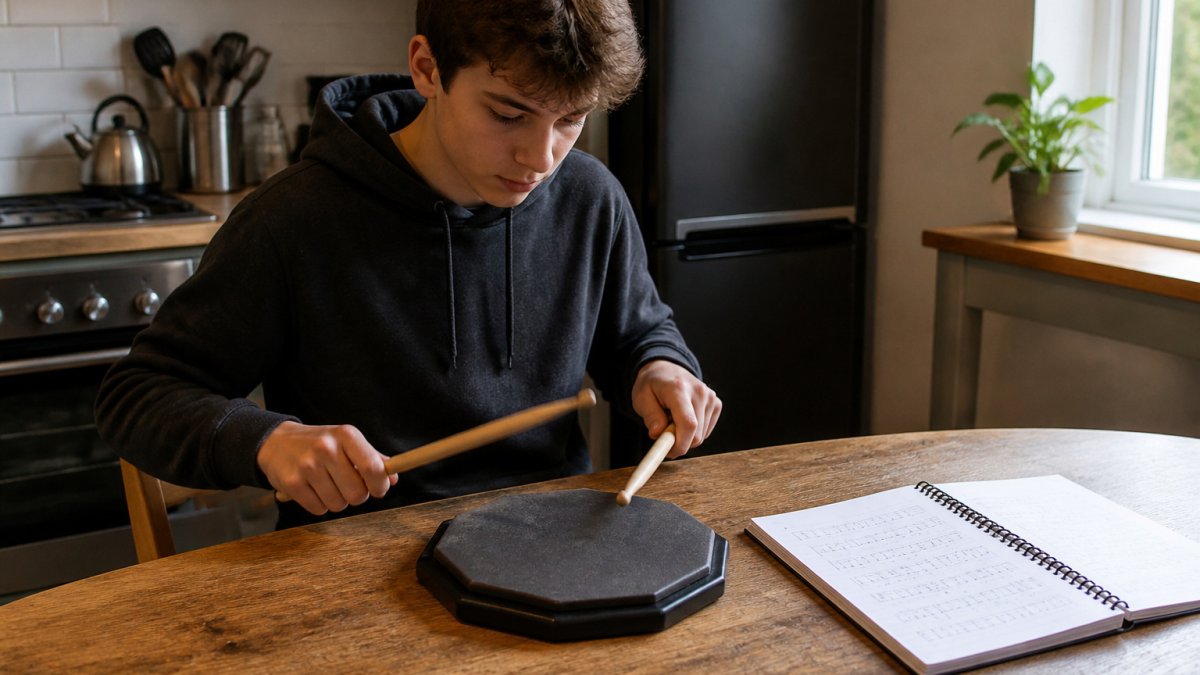
- Rudiments: single strokes, double strokes, paradiddles, and flams
- Stick control: even tone, height, and grip
- Timing: playing steady patterns with a metronome
- Dynamics: playing soft and loud on command
Most of this carries straight over to a kit later. Clean fundamentals on a pad make your first kit lessons far easier.
Practice Pad vs Electronic Drum Kit: Which Suits a Beginner?
This is the choice many new drummers face. A practice pad is cheap, small, and quiet enough for shared homes. An electronic drum kit gives you a full set of sounds, headphone practice, and a closer feel to playing in a band. Deciding between these entry-level options often leads to questions about whether investing in professional grade gear provides a more sustainable path for long-term development.
Here is a simple comparison:
| Factor | Practice Pad | Electronic Drum Kit |
|---|---|---|
| Cost | Low | Higher |
| Space needed | Very small | Dedicated corner |
| Noise | Quiet | Quiet with headphones |
| Best for | Hand technique | Full kit playing |
If you are unsure, start with a pad. It builds the foundations cheaply, and you can move to a kit once you know you will keep playing.
Benefits of a Portable Drum Pad for New Drummers
A pad gives beginners several clear advantages:
- Low cost: a good entry point before buying larger equipment
- Quiet practice: useful in flats or homes where noise is a problem
- Easy to store: it fits in a cupboard or a bag
- Focused practice: you work on technique without the distraction of a full kit
The main benefit is consistency. Ten minutes a day on a pad builds more control than an occasional long session on a noisy kit.
Drawbacks and Limitations to Consider
Be realistic about what a pad cannot teach:
- It does not develop limb independence across a full kit
- The rebound feel differs from a real drumhead or cymbal
- You will not learn to play along with music in a band setting
Watch out: many beginners buy a pad and expect it to replace kit lessons. Use it alongside regular playing on a full kit, not instead of it.
Choosing the Right Drum Practice Pad Size
Size matters more than most beginners expect. A pad that is too small makes accurate stick placement hard. A pad that is too large takes up space you may not have.
Consider these points:
- Standard single pads suit most beginners and are easy to store
- Larger pads give more room for accurate strokes
- Mounted pads need a stable stand, so check the height suits your seated position
Measure your practice space first, then pick the largest size that fits comfortably.
Deciding Whether a Pad Is Right for You and Next Steps
A portable drum pad is worth it for beginners who want a low-cost, quiet way to build technique. It is less useful if you want to play a full kit from day one, but many players use one alongside kit lessons for years.
If you are ready to start, we suggest the following steps:
- Set a daily 10-minute practice routine focused on rudiments
- Use a metronome from the first session
- Review your technique every few weeks and adjust your practice
Local help is available too. For advice on instrument maintenance, speak to Hayes Music directly.
Frequently Asked Questions
Is a drum practice pad worth it for beginners?
For most beginners, yes, provided the goal is building technique rather than playing full songs. A portable pad lets you work on stick control, rudiments, timing and dynamics quietly and cheaply, and it fits in a small flat. It will not teach you how a full kit feels under the feet or how to coordinate limbs across several drums, so it works best alongside regular time on a kit or with a teacher. Pricing depends on the model, accessories and delivery, so check current prices and availability on the Hayes Music website or ask in store.
Can you learn to play drums with just a practice pad?
You can build a strong foundation with a pad, including grip, stroke types, rudiments and steady timing with a metronome. Many players do this before they ever sit at a kit. However, learning to play drums properly also means coordinating hands and feet, hearing how parts fit together and playing with other musicians. A pad covers the hands well but leaves those skills untouched, so plan to get time on a full kit at some point.
Is a practice pad better than an electronic drum kit for beginners?
It depends on your budget, space and noise situation. A practice pad is compact, inexpensive and quiet enough for shared homes, which makes it ideal for daily hand technique. An electronic kit offers full-limb practice, built-in sounds and headphone play, but takes more space and costs more. Many beginners start with a pad for technique and move to an electronic kit once they want to play along with music. Check the Hayes Music website or visit the showroom to compare current options.
What size drum practice pad should a beginner get?
A pad of around 30 cm across is a common choice for beginners, because it is large enough to practise accurate strokes and small enough to store easily. Some players prefer a larger pad to replicate the rebound of a snare drum more closely. Consider the surface, rebound and whether it sits securely on a stand or your lap before deciding. Trying one in the Hayes Music showroom can help you judge feel before you buy.