 How-to
How Do You Choose a Student Clarinet?
Last Updated: October 27, 2026
Quick Summary
Choose a student clarinet with closed-hole keys, an ABS plastic body, a well-set-up key action and a decent mouthpiece included. Test every key, play a slow scale and check the pads before buying, and ask the retailer what setup is included.
- Closed-hole keys let small hands cover the tone holes cleanly.
- An ABS plastic body is durable and resists temperature changes.
- Reeds in a beginner strength such as 2 or 2.5 are needed.
- A showroom with a dedicated practice room helps you test instruments.
- Ask the retailer what setup is included before you buy.
Table of Contents
- What to Look for When Buying a Student Clarinet
- Plastic vs Wooden Clarinet: Which Suits a Beginner?
- Should You Rent or Buy a Clarinet?
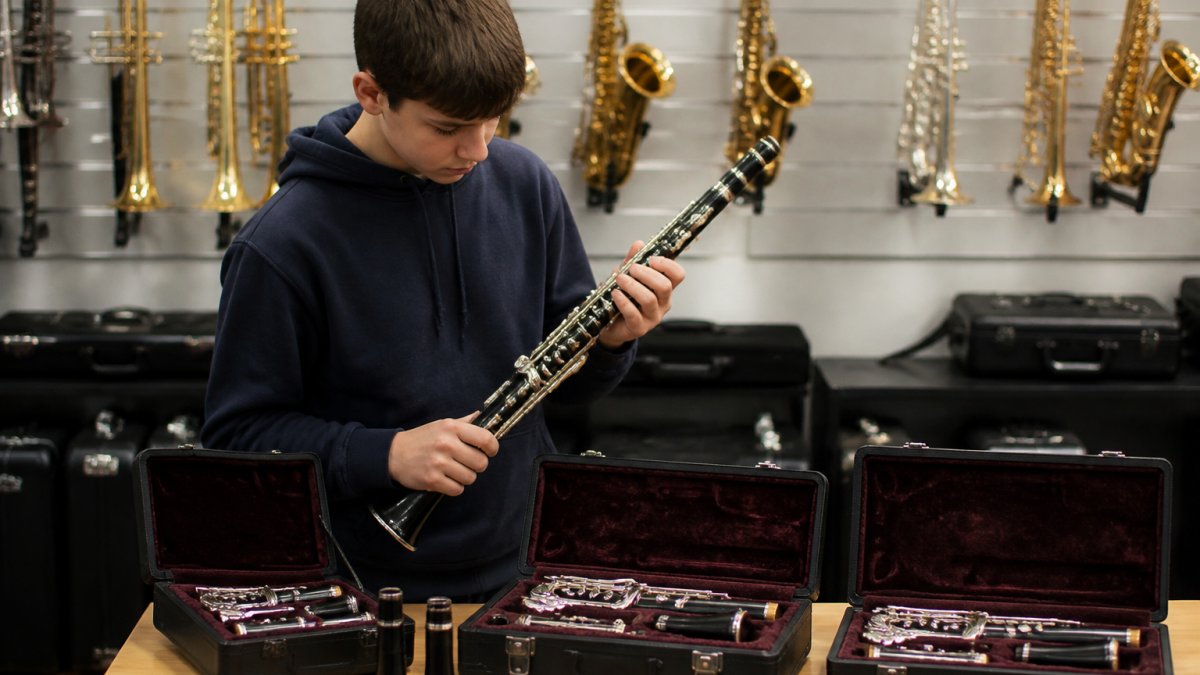
- How to Test a Clarinet Before Buying
- Clarinet Accessories for Beginners: What You Actually Need
- How Much Should You Spend on a Student Clarinet?
- Visiting a Showroom to Choose Your Student Clarinet
- Frequently Asked Questions
What to Look for When Buying a Student Clarinet
Choosing the right student clarinet comes down to a handful of things that actually affect how a beginner plays. The good news is that learning how to choose a student clarinet can be straightforward. Once you know which features to look for, you can browse a beginner clarinet outfit that is ready to buy.
Key Features That Matter for Beginners
- Closed-hole keys so small hands can cover the tone holes cleanly
- ABS plastic body for durability and resistance to temperature changes
- A well-set-up key action with no leaks or stiff pads
- A decent mouthpiece included, not a throwaway
- A sturdy case with room for accessories
Plastic vs Wooden Clarinet: Which Suits a Beginner?
Here's the short version:
| Feature | Plastic | Wooden |
|---|---|---|
| Durability | High | Moderate |
| Weather resistance | Good | Poor |
| Warmth of tone | Moderate | High |
| Maintenance | Low | High |
| Best for | Beginners | Advancing players |
Should You Rent or Buy a Clarinet?
- Is this the player's first instrument?
- Are they likely to stick with it past a year?
- Do you want the flexibility to swap instruments?
How to Test a Clarinet Before Buying
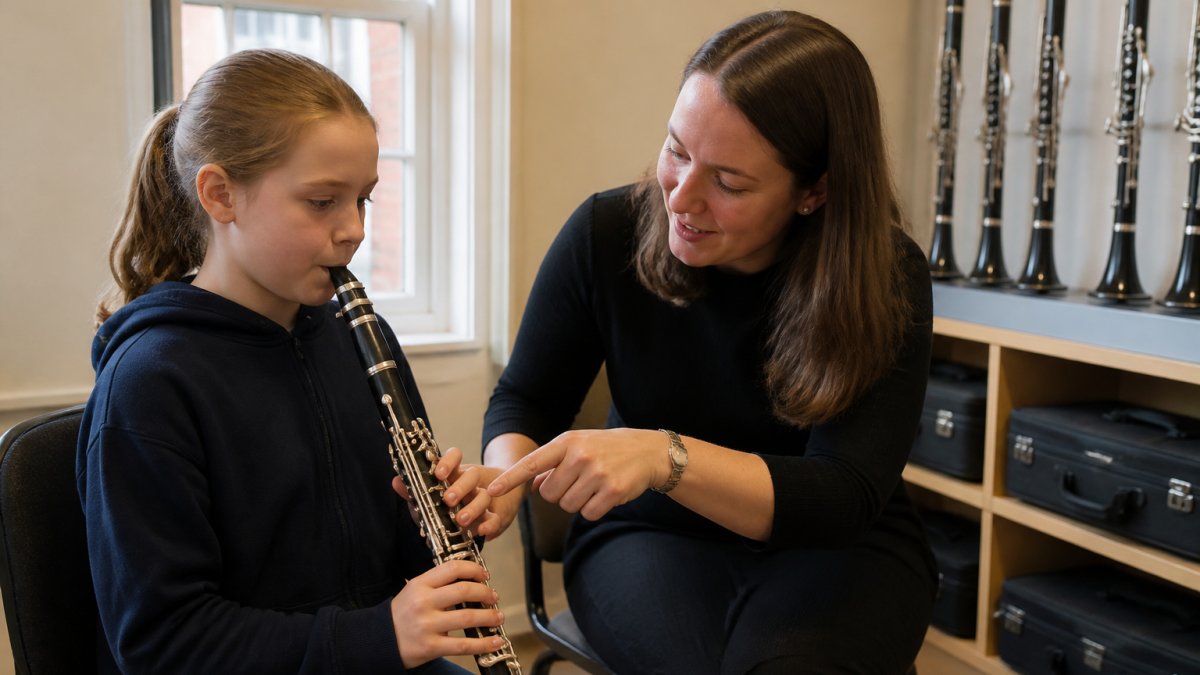
- Press every key. Each should move smoothly and spring back cleanly.
- Play a slow scale. Listen for squeaks or notes that won't speak.
- Check the pads. Look for tears or gaps where pads meet the tone holes.
- Try the mouthpiece. A beginner should be able to get a steady sound within a few minutes.
- Inspect the case and joints. Everything should fit snugly with no wobble.
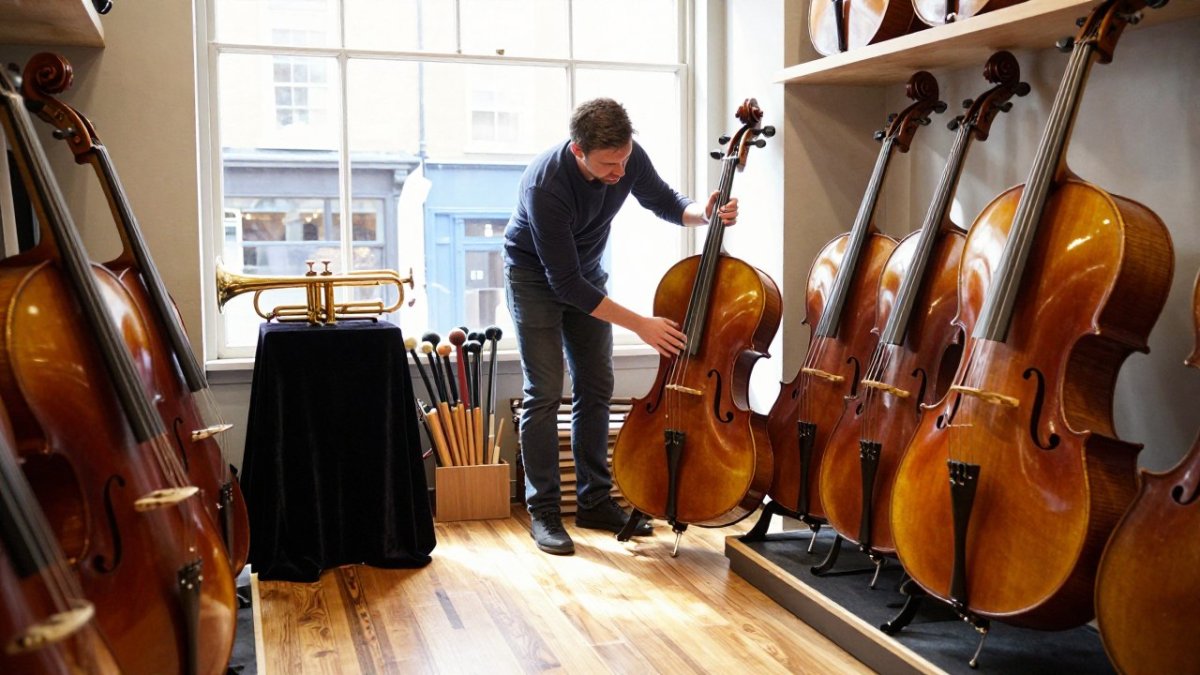
A showroom with a dedicated practice room is among Hayes Music's features.
Clarinet Accessories for Beginners: What You Actually Need
- Reeds in a beginner strength, such as a 2 or 2.5
- A cleaning cloth for the bore and mouthpiece
- Cork grease for the joints
- A stand to rest the instrument safely between sessions
- A music stand for practice at home
How Much Should You Spend on a Student Clarinet?
Ask the retailer what setup is included. If they can't tell you, that's a warning sign.
Visiting a Showroom to Choose Your Student Clarinet
At Hayes Music, the showroom features a dedicated practice room, and the business has a full backup service and repair centre for brass and woodwind instruments.
Frequently Asked Questions
What should I look for when buying a student clarinet?
Focus on four things: a reputable brand with a serviceable mechanism, a mouthpiece that suits a beginner, a comfortable key layout for smaller hands, and a shop that can adjust or repair the instrument. Check that the pads seal properly and the keys move smoothly. A student clarinet should arrive set up and playable, not in a box needing work.
Should a beginner buy a plastic or wooden clarinet?
Most beginners start on a plastic or ABS resin clarinet. These are durable, resistant to temperature and humidity changes, and cost less to maintain. Wooden clarinets sound warmer but need more careful handling and are better suited to players who have settled into regular practice. For a school instrument that travels in a bag, plastic is the practical choice.
Is it better to rent or buy a beginner clarinet?
Renting suits families testing whether a child will stick with lessons, since it avoids a large outlay. Buying makes sense when the player is committed and you want an instrument you can keep, insure and have serviced long-term. Some shops offer rent-to-buy schemes, which can bridge the two. Ask about repair cover and return terms before deciding.
What accessories does a beginner clarinettist need?
Start with a few reeds in strengths 1.5 to 2.5, a reed case, a pull-through swab, cork grease, and a sturdy music stand. A mouthpiece cap and ligature usually come with the instrument. Add a cleaning cloth and a small notebook for lesson notes. Avoid buying every accessory at once; build up as your teacher recommends.
Learning to play takes patience, and the instrument shouldn't be the thing holding a beginner back. If you want help choosing, our team can talk you through the options and make sure the clarinet arrives ready to play. Hayes Music offers a wide range of beginner instruments, a dedicated practice room for testing, and an on-site repair centre for ongoing support. Get started with Hayes Music and give a new player an instrument that's set up to succeed.